 Politics & Law
Việt Nam, UK seek to boost political trust, expand comprehensive strategic partnership
1.
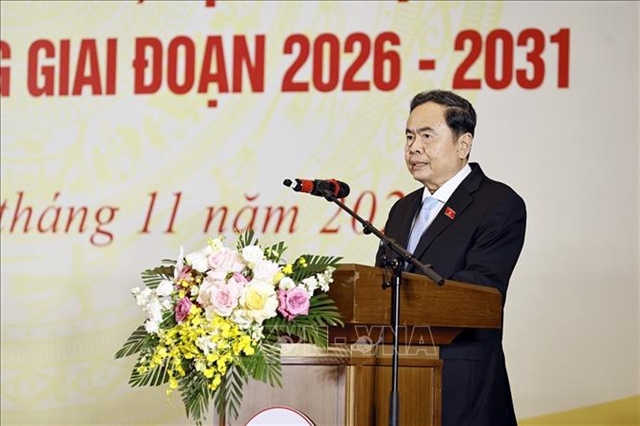 |
| National Assembly President Trần Thanh Mẫn addresses the conference. — VNA/VNS Photo |
HÀ NỘI — National Assembly (NA) President Trần Thanh Mẫn has called for closer coordination among the NA Council for Ethnic Affairs, the Ministry of Public Security, the Ministry of Ethnic and Religious Affairs, and the Border Guard Command, in developing ethnic minority policies, stressing that policy quality and practical benefits for local people should be the key measures of cooperation.
The top legislator made the remarks at a conference to sign coordination regulations for the 2026–31 period between the four agencies in Hà Nội on Wednesday.
He said the coordination programme aims to link legislative work, appraisal and supervision with State management, improve the legal and policy framework, and address obstacles to policy implementation in ethnic minority, mountainous and border areas. It also seeks to strengthen information sharing and inter-agency coordination, improve living conditions for ethnic minority communities and reinforce public trust in the Party and State.
Ethnic affairs and national solidarity are strategic and long-term issues and the responsibility of the entire political system, he stressed, saying that development in ethnic minority and mountainous areas is always closely linked to strengthening national defence and security and safeguarding border sovereignty.
The NA President urged the four agencies to proactively coordinate from the policy research and proposal stage, take into account practical conditions and people's views; review and address overlapping or inadequate regulations on beneficiaries, geographical coverage, resources and implementation responsibilities.
The Council for Ethnic Affairs should promptly propose improvements to legislation, implementation mechanisms and resources allocation while ensuring objectivity and independence in its appraisal and supervisory work, he said.
He asked the Ministry of Ethnic and Religious Affairs to advise on policies for the new period and ensure that national target programmes under its management align with the two-tier local administration model and reach all eligible beneficiaries.
He also underlined the need to combine socio-economic development with maintaining security and protecting border sovereignty, saying that the Ministry of Public Security must strengthen monitoring, analysis and forecasting, proactively address security and public order issues, combat crime and prevent the exploitation of ethnic and religious matters to undermine the great national solidarity bloc.
The Border Guard Command must work with local Party committees, authorities and the Council for Ethnic Affairs to propose policies for border area development in conjunction with safeguarding territorial and border security and building a strong people's border guard posture, he said.
The NA President said the agencies must stay close to the people, listen to their concerns and promote the role of ethnic communities, ethnic minority officials and reputable individuals, while communication and public mobilisation should be closely linked to addressing people's practical needs.
He called on agencies to stay close to communities, listen to people's concerns and promote the role of ethnic minority officials and reputable individuals in community development.
Regarding information sharing and supervision, he called for mechanisms to facilitate information exchange and access to shared databases, ensuring timely, evidence-based information while protecting State secrets, personal data and information security.
The supervision of the Council for Ethnic Affairs should focus on issues directly affecting people's lives, clearly identify causes and responsibilities, and closely monitor the implementation of recommendations, he said, adding that relevant agencies must proactively address the issues, provide explanations and report on the results of their handling within their respective authority.
He requested strict implementation of the coordination regulations, with clear responsibilities assigned to agency heads. Each agency should designate leaders and focal points, identify priority tasks, assign lead agencies and set specific targets and deadlines. He said that cooperation must be assessed based on tangible outcomes, including improved policies, implemented recommendations and difficulties resolved for local communities.
The newly signed regulations among the agencies are expected to strengthen coordination in legislation, appraisal, supervision and policy recommendations concerning ethnic minority communities and mountainous, border and island areas.
The agencies will jointly review overlapping or inadequate policies, assess their feasibility and implementation conditions, and monitor law enforcement. Joint supervision will focus on issues affecting people's livelihoods, including land, resettlement, employment, education, healthcare, personnel work and national target programmes. They will also step up information exchange, improve communication and public mobilisation, standardise shared databases and coordinate social welfare activities in ethnic minority, mountainous and border areas. — VNA/VNS
Politics & Law
 Politics & Law
 Politics & Law
 Politics & Law
 Politics & Law
 Politics & Law
 Politics & Law
 Politics & Law
 Politics & Law
 Politics & Law
 Politics & Law
 Politics & Law
 Politics & Law
 Politics & Law