 Politics & Law
.jpg)
SABECO wins three honours at Asia Pacific Enterprise Awards 2026
1.
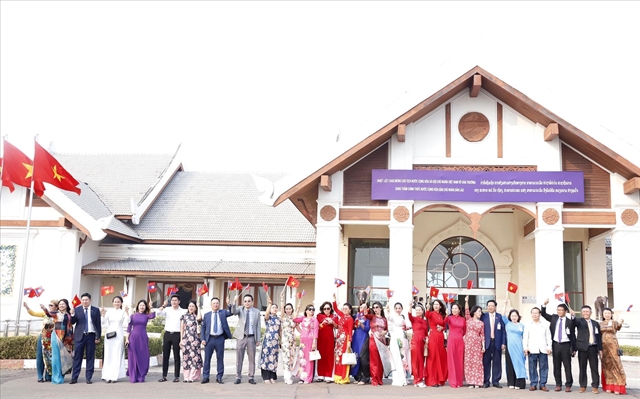 |
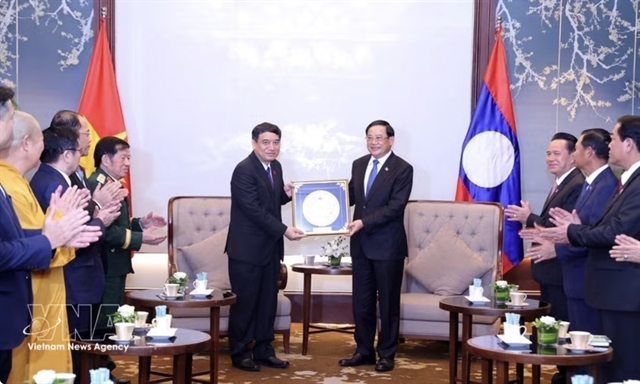
| Overseas Vietnamese in Laos wave flags at a state event. — VNA/VNS Photo |
HÀ NỘI — The community of more than 6.5 million Vietnamese people living, working and studying in over 130 countries and territories is now being framed as both a strategic resource and a network of 'cultural ambassadors' carrying Vietnamese identity, talent and ambition into the world.
The Politburo’s Resolution 23, dated August 2, 2026, sets the core policy shift: Việt Nam must change how it engages the overseas community and build mechanisms that convert its resources into substantive contributions to the country.
Policy shift: From care to co-creation
Resolution 23 marks a breakthrough in the Party's mindset and strategic vision. It inherits earlier policy while fitting into Việt Nam’s broader foreign policy and global integration framework. Its key signal is a change of method, from 'mobilisation, gathering and care' to 'partnership, mechanism design and resource mobilisation', creating a favourable environment for overseas Vietnamese (OVs) to join directly and deeply in national construction, development, and defence.
Vietnamese Ambassador to Laos Nguyễn Minh Tâm said the diplomatic mission always works closely with associations to care for the community’s material and spiritual life, while pushing origin-oriented activities and cultural identity.
In Laos, a drive to complete community organisation across all 18 cities and provinces has resulted in a more cohesive network, improved support effectiveness and living standards, and reinforced compliance with local law.
According to the Vietnamese Business Association in Laos, Việt Nam is now Laos’ second-largest investor, while Laos ranks first among the 88 countries and territories where Việt Nam invests abroad.
Vietnamese companies have invested in nearly 300 projects worth more than US$7 billion in the neighbouring country. Their presence in telecommunications, finance-banking, energy and high-tech agriculture affirms Việt Nam’s economic position and signals a partnership model with the host country.
The Party and State leaders have repeatedly used overseas trips and embassy meetings with Vietnamese communities to stress their support. OV community’s contributions are becoming more diverse, deeper with breakthroughs. Vietnamese experts, scientists and intellectuals at global innovation centres are advising on policy, transferring technology and training quality workforce. Resolution 23 now points to a strategic direction: a global Vietnamese connectivity ecosystem, especially in semiconductors, artificial intelligence and innovation.
During the recent official visit to Belgium, General Secretary of the Communist Party of Việt Nam Central Committee and President Tô Lâm and a high-ranking Vietnamese delegation met Vietnamese experts and intellectuals in Belgium and Luxembourg. After hearing their policy recommendations, he said these are the views of insiders and love for the homeland is shown through concrete actions.
Under his direction, scientists do not need to be in Việt Nam to contribute. The model should allow flexible mechanisms: expert contracts by task, remote work, joint research and lump-sum payment on final delivery. Ministries, agencies, localities and businesses should place clear orders. Experts and intellectuals should propose boldly and accept assignments. The Party, State, Government and relevant agencies must listen, clear bottlenecks and answer with concrete results.
Culture as soft power
By casting each OV as a 'cultural ambassador', Việt Nam is treating identity preservation as proactive cultural outreach, using cultural values as a resource to boost soft power and national prestige. Younger generations are a focus through tradition, history and culture education; experiential activities, return-to-origin trips, study, start-up, innovation and people-to-people exchanges.
The case of Nguyễn Thị Xuân Oanh, co-founder of the first Vietnamese language school in Thailand in 2017, is a standout example.
Born and raised in Thailand, she said pride in her Vietnamese homeland remains sacred. Oanh recalled that in 1962, while still a schoolgirl, her older siblings invited her to help teach Vietnamese. She taught Vietnamese in the morning; in the evening, she knocked on doors to encourage young people into supplementary education and patriotism.
Now elderly, she still teaches Vietnamese online, aiming to help Vietnamese children listen, speak, read and write fluently, and keep their pride in being Vietnamese. The Vietnamese community in Udon Thani is also known for business acumen, success and loyalty to the homeland. When natural disasters or floods hit Việt Nam, its charitable drives again highlighted a tradition of sharing.
Phạm Văn Hưng, Chairman of the General Association of Vietnamese People in Laos, said that since its founding in 2009, the association has staged practical activities and become a solid support for the community to do business, live stably, comply with the law and raise the prestige of Vietnamese people globally. It has also proactively disseminated the guidelines and policies of the two Parties and States, strengthening the great national unity.
Preserving Vietnamese is defined as a 'vital task'. Vietnamese language schools, traditional cultural activities and national beliefs are being maintained and widely spread, he added. — VNA/VNS
Politics & Law
 Politics & Law
 Politics & Law
 Politics & Law
 Politics & Law
 Politics & Law
 Politics & Law
 Politics & Law
 Politics & Law
 Politics & Law
 Politics & Law
 Politics & Law
 Politics & Law
 Politics & Law
 Politics & Law