 Politics & Law
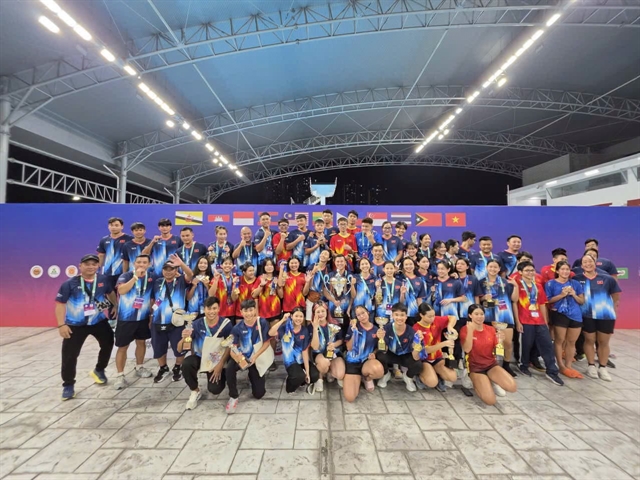
Việt Nam tops Southeast Asian finswimming championships with 92 golds
1.
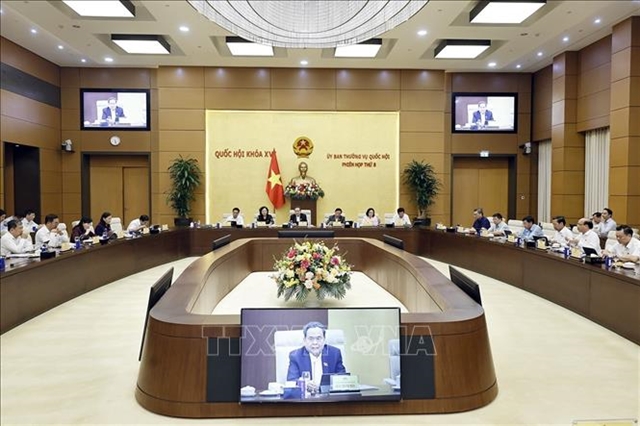 |
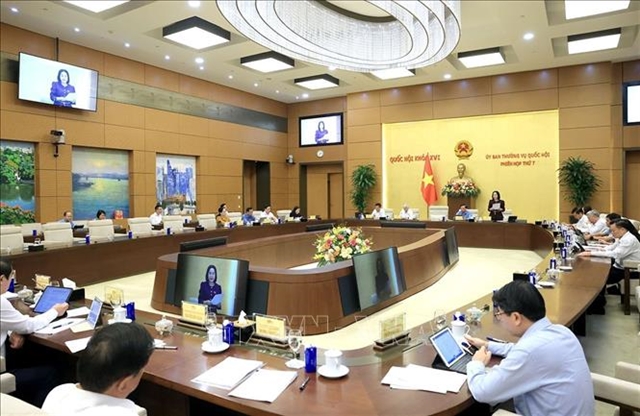
| President of the National Assembly Trần Thanh Mẫn speaks at the eighth session of the NA Standing Committee on Monday. VNA/VNS Photo |
HÀ NỘI — The National Assembly (NA) Standing Committee convened its eighth session on Monday, with the investment policy for the national target programme on crime prevention and control for the 2026–2035 period among issues high on the agenda.
According to the Government’s proposal, the programme will run from 2026 to the end of 2035, with a total budget estimated at over VNĐ45,3 trillion (nearly US$1.76 billion) for the 2026–2030 phase and approximately VNĐ18,15 trillion for 2031–2035.
By 2030, the country aims to reduce the number of drug addicts and illicit drug users annually, striving for at least 50 per cent of communes, wards, and special zones nationwide to be drug-free. The programme also targets a 100 per cent detection and clearance rate for complex drug hotspots, high-risk areas, retail drug points, and illegally cultivated plants containing narcotic substances.
It looks to guarantee facilities and maintenance of treatment for at least 50,000 opioid-dependent individuals, with over 90 per cent of drug addicts, illegal drug users, and those undergoing or completing drug rehabilitation receiving medical and psychological counselling, support, and intervention.
By 2035, key targets include ensuring that 100 per cent of major press agencies feature dedicated pages or columns on crime prevention and control; over 95 per cent of the population receives crime prevention information; and 100 per cent of school students and 90 per cent of university students undergo legal education and crime prevention training.
Preventive measures will be enhanced to achieve a sustainable reduction in crime, aiming for an annual reduction of over 10 per cent in social order offences.
Phan Chí Hiếu, Chairman of the NA Committee on Legal and Judicial Affairs, stated that the committee basically agrees on the necessity of establishing the programme.
He suggested that the drafting body continue reviewing and cross-referencing tasks that overlap with other national target programmes to clarify the scope, target groups, geographic areas, deliverables, and funding sources.
On this basis, suitable integration options should be studied to ensure no duplication of tasks and funding, thereby maximising resource efficiency in achieving the programme's objectives, Hiếu said.
Voicing support for the programme, NA President Trần Thanh Mẫn noted that it aligns with the Politburo-issued orientations and central authorities’ resolutions on socio-economic development for 2026–2030. Accordingly, alongside socio-economic development tasks, focus must be placed on the crime fight, particularly drug-related offences and other crimes, to create a stable and safe environment for development.
The most critical issue is effective implementation to yield tangible results and ensure invested resources are utilised efficiently to curb crime across all fronts, he emphasised, asking ministries, sectors, and localities to promptly formulate specific implementation plans with clear targets, roadmaps, and solutions tailored to local conditions.
The top legislator stressed that to curb drug-related offences and other crimes, it is vital to leverage the collective strength of the entire people, describing every citizen as a soldier, every family as a battleground, and every locality as a fortress.
At the meeting, deputies also commented on the investment policies for three expressway projects, namely Bảo Hà–Lai Châu (Bảo Hà–Tân Phong section), Quảng Ngãi–Kon Tum, and Mộc Châu–Sơn La–Điện Biên (Sơn La section).
The projects aim to remove infrastructure bottlenecks, bolster inter-regional connectivity, expand development space, improve living standards, especially for ethnic minority groups, and ensure national defence and security safeguarding.
The committee agreed to submit the draft resolution on the investment policies for the three expressway projects to the NA for consideration at the ongoing second session.
Later, participants deliberated on special mechanisms and policies for tourism development. — VNA/VNS
Politics & Law
 Politics & Law
 Politics & Law
 Politics & Law
 Politics & Law
 Politics & Law
 Politics & Law
 Politics & Law
 Politics & Law
 Politics & Law
 Politics & Law
 Politics & Law
 Politics & Law
 Politics & Law
 Politics & Law