 Sci-Tech
HCM City faces acute shortage of technical, management personnel
1.
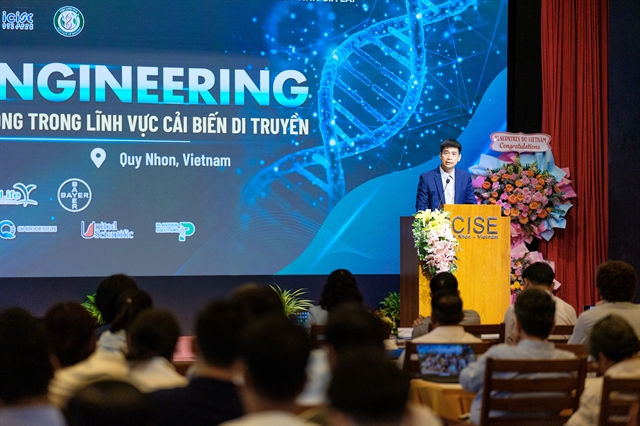 |
| A speaker delivers remarks at the workshop. — Photo courtesy |
GIA LAI — Leading gene-editing scientists gathered in the Gia Lai Province on Wednesday for an international conference on genome engineering, as Việt Nam works out how to regulate gene-edited crops and bring them to market.
The Frontiers in Genome Engineering 2026 conference, the eighth edition of the meeting and the first held in Việt Nam, has drawn nearly 150 scientists, researchers and doctoral students from 15 countries to the International Centre for Interdisciplinary Science and Education (ICISE) in the Quy Nhơn.
Those taking part include Harvard University’s David R. Liu and Caixia Gao of the Chinese Academy of Sciences, both joining online, as well as prominent researchers from the US, Japan and Germany.
Nguyễn Văn Long, who heads the science and technology department at the Ministry of Agriculture and Environment, said a government decree issued this year, Decree 43, had added rules on identifying and regulating gene-edited organisms.
But authorities still need to clarify how scientific evidence should be prepared, what product developers and regulators are each responsible for, and how a decision on a product’s legal status ties in with later requirements for testing, variety registration and food safety, he said.
"The potential is enormous, but each product has its own characteristics, level of risk and regulatory requirements," Long said.
Decisions should rest on evidence about how a product was made, the nature of the genetic change, whether it contains foreign DNA, the trait it carries and its intended use, he said. Gene-edited fish and other aquatic species raise further questions, including how they might spread and interact with the environment.
The farm sector needs to raise productivity and quality while adapting to climate change, Long said, and gene-editing tools such as CRISPR, which allow targeted changes to DNA, could help breeders develop crops, livestock and fish with specific traits.
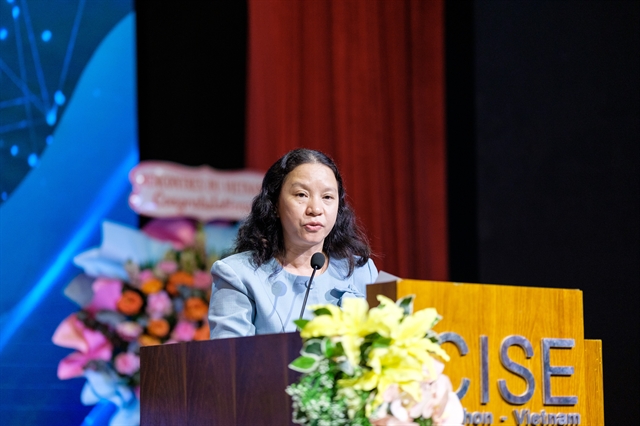 |
| Cao Thị Mộng Hoài, deputy director of Gia Lai's Department of Science and Technology, speaks at the conference. |
The Government’s plans for an agricultural biotechnology industry call for commercially viable products, not just technical mastery, he said, but shortages of equipment, materials and other resources, along with difficulty forging ties with businesses, stand in the way.
Long urged participants to focus on promising applications that meet producers’ needs and can be backed by data, and to draw selectively on other countries’ regulatory experience, bearing in mind that Việt Nam’s export markets treat such products differently.
He called for evidence-based proposals on guidelines, standards and inter-agency coordination, as well as methods for identifying gene-edited organisms.
Participants should separate issues already covered by existing rules from those that still need guidance or action by higher authorities, he said, adding that his department would use the input to recommend next steps.
The main conference features nearly 60 talks and posters, ranging from the basic biology of CRISPR-Cas systems and next-generation editing tools to applications in agriculture, medicine and biotechnology.
The series began in Seoul in 2017 and has since been held in China, Japan, India and Singapore, growing into a forum where researchers, companies and regulators share the latest advances in the field.
The conference is organised by the Rencontres du Vietnam scientific association and ICISE, together with the Institute of Biology at the Vietnam Academy of Science and Technology.
Organisers said holding it in Việt Nam gives local scientists, especially young researchers and doctoral students, direct access to top experts and a chance to build networks and find research partners.
Cao Thị Mộng Hoài, deputy director of Gia Lai's Department of Science and Technology, said advances in genome engineering could help produce higher-yielding, more resilient crops and livestock and open new avenues for diagnosing and treating disease.
But developing and using such technologies also requires strong research capacity, a highly skilled workforce and a commitment to safety and responsible use, she said. She added that the province hoped conferences at ICISE would help it build closer ties with the global scientific community.
Since opening in 2013, ICISE has hosted more than 19,000 scientists from 62 countries and territories, including 19 Nobel laureates, according to Trần Thanh Sơn, the centre’s deputy director.
He said this year’s conference built on a workshop on plant biotechnology and crop gene editing that ICISE hosted in April 2024, chaired by David Jackson of Cold Spring Harbor Laboratory in the US. — VNS
Sci-Tech
 Sci-Tech
 Sci-Tech
 Sci-Tech
 Sci-Tech
 Sci-Tech
 Sci-Tech
 Sci-Tech
 Sci-Tech
 Sci-Tech
 Sci-Tech
 Sci-Tech
 Sci-Tech
 Sci-Tech
 Sci-Tech