 Sci-Tech
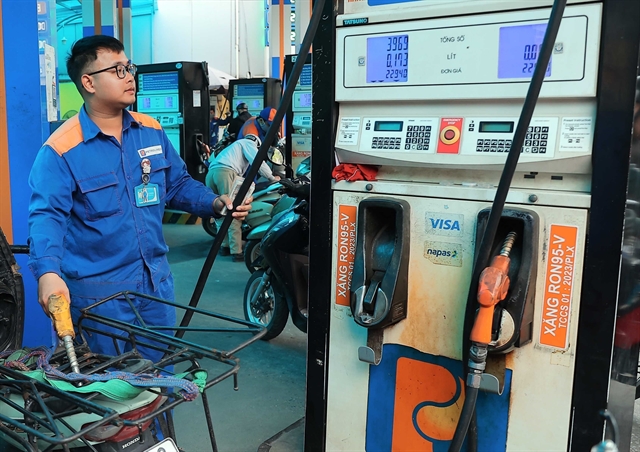
PM orders urgent completion of decree on petroleum trading by November 10
1.
 |
| Việt Nam's national electronic identification application, VNeID, on a mobile phone. The application is going to be connected to Singapore's Singpass and Laos' LAeID systems. — VNA/VNS Photo |
SINGAPORE — Việt Nam is advancing plans to connect its national electronic identification application, VNeID, with Singapore’s Singpass system and Laos’s LAeID system under Decision No. 1830/QD-TTg dated September 22, 2026, issued by the Prime Minister, with trial connectivity targeted for completion before November 15, 2026.
This high-tech initiative marks an important step towards simplifying administrative procedures and immigration formalities, while promoting digital cooperation within ASEAN.
From Singapore’s perspective, connecting VNeID with Singpass could lay the foundation for a bilateral digital corridor, opening up greater opportunities for cooperation in trade, investment, services, tourism and finance.
Singapore has operated its Singpass digital identity system since 2003, while Việt Nam is stepping up the development of its national population database and the use of VNeID.
Professor Vũ Minh Khương from the Lee Kuan Yew School of Public Policy emphasised that connecting digital infrastructure, especially between Việt Nam and Singapore, should be a top priority.
He noted that the Việt Nam-Singapore-Laos connectivity model is a foundation for expanding electronic interoperability across the region, covering areas like customs, tourism, payments, banking, and finance.
"To make this vision a reality, businesses must develop platform models, identify needs and coordinate implementation," he said.
For citizens, digital ID interoperability could simplify information verification, reduce repetitive declaration requirements, and shorten the time needed to complete administrative procedures.
Businesses could also benefit from convenient identity verification when opening bank accounts, registering businesses, or establishing legal entities across borders.
However, the connectivity process poses a number of technical, security, and legal challenges.
According to Lê Anh Đức, an artificial intelligence (AI) expert and Vice Chairman and Head of the Science and Technology Committee of the Liaison Committee for the Vietnamese Community in Singapore, the two countries need to address differences in data structures, develop standards for information mapping, and ensure stable connectivity.
"In particular, cross-border data exchange must meet requirements for privacy protection and information security, while preventing identity fraud and cyberattacks," Đức said.
At the ASEAN level, further obstacles include disparities in technological development among member states, differences in digital signature standards, and variations in legal frameworks for personal data protection, he added. Therefore, establishing compatible standards and lawful data-sharing mechanisms is crucial to expanding the model.
The trial connection of VNeID with Singpass and LAeID could serve as a pilot model for testing technical and legal solutions before wider implementation.
If implemented effectively, the initiative would help promote digital identity interoperability, facilitate cross-border transactions, and support ASEAN’s digital integration process. — VNA/VNS
Sci-Tech
 Sci-Tech
 Sci-Tech
 Sci-Tech
 Sci-Tech
 Sci-Tech
 Sci-Tech
 Sci-Tech
 Sci-Tech
 Sci-Tech
 Sci-Tech
 Sci-Tech
 Sci-Tech
 Sci-Tech
 Sci-Tech