 Economy


PM orders urgent completion of decree on petroleum trading by November 10
1.
|
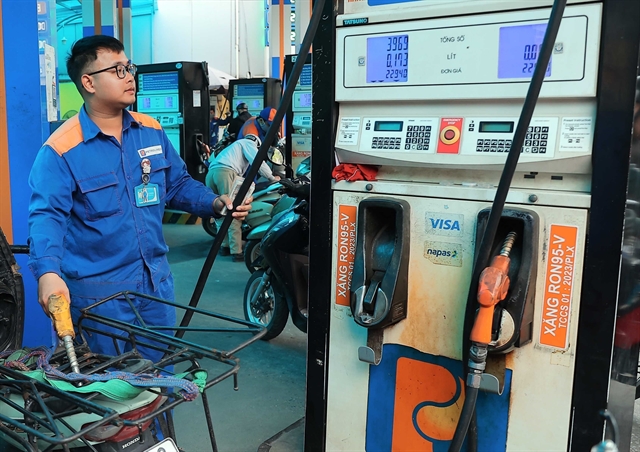
| At a petrol station of Petrolimex in Hà Nội. The new decree on petroleum business aims to strengthen the legal framework for petroleum trading, safeguard national energy security and establish a market-based petroleum sector operating under state management. — VNA/VNS Photo Trần Việt |
HÀ NỘI — Prime Minister Lê Minh Hưng has asked the Ministry of Industry and Trade to submit a draft decree replacing the country’s existing petroleum trading regulations to the Government for consideration by November 10.
Under Document No. 10747/VPCP-CN issued by the Government Office on October 21, the Ministry of Industry and Trade has been instructed to work with the ministries of Finance, Justice, Construction and Public Security, as well as the other relevant agencies, to review and complete the draft.
The new regulations must restructure the petroleum trading system by reducing the number of key petroleum traders, strengthening their capacity to secure supplies and maintain reserves, and clarifying their responsibility for ensuring market supply.
The restructuring must follow a feasible roadmap that avoids disrupting the market, the PM asked.
The new regulations must also eliminate unnecessary intermediaries and reduce distribution costs, while establishing a leaner, more transparent and efficient distribution system.
On pricing, the government seeks to introduce a market-based mechanism under state management to ensure that the authorities can monitor the factors determining fuel prices and retail prices, and have sufficient tools to regulate the market and stabilise prices.
The framework must also prevent speculation, market manipulation and unreasonable price increases.
Separately, the ministry must proactively develop and implement plans to ensure adequate petroleum supplies under all circumstances, working with relevant agencies to prevent shortages or supply disruptions.
The Ministry of Industry and Trade said that, the new decree aims to strengthen the legal framework for petroleum trading, safeguard national energy security and establish a market-based petroleum sector operating under state management.
A key proposed change concerns fuel price management. Under the draft, the state would no longer publish benchmark fuel prices periodically as it does under the current system.
Instead, key petroleum traders and distribution traders would be allowed to set and announce retail prices within their respective distribution networks, based on a pricing formula stipulated in the decree.
After adjusting prices, traders would be required to declare them and notify the relevant authorities for inspection and supervision. — VNS
Economy
 Economy
 Economy
 Economy
 Economy
 Economy
 Economy
 Economy
 Economy
 Economy
 Economy
 Economy
 Economy
 Economy