
Education in the age of AI: ensuring people remain in control
1.
|
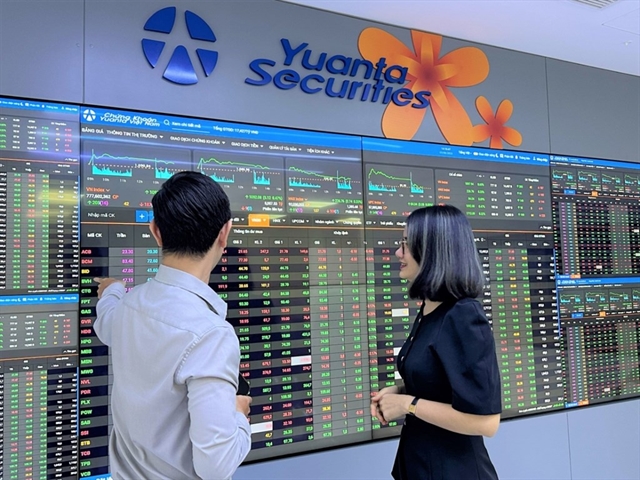
| Investors observing the market's performance in the trading room of a securities firm. — Photo courtesy of Yuanta Securities |
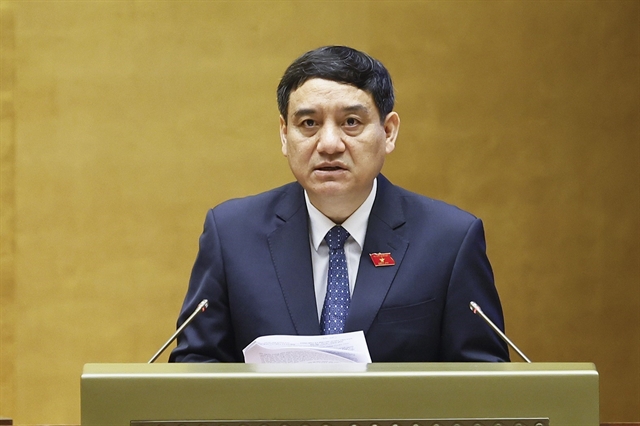
HÀ NỘI — The proposed Securities Law amendments seek to make fundraising easier for businesses, but National Assembly Vice Chairman Nguyễn Hồng Diên has called for clearer safeguards covering initial public offering (IPO) proceeds, financial disclosures and securities intermediaries to ensure that regulatory reforms do not expose investors to greater risks.
At a group discussion on the draft law last week, Diên supported removing obstacles for businesses, cutting business conditions and streamlining administrative procedures. However, he stressed that facilitating fundraising must go hand in hand with ensuring market safety and protecting investors' rights.
One issue he highlighted was the proposed cancellation of an IPO if, after the distribution period ends, the shares fail to meet minimum ownership-dispersion requirements. Under the draft, at least 100 investors who are not major shareholders must hold a minimum of 15 per cent of the shares offered, or 10 per cent for companies with charter capital of at least VNĐ1 trillion (US$38.6 million).
Diên agreed that ownership dispersion should be assessed after the distribution process to reflect the actual outcome of an offering. However, he warned that cancelling an IPO could create risks for investors who had already paid for shares.
For example, if an issuer had received subscription money but attracted only 90 investors by the end of distribution, the obligation to refund the money could lead to delays, misuse of funds or disputes.
He called for clearer rules on when distribution results must be determined and announced, as well as the deadlines and responsibilities of issuers and distribution organisations for refunds. Subscription money should also be managed separately to prevent it from being used for other purposes.
Audit qualifications require clearer criteria
Diên also raised concerns about the proposed use of financial statements containing qualified audit opinions in securities offering dossiers.
The draft would permit such statements if the qualification did not affect the issuer's eligibility for the offering, the issuer provided a reasonable explanation and the auditing organisation confirmed the explanation.
He said the law needed to distinguish between a qualification that did not disqualify a company from an offering and one that did not significantly affect the quality of financial information or investment decisions.
Qualifications concerning revenue, profit, asset values or the ability to continue as an ongoing concern could still influence investors' assessments, he said.
He proposed specifying criteria for assessing the impact of audit qualifications, together with issuers' responsibilities for explanations and information disclosure and auditors’ confirmation responsibilities, particularly for material financial indicators.
Regarding securities custody, the draft proposes abolishing several specific conditions for commercial banks and foreign bank branches, including requirements related to capital adequacy ratios, business performance and facilities for custody operations.
Diên supported removing overlapping or unnecessary conditions and shifting from prior checks to post-inspection. However, he cautioned that meeting general banking requirements did not necessarily mean that risks specific to securities custody had been adequately controlled, including risks associated with monitoring investment fund assets.
He called for clearer coordination and information-sharing arrangements among the State Bank of Vietnam (SBV), the State Securities Commission and the Vietnam Securities Depository and Clearing Corporation. The rules should also identify warning signs and circumstances in which custody services may need to be restricted or suspended.
In addition, the draft should specify responsibilities, deadlines and procedures for transferring securities, cash and customer data if a custody organisation encounters difficulties or can no longer operate. — BIZHUB/VNS
 Economy
 Economy
 Economy
 Economy
 Economy
 Economy
 Economy
.jpg) Economy
 Economy
 Economy
 Economy
 Economy
 Economy
 Economy