 Economy

‘Green’ finance needed to mitigate climate change and disaster
1.
 |
| Khuất Quang Hưng, deputy general director of Nestlé Việt Nam, speaks at a panel discussion on supply chains at the 2026 Swiss–Việt Nam Economic Forum (SVEF) in Hà Nội. — Photos courtesy of the company |
HÀ NỘI — The Việt Nam–EFTA free trade agreement is expected to open new markets for Vietnamese goods, but the greatest opportunities will go to supply chains that meet increasingly stringent quality and sustainability requirements.
At the 2026 Swiss-Việt Nam Economic Forum (SVEF) in Hà Nội on October 19, Nestlé shared its experience in building more resilient supply chains in Việt Nam.
The forum took place as Việt Nam and the European Free Trade Association (EFTA) signed a free trade agreement, coinciding with the 55th anniversary of diplomatic relations between Việt Nam and Switzerland.
EFTA comprises Switzerland, Norway, Iceland and Liechtenstein. Two-way trade between Việt Nam and the bloc reached 4.8 billion euros (US$5.4 billion) in 2025. In addition to commitments on industrial goods, the agreement covers sustainable development, small- and medium-sized enterprises (SMEs), cooperation and capacity building.
Speaking at a discussion on industrial transformation and supply chains, Khuất Quang Hưng, deputy general director of Nestlé Việt Nam, shared his views on building competitive and resilient supply chains, drawing on the company’s experience in sustainable coffee production.
He said a competitive and resilient coffee supply chain must start with farmers.
“A strong and resilient coffee supply chain cannot exist without resilient farmers. Against the backdrop of climate change, growing pressure on soil quality and water resources, and increasingly stringent requirements for traceability and emissions reduction, farmers need access to new knowledge, technology and appropriate farming practices to protect natural resources, maintain productivity and secure their livelihoods in the long term,” Hưng said.
He added that sustainability could only be maintained if it also made economic sense and improved farmers’ livelihoods.
Businesses therefore needed to move beyond transactional purchasing relationships towards long-term partnerships that help farmers boost productivity, reduce costs and adopt sustainable farming standards. Such cooperation could increase yields and incomes while reducing environmental impacts. Supporting the development of SMEs across the supply chain was also important.
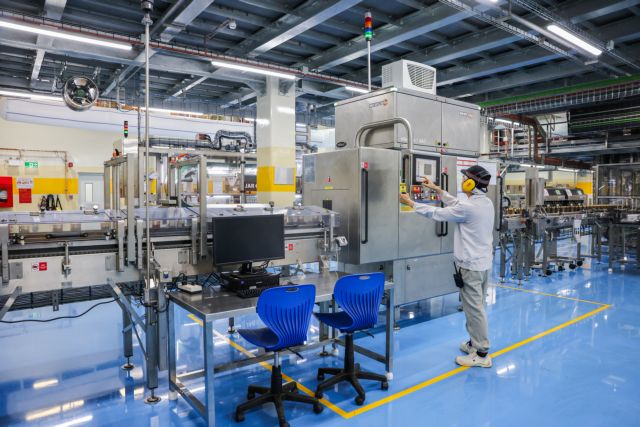 |
| The value of coffee beans is increased through deeper processing, helping retain more value in Việt Nam. |
Since 2011, the NESCAFÉ Plan has worked with more than 23,000 farming households and organised over 492,000 training sessions on sustainable coffee production under the 4C standard.
The programme has provided support for high-yielding coffee varieties resistant to drought and pests, more efficient irrigation, reduced use of chemical fertilisers and the transition to regenerative agriculture. These measures have helped farmers lower costs, improve incomes and better meet export requirements.
According to Nestlé Việt Nam, sustainable value chains rest on three pillars: trust, which enables partners to invest jointly and address challenges; capabilities to meet increasingly demanding standards, particularly in stringent markets; and long-term commitment to maintaining partnerships, building capacity and supporting local suppliers.
“This also creates significant opportunities for cooperation between Swiss and Vietnamese businesses. Swiss companies bring strengths in technology, expertise, quality standards and international experience, while Vietnamese partners offer deep local knowledge, production capabilities and an entrepreneurial spirit.
“Combining these strengths can help build more competitive and sustainable value chains in the future,” he said. — VNS
Economy
 Economy
 Economy
 Economy
.jpg) Economy
 Economy
 Economy
 Economy
 Economy
 Economy
 Economy
 Economy
 Economy
 Economy
.jpg) Economy




