 Economy



Top leader hails friendship association's role in nurturing Việt Nam–Denmark ties
1.
|
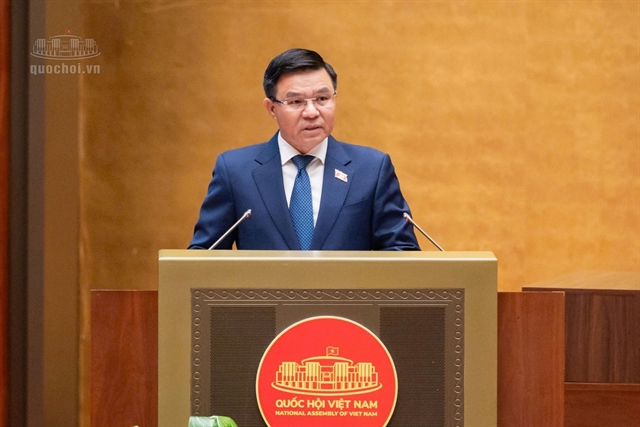
| Minister of Industry and Trade Lê Mạnh Hùng presents the Government's proposal. — Photos quochoi.vn |
HÀ NỘI — A draft law proposes abolishing or simplifying 20 administrative procedures and business conditions across four commercial laws, while introducing new rules to address competition on digital platforms and strengthen consumer data protection.
The draft law amending and supplementing several articles of the Law on Commerce, the Law on Competition, the Law on Foreign Trade Management and the Law on Protection of Consumer Rights was presented to the National Assembly on Tuesday during its second session.
Presenting the Government's proposal, Minister of Industry and Trade Lê Mạnh Hùng said the amendments aimed to institutionalise the Party's policies, improve consistency across the legal system, align domestic regulations with international commitments and reduce administrative burdens on businesses and citizens.
The draft also seeks to expand decentralisation and delegation of authority to improve the investment and business environment and support the country's ambition for double-digit economic growth.
Commercial law provisions to be streamlined
Under the proposed amendments to the 2005 Law on Commerce, provisions governing contracts, legal remedies and dispute resolution would be removed in favour of applying the 2015 Civil Code consistently.
The Ministry of Industry and Trade said overlapping provisions in the two laws, including those governing penalties for contractual breaches and limitation periods for lawsuits, has complicated commercial dispute resolution.
The proposed changes aim to eliminate legal inconsistencies and reduce compliance costs for businesses. Transitional provisions would also cover contracts signed before the revised law takes effect.
The draft would also remove specific business conditions for commercial inspection services, shifting from a pre-licensing approach to post-inspection oversight.
Under the proposed mechanism, businesses would no longer need to meet specific conditions before providing inspection services but would remain responsible for their inspection results and certificates and be required to retain records for subsequent audits.
Digital platforms face closer competition scrutiny
|
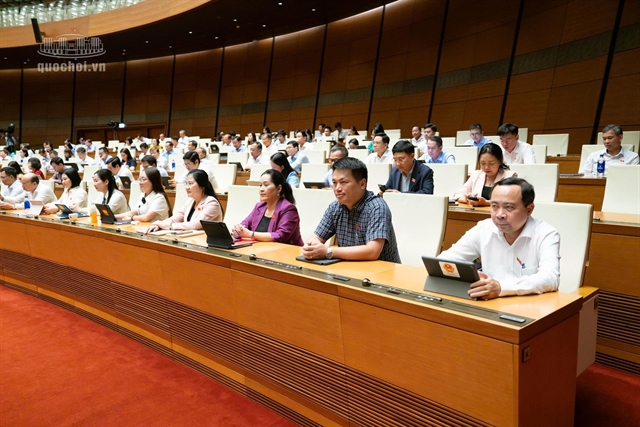
| Delegates attending the session. |
Digital platforms face closer competition scrutiny
Amendments to the 2018 Law on Competition would strengthen oversight of anti-competitive practices, abuse of dominant market positions and unfair competition in the digital economy.
The draft proposes taking account of factors including data holdings, user numbers, network effects, switching costs and digital ecosystems when assessing a company's market power. These factors can give digital platforms significant competitive advantages even when their services are offered free of charge, the ministry said.
For example, a platform with a large user base and extensive data could create barriers to entry for competitors, even if its share of the market measured by revenue remained relatively small.
Existing regulations do not fully reflect these characteristics, according to the ministry. The proposed changes aim to give regulatory authorities a stronger basis for assessing market power and addressing anti-competitive conduct.
Import-export authority to be decentralised
Under the proposed amendments to the Law on Foreign Trade Management, two administrative procedures would be abolished, nine groups of procedures simplified, and authority decentralised or delegated in five areas.
The draft would authorise provincial-level People's Committees to handle certain matters involving certificates of origin (C/Os), processing, transit and specific import-export activities.
The changes aim to reduce reliance on central authorities, shorten application processing times and give local governments and businesses greater autonomy. However, rules on determining goods' origin must remain consistent nationwide to ensure compliance with free trade agreements (FTAs).
Consumer control over personal information to be strengthened
Proposed amendments to the Law on Protection of Consumers' Rights focus on the collection and use of personal information and the decentralisation of state management responsibilities to local authorities.
The changes would give consumers greater control over the purposes for and scope within which their personal information is collected and used.
The draft also revises certain regulatory powers and mechanisms for supporting consumer dispute resolution to align with the two-tier local government structure.
Head of the National Assembly's Committee for Economic and Financial Affairs Phan Văn Mãi acknowledged the need to amend the four laws to remove legal bottlenecks, streamline administrative procedures and support the development of the digital economy.
However, the committee recommended further scrutiny of provisions that could have significant implications for businesses, calling for amendments to focus on clearly identified issues, he said. — VNS
Economy
 Economy
.jpg) Economy
 Economy
 Economy
 Economy
 Economy
 Economy
 Economy
 Economy
 Economy
 Economy
 Economy
 Economy
.jpg) Economy