 Economy

Thales seeks deeper technology and industrial ties with Việt Nam
1.
|
|
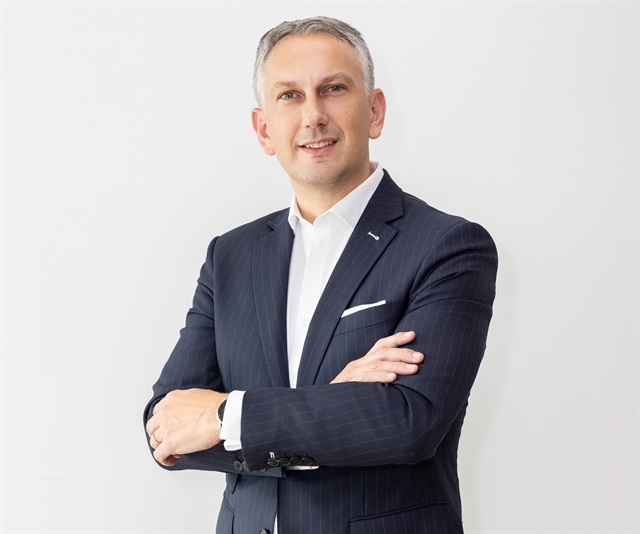
| Nicolas Bernardin, country director for Việt Nam at Thales. — Photo courtesy of Thales |
As Việt Nam steps up efforts to develop its domestic technology capabilities, accelerate digital transformation and strengthen its industrial base, cooperation with international technology leaders is becoming increasingly important.
In an interview with Việt Nam News reporter Vũ Hoa, Nicolas Bernardin, country director for Việt Nam at Thales, discusses how the Franco-Vietnamese Comprehensive Strategic Partnership can translate into tangible cooperation in science, technology and industrial development.
How can the Franco-Vietnamese Comprehensive Strategic Partnership translate into tangible cooperation in technology and industrial development, and what role can Thales play in this process?
The Franco-Vietnamese Comprehensive Strategic Partnership offers a major opportunity to deepen our cooperation, particularly in science, technology, innovation and industrial development.
This ambition is closely aligned with Việt Nam's Resolution 57, which identifies science, technology and innovation as key drivers of the country's future growth, based on developing indigenous capabilities and international partnerships.
Thales is a global technology leader in defence, aerospace and cyber and digital fields, with over 85,000 employees worldwide and annual revenues exceeding 22 billion euros (US$24.7 billion). We invest approximately 4.5 billion euros annually in research and development, particularly in strategic technologies such as AI, cybersecurity and quantum technologies.
With more than 30 years of presence in Việt Nam, our ambition goes beyond supplying advanced technologies. We aim to build long-term industrial partnerships that strengthen local capabilities, foster innovation and support Việt Nam's technological development.
Our recent agreements with Vietjet and GTEL illustrate this approach. With Vietjet, we are expanding our aviation partnership into digital aviation, AI and cybersecurity. With GTEL, we are exploring cooperation in advanced technologies, including AI and quantum technologies, with potential applications in security and airspace management.
Our objective is to combine Thales' global technological expertise with Vietnamese industrial capabilities and talent, contributing to the country's long-term development ambitions.
As Việt Nam accelerates its digital transformation, how can Thales help strengthen local technological capabilities while fostering long-term cooperation between French and Vietnamese partners?
Việt Nam's National Digital Transformation Strategy for 2026-30 sets ambitious objectives for developing domestic technological capabilities, strengthening digital infrastructure and accelerating the adoption of advanced technologies.
As Việt Nam becomes increasingly digitalised, trust, cybersecurity and the resilience of critical infrastructure will be essential to ensuring a secure and sustainable transformation. These are areas where Thales brings decades of extensive expertise, combining cybersecurity, data protection and secure connectivity.
In Việt Nam, Thales already supports this transformation through longstanding relationships with leading telecommunications operators and financial institutions.
Our cooperation with VNPT covers areas such as secure connectivity, satellite communications, digital identity and cybersecurity, contributing to the development of trusted and resilient digital infrastructure.
More recently, our partnership with GTEL has opened new opportunities in cybersecurity and advanced technologies, including AI and quantum technologies, with potential applications in the protection of critical infrastructure and public security.
Our ambition is to help Việt Nam build a digital economy that is not only more connected and advanced, but also trusted, secure and resilient.
|
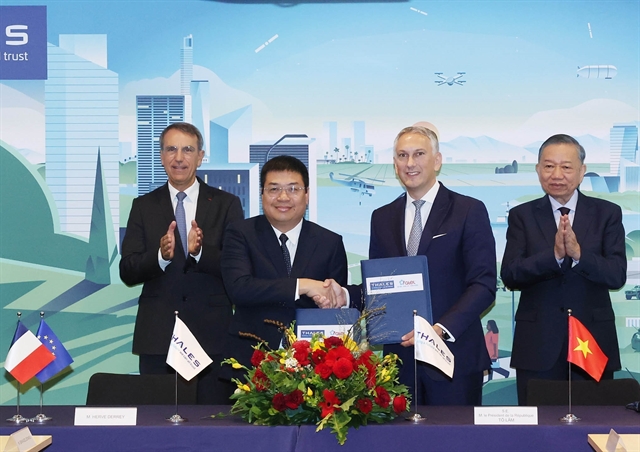
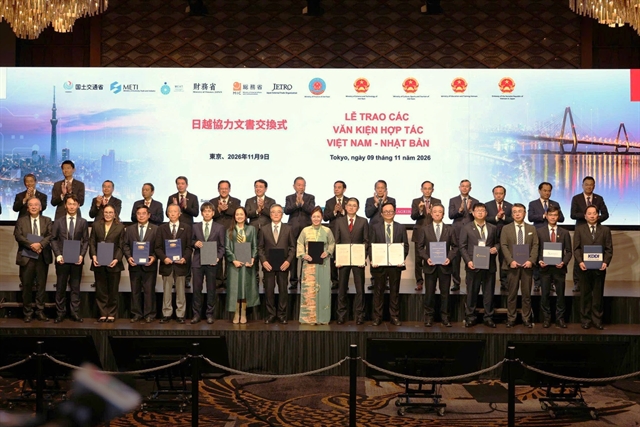
| Vietnamese Party General Secretary and President Tô Lâm witnessed the signing of a cooperation agreement between Thales and Việt Nam’s GTEL. — VNA/VNS Photo |
What do Thales’ collaborations with Vietjet and GTEL demonstrate about the potential for Franco-Vietnamese cooperation, and how could these partnerships pave the way for collaboration in other strategic sectors?
Our recent partnerships with Vietjet and GTEL illustrate how Franco-Vietnamese cooperation is evolving beyond traditional activities towards advanced digital technologies, innovation and new industrial opportunities.
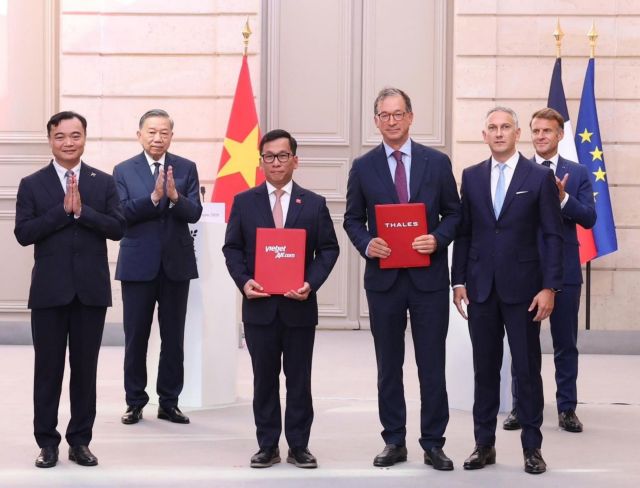
With Vietjet, we are expanding an established aviation relationship. In September, we signed a multi-year Repair-By-The-Hour contract to support the avionics maintenance of its A320 and A330 fleets, improving aircraft availability and operational efficiency. We also signed an MoU to explore cooperation in digital aviation, including AI, predictive maintenance, connected aircraft services and cybersecurity.
Our partnership with GTEL opens new opportunities in emerging technologies, particularly AI, quantum technologies and cybersecurity, with potential applications in low-altitude airspace management, counter-drone systems, public security and the protection of critical infrastructure.
What makes these partnerships particularly promising is the opportunity to combine Thales' global technological expertise with the local knowledge and capabilities of Vietnamese partners, fostering joint innovation and the development of new solutions adapted to Việt Nam's demand.
We see opportunities to extend this approach to other strategic sectors in Việt Nam, including space, telecommunications, UAV management and critical infrastructure protection.
|
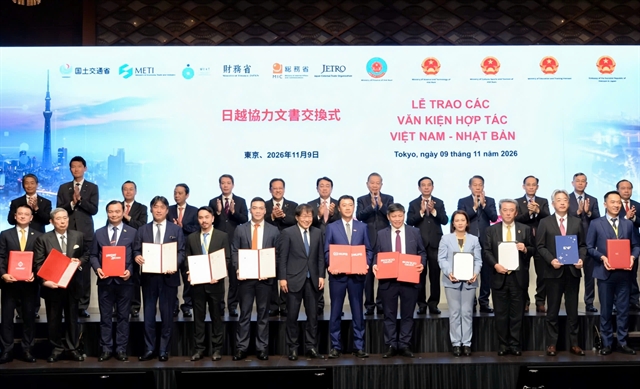
| The signing ceremony between Thales and Vietjet, witnessed by Vietnamese Party General Secretary and President Tô Lâm (second from left). — Photo courtesy of Thales |
With AI and cybersecurity becoming increasingly critical to national competitiveness, how can Thales contribute to Việt Nam’s digital transformation and the resilience of its critical infrastructure?
AI, cybersecurity and quantum technologies are transforming industries and creating new opportunities for innovation. They are also at the heart of Thales' technology strategy, supported by significant investments in research and development.
One of Thales' key differentiators is our expertise in AI for critical systems. Unlike conventional AI applications, AI used in sectors such as aviation, defence or transportation must meet the highest standards of reliability, safety and security. Our approach is to develop trusted, secure and explainable AI, designed to support human decision-making while keeping people in control of critical operations.
Through cortAIx, our dedicated AI accelerator, Thales brings together research, engineering and industrial expertise to develop AI solutions for these demanding environments. For instance, in air traffic management and airports, AI can help optimise traffic flows, anticipate disruptions and improve operational efficiency.
Cybersecurity is another major strength of Thales, with more than 6,000 cybersecurity experts worldwide and solutions protecting over 30,000 organisations. Beyond data encryption, digital identity and access management, Thales is also investing in post-quantum cryptography to anticipate future security challenges.
For Việt Nam, these capabilities are particularly relevant as the country accelerates its digital transformation and modernises its infrastructure
How does Thales envision its long-term role in Việt Nam, particularly in developing local talent, fostering innovation and supporting the country’s industrial ambitions?
With more than 30 years of presence in Việt Nam, Thales is committed to being a long-term technology and industrial partner, supporting the country's ambitions towards 2045.
An important milestone was the visit of Vietnamese Party General Secretary and President Tô Lâm to the Thales Research and Technology centre in Palaiseau, near Paris, France in September. We were honoured to welcome the Vietnamese delegation and showcase some of our latest innovations in AI, quantum technologies, semiconductors and other advanced technologies.
This visit highlighted the strong potential for deeper scientific, technological and industrial cooperation between our two countries.
For Thales, developing local talent is just as important as bringing advanced technologies to Việt Nam. This commitment is reflected in our industrial and academic partnerships. In the space sector, our cooperation with the Vietnam Space Committee and OSB Group aims to promote education, training and innovation in satellite technologies, helping develop Việt Nam's domestic expertise in this strategic field.
We are also strongly committed to STEM (Science, Technology, Engineering and Mathematics) education to inspire the next generation of engineers and scientists.
One particularly inspiring example is the achievement of a young Vietnamese student who won a silver medal at the 2025 International Physics Olympiad in Paris and was also selected as one of only five students worldwide to receive the Thales STEM for All Award. This recognition celebrates outstanding scientific talent and provides mentoring and financial support to help young people pursue their ambitions.
Looking ahead, our ambition is not only to bring the best of Thales' technologies to Việt Nam, but also to help develop the talent, expertise and industrial ecosystem that will shape the country's technological future. — VNS
Economy
 Economy
 Economy
 Economy
 Economy
 Economy
 Economy
 Economy
 Economy
 Economy
 Economy
 Economy
 Economy
 Economy
 Economy