 Economy

Deputy PM calls for price stability through the end of 2026, tighter market controls
1.
|
|
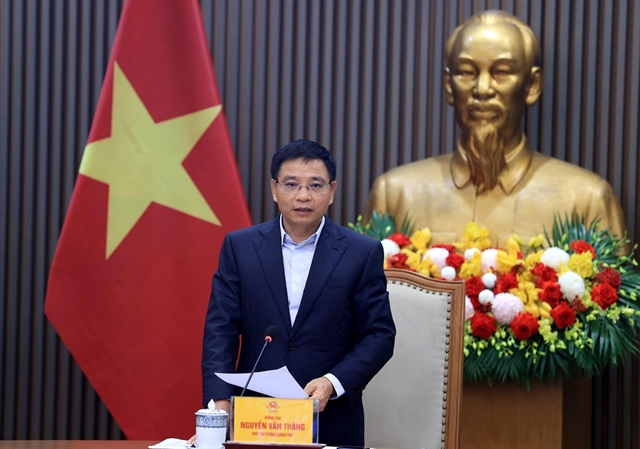
| Deputy Prime Minister Nguyễn Văn Thắng speaks at a meeting of the Steering Committee for Price Management in Hà Nội on Monday. — VNA/VNS Photos |
HÀ NỘI — Việt Nam will maintain price stability for State-managed goods and services through the end of 2026 and step up controls to prevent unusual price fluctuations, particularly during the year-end period and the Lunar New Year (Tết) holiday, Deputy Prime Minister Nguyễn Văn Thắng said on Monday.
Thắng, who heads the Government's Steering Committee for Price Management, made the statement at a meeting in Hà Nội reviewing price management efforts in October and the first 10 months of the year and setting priorities for the remainder of 2026. The meeting was also connected online with 34 provinces and cities nationwide.
Controlling inflation and maintaining macroeconomic stability remained overarching government priorities, supported by coordinated fiscal and monetary policies, tax and fee reductions, electricity price adjustments and measures to lower production costs, he said.
He added that social welfare spending had reached approximately VNĐ250 trillion (US$9.5 billion) in the first 10 months of the year.
Thắng also commended 20 localities for keeping their CPI increases below 4.5 per cent, the inflation ceiling approved by the National Assembly, but cautioned against complacency in price monitoring.
He instructed ministries, agencies and local authorities to closely monitor domestic and international supply, demand and price developments, particularly for goods with a significant weighting in the CPI and essential production inputs such as petroleum, food, fertilisers, animal feed and construction materials.
Authorities must promptly assess factors that could trigger unusual price movements and prepare appropriate response measures, he said.
For goods and services subject to state pricing, adjustments must follow an appropriate roadmap, with careful consideration of their necessity, timing, scale, impact on inflation and consumers' ability to pay. Price adjustments should not be concentrated toward the end of the year or around the Tết holiday, he added.
Thắng also called for closer monitoring of input costs and retail prices following policy changes, including fuel tax cuts and electricity price reductions, to ensure that the benefits are passed on to consumers and businesses.
He urged authorities to strengthen communication on market supply, demand and prices, as well as government price-management policies, to ensure transparency and prevent public anxiety or expectations of further price increases.
Inspections should also be intensified to ensure compliance with regulations on price declarations and postings, particularly in essential goods markets and sectors prone to sharp fluctuations during the year-end period and Tết.
Authorities must promptly detect and strictly penalise speculation, hoarding, price manipulation and unreasonable price increases that exploit market fluctuations or natural disasters, he said.
Regarding support policies for 2027, Thắng instructed relevant agencies to assess the effectiveness of existing tax and fee exemptions, reductions and deferrals, and propose extensions or adjustments where necessary to ensure continued support for businesses and households without policy gaps.
For measures falling under the National Assembly's authority, ministries must urgently conduct impact assessments and submit proposals to the Government for timely consideration and submission to the legislature.
He also called on localities whose CPI increases remained below the national average to maintain vigilance and prepare for potential inflationary pressures from stronger consumer demand in the final two months of the year and during the Tết holiday.
|
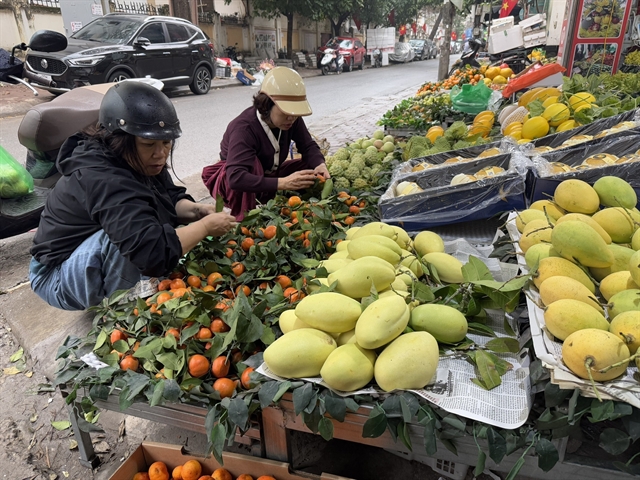
| People shop for fruits at a market in Hà Nội. Domestic prices had risen steadily during the first five months of 2026 before easing in June and July. |
Deputy Minister of Finance Lê Tấn Cận told the meeting that domestic prices had risen steadily during the first five months of 2026 before easing in June and July, then rebounding from August through October. The increases were driven mainly by seasonal factors, movements in global fuel prices and higher input costs.
Consumer price index (CPI) rose 0.2 per cent in October from the previous month, largely due to higher domestic fuel prices in line with global trends. Average CPI increased 4.57 per cent year on year in the first 10 months, while core inflation rose 4.24 per cent.
The Government has introduced a range of measures to ease inflationary pressure, including ensuring supplies of essential goods, stabilising markets, reducing or exempting taxes and fees, and supporting production and business activities.
From November 1, the average retail electricity price was cut by 2 per cent, while the special consumption tax on gasoline was reduced to zero through March 31, 2027.
The Ministry of Finance expects prices to remain under pressure in the final two months of the year due to stronger consumer demand, fluctuations in energy, raw material and food prices, and demand for construction materials linked to public investment.
However, fuel tax reductions, lower electricity prices and measures to secure the supply of goods are expected to help contain price increases, it said.
The ministry has revised its forecast for average inflation in 2026 to 4.5 per cent-4.7 per cent, a range also projected by the State Bank of Vietnam. International organisations have forecast inflation of between 4.2 per cent and 5.5 per cent. — VNS
Economy
 Economy
 Economy
 Economy
 Economy
 Economy
 Economy
 Economy
 Economy
 Economy
 Economy
 Economy
 Economy
 Economy
 Economy