 Society
Marine tourism driving force in Việt Nam’s ambition to become strong maritime nation
1.
|
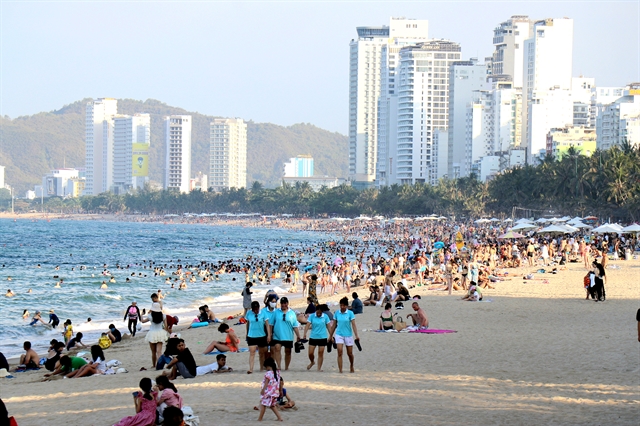
| Tourists at the beach in Nha Trang in the coastal south-central province of Khánh Hòa. — VNA/VNS Photo Nguyễn Thành |
By Nguyễn Hằng
HÀ NỘI — With its long coastline, numerous coastal cities, cultural heritage sites, seaports and international airports, Việt Nam is well placed to develop marine tourism into a major driver of economic growth, supporting its ambition to become a strong maritime nation under Resolution No. 20-NQ/TW.
However, to fully realise the potential, the tourism sector needs to move beyond developing individual destinations towards establishing highly interconnected marine tourism clusters.
Marine tourism is emerging as one of the key growth drivers of Việt Nam’s tourism industry, making a significant contribution to revenue, generating employment and stimulating a wide range of related service sectors.
Deputy Minister of Culture, Sports and Tourism Hồ An Phong said the country has distinctive advantages in developing marine tourism, including its extensive coastline, natural landscapes, cultural heritage and communities with unique identities.
In addition, the network of coastal cities, seaports and international airports provides a favourable foundation for expanding connectivity and attracting international visitors.
In practice, marine tourism in Việt Nam has entered a period of large-scale development. Destinations such as Khánh Hòa, Phú Quốc, Đà Nẵng and Hạ Long are emerging as major hubs attracting both domestic and international visitors.
Phong also said the coastal central province of Khánh Hòa alone is expected to welcome around 23.7 million visitors this year, with tourism revenue estimated at more than VNĐ80.2 trillion (approximately US$3 billion). In 2024, the province's tourism revenue stood at around $2 billion.
Marine tourism currently accounts for approximately 70 per cent of the country's total tourist arrivals and tourism revenue, Phong said.
Beyond generating direct income, the sector also drives around 16 other service industries, ranging from transport, telecommunications, finance and real estate to trade and food services.
This demonstrates that developing marine tourism is important not only for the tourism industry itself but also for generating wider economic benefits, particularly in coastal localities.
As Việt Nam pursues its ambition to become a strong maritime nation, making effective use of its marine tourism potential will help expand the country's economic development space, enhance the competitiveness of localities and increase the contribution of the marine economy.
Interconnected marine tourism clusters
Despite significant achievements, Phong said Việt Nam's marine tourism sector still had considerable room for growth.
One of its current limitations is that, although the country has developed numerous dynamic coastal cities and destinations, it has yet to establish a comprehensive network of highly interconnected marine tourism clusters.
"Marine tourism products are becoming increasingly diverse, but high-value-added offerings remain in short supply," he added.
Infrastructure development also remains uneven in some localities and does not yet fully meet the requirements of large-scale marine tourism hubs.
The private sector has invested in a number of major tourism complexes, but the focus now needs to shift from developing individual large-scale projects towards building integrated tourism ecosystems.
Phong said that the future direction should not be to spread marine tourism development too thinly.
“Instead, Việt Nam should identify areas with the potential to become growth poles and develop interconnected marine tourism clusters with integrated infrastructure, products and services.”
Alongside spatial planning, investment in connectivity infrastructure and breakthroughs in tourism products will be key priorities.
|
|
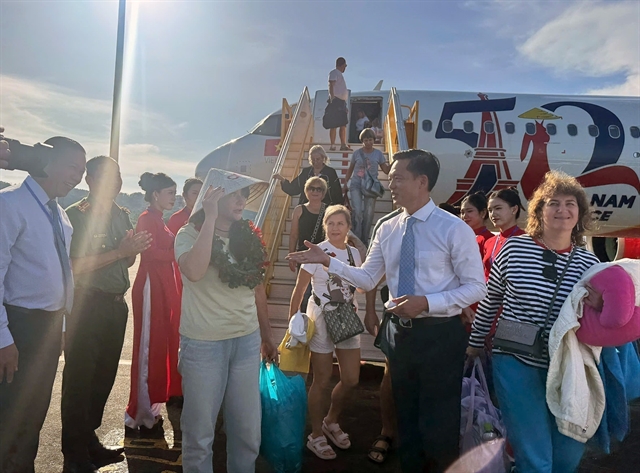
| Russian tourists at Phú Quốc International Airport. — VNA/VNS Photo |
Tapping new markets
International markets are opening up significant opportunities for Việt Nam's marine tourism sector.
According to Phong, the source markets for visitors to Việt Nam are becoming increasingly diverse, with Northeast Asia continuing to account for a large share.
Alongside traditional markets such as China and the Republic of Korea, the number of Russian visitors is recovering and growing strongly.
“Việt Nam is also stepping up promotion in India through Bollywood cinema, while expanding tourism promotion activities in Southeast Asian markets.”
The ministry has intensified promotional activities at bilateral and multilateral forums and on international online platforms. It has also worked with businesses and relevant organisations to mobilise resources for tourism development.
However, Phong said a key priority was to shift the focus from pursuing visitor numbers towards improving visitor quality, spending levels and length of stay.
Rather than simply attracting visitors for short sightseeing trips, destinations need to develop more resort, cultural experience, water sports, culinary and entertainment products to encourage longer stays and higher spending.
Another priority is to establish distinctive brands for individual marine tourism hubs and clusters.
Phong cited Bali in Indonesia as an example, where the destination's image is closely associated with signature offerings such as surfing, cuisine and fairs.
He noted that Việt Nam attracted considerable online search interest in the Asian region.
However, when people searched for specific destinations and tourist cities, many Vietnamese localities still lacked the brand recognition enjoyed by places such as Phuket in Thailand and Bali in Indonesia.
"Therefore, efforts to promote Việt Nam's image need to go hand in hand with strategies to build individual destination brands, based on distinctive tourism products with international competitiveness."
|
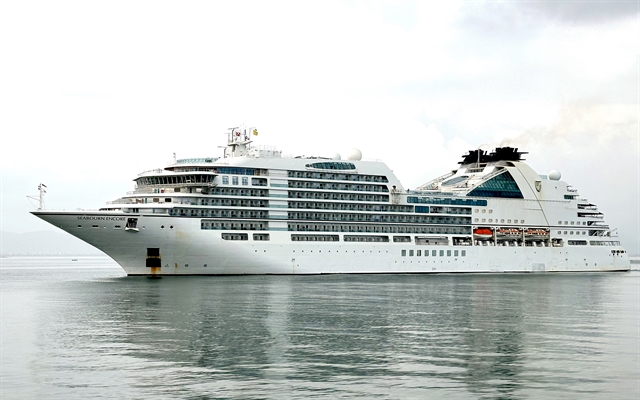
| The cruise ship Seabourn Encore docks at Tiên Sa Port, in Đà Nẵng City. — VNA/VNS Photo Lê Lâm |
Cruise tourism
One of the development areas highlighted by Phong was the cruise tourism market.
With its favourable geographical location and extensive network of seaports, Việt Nam is well positioned to attract international cruise routes.
However, developing this market will require investment in dedicated port infrastructure for cruise ships, alongside the establishment of a comprehensive range of onshore consumer services.
The objective should not simply be to bring cruise ships into port, but also to create sufficiently attractive experiences to encourage passengers to explore local destinations, shop, enjoy local cuisine and use local services.
Việt Nam should also make better use of its potential for year-round marine tourism.
Phong cited Khánh Hòa, which enjoys around 300 days of sunshine annually, providing favourable conditions for developing resort and marine experience products.
However, tourism development remains affected by seasonality.
The international tourist season runs from October to April, coinciding with the peak season for domestic visitors.
Phong also said solutions are needed to shorten the low season, diversify tourism products and maintain stable tourism activity throughout the year.
Amid increasingly intense competition between destinations, international cooperation plays an important role in expanding markets, attracting visitors and enhancing the competitiveness of Việt Nam's marine tourism sector.
Phong said Việt Nam needed to continue stepping up promotion at bilateral and multilateral forums and on international online platforms, while working closely with businesses and relevant organisations to mobilise resources for tourism development.
Experience from hosting APEC 2017 in the coastal central city of Đà Nẵng showed that a major international event could generate lasting promotional benefits if combined with communications campaigns, destination marketing and stronger air connectivity.
Preparations for APEC 2027 in Phú Quốc also present an opportunity to promote Việt Nam's image, particularly its marine tourism hubs, to the international business community and overseas visitors.
The Ministry of Culture, Sports and Tourism has also drawn up plans to promote APEC 2027 at a trade fair in Germany; and at the World Travel Market (WTM) that is scheduled to take place in London this November.
Phong said the key is to establish clear strategic directions, unlock resources and strengthen coordination and shared responsibility among stakeholders in developing marine tourism.
With its existing advantages, marine tourism can make an increasingly significant contribution to economic growth and enhance Việt Nam's standing on the international tourism map.
However, turning this potential into tangible strength will require the country to move beyond developing individual destinations and towards building highly interconnected marine tourism ecosystems characterised by quality and strong competitiveness.
This is also the path towards unlocking marine tourism's role as a strategic driver in Việt Nam's ambition to become a strong maritime nation. — VNS
Society
 Society
 Society
 Society
 Society
 Society
 Society
 Society
 Society
 Society
 Society
 Society
 Society
 Society
 Society