 Opinion
Mutual trust, commitment to cooperation tie Việt Nam and Japan: expert
1.
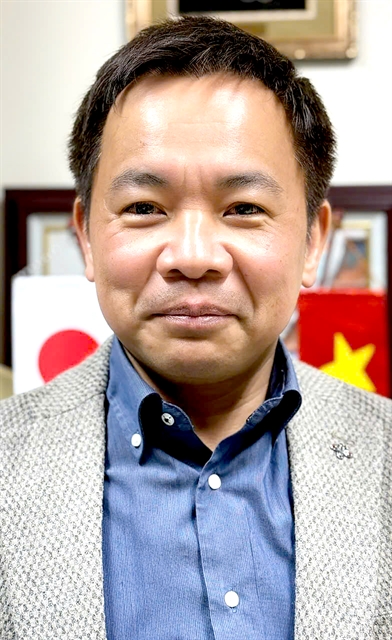 |
| Professor Trần Đăng Xuân from Hiroshima University in Japan. Photos courtesy of Professor Trần Đăng Xuân |
After 28 years studying and working in Japan, Professor Trần Đăng Xuân from Hiroshima University, who is also president of the Vietnam–Japan Expert Association, works to promote cooperation between Japanese and Vietnamese universities, research institutes, enterprises and management agencies.
In an interview with Việt Nam News reporter Nguyễn Khánh Chi during the ongoing official visit to Japan by Party General Secretary and President Tô Lâm from November 8 to 11, he highlights bilateral cooperation in science, technology and education.
In your opinion, what is the most important factor behind the sustainable development of Việt Nam-Japan relations over the past 50 years?
In my view, the most important factors are mutual trust, mutual respect and a shared commitment to long-term cooperation. The relationship between the two countries has been nurtured not only through diplomacy, but also through close connections among people, universities, businesses and communities of experts.
Japan values credibility, quality and long-term commitment, while Việt Nam offers a dynamic workforce, a growing market and a strong aspiration for progress. In the new era, the two countries need to move beyond investment, trade and workforce training toward jointly conducting research, co-developing technologies, sharing intellectual property and commercialising new innovations together. This will serve as the foundation for deeper and more sustainable cooperation.
What lessons from Japan can Việt Nam learn in developing science and technology, and especially biotechnology?
The most important lesson is not how much money is invested, but how the research system is organised, how a scientific environment is built and how talent is used. Japan places great emphasis on rigorous and ethical research, perseverance in pursuing long-term goals, and connecting fundamental research with practical applications.
Việt Nam needs to grant genuine autonomy to scientists, concentrate resources on strong research groups capable of achieving breakthroughs and establish mechanisms to bring laboratory results into production, while ensuring fair benefits for both scientists and businesses.
In agricultural biotechnology, studies on yield-related rice genes such as Gn1a, APO1 and other valuable genetic resources open opportunities to develop new rice varieties with higher productivity, better quality and greater economic value. However, this potential must be validated through breeding research and field trials.
Scientists who are truly capable of creating breakthrough technologies are often more concerned with the research environment, outstanding collaborators and opportunities to transform ideas into products than with financial compensation alone.
How do you assess the potential for Việt Nam-Japan cooperation in AI, semiconductors and digital transformation?
The potential is enormous. Japan has strengths in materials, equipment, manufacturing technologies, industrial management and a well-established business ecosystem. Việt Nam, meanwhile, benefits from a young workforce, strong learning capabilities and a growing demand for digital transformation.
In the semiconductor sector, Việt Nam can become more deeply integrated into the global value chain if it invests simultaneously in technical talent and research capacity. In the field of AI, alongside building core technological capabilities, Việt Nam should prioritise practical applications in industrial production, agriculture, healthcare, education and public administration.
Hiroshima University is promoting international education programmes, including cooperation with the University of Idaho in the US to train talent for the semiconductor industry and other advanced technologies. Cooperation between Việt Nam and Japan should evolve from primarily sending workers to Japan toward jointly training engineers, establishing laboratories, conducting research and development, and ultimately creating innovation centres in Việt Nam.
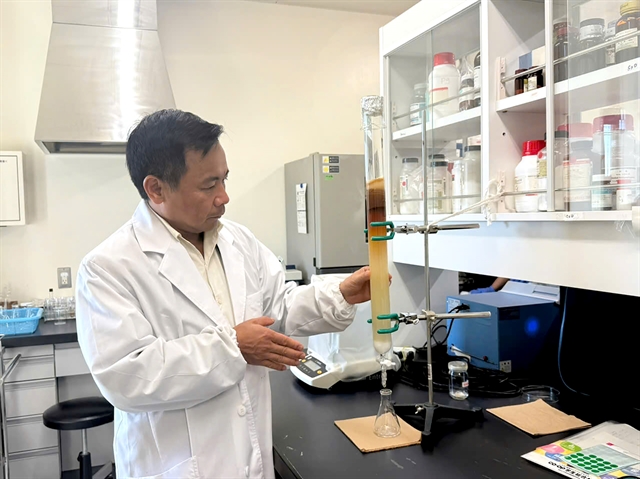 |
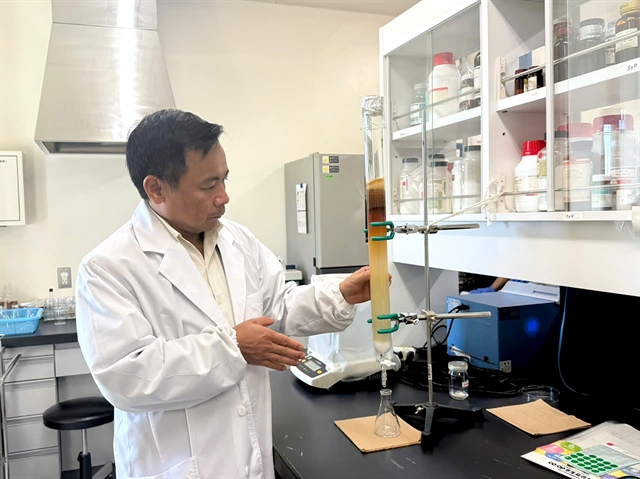
| Professor Trần Đăng Xuân conducting his research in a lab. |
How should Việt Nam prepare its workforce to keep pace with Japan’s cutting-edge technology industries?
Việt Nam needs to shift its focus from training a sufficient number of workers to developing a workforce capable of mastering, improving and innovating technologies. The foundation should be strong education in mathematics, natural sciences, foreign languages, information technology and independent thinking, combined with hands-on experience in laboratories and businesses.
I would particularly emphasise attracting talented Vietnamese professionals who are directly involved in industrial production in Japan and other developed countries, including chief engineers, technology specialists, production line managers, designers, quality control experts, automation engineers and product development professionals.
They understand how technology operates on an industrial scale, how quality management works, how production is organised and how products are brought to market. This is an invaluable resource for shortening the gap between technology adoption and technology mastery.
Of course, scientists and researchers working in laboratories continue to play an essential role in generating new knowledge and technologies. What Việt Nam needs is to connect these two groups with domestic enterprises to form teams capable of conducting research, development, production and commercialisation of products.
To attract and retain such talent over the long term, the key factors are not only financial incentives but also a transparent working environment, genuine autonomy, capable colleagues and opportunities to carry out meaningful projects. Việt Nam should not limit itself to training workers merely to participate in global production chains. Instead, it should aim to train and attract individuals who can create and master technologies themselves.
How would you assess the current level of cooperation between universities and research institutes in Việt Nam and Japan?
Cooperation has developed significantly through student exchanges, master’s and doctoral training programmes, scholarships and joint research initiatives. However, in terms of the number of technologies developed, transferred and commercialised, I believe the level of cooperation still falls short of the full potential of both countries.
Some programmes remain largely focused on memoranda of understanding, delegation exchanges or collaboration among a small number of individuals. There is a need to move toward long-term joint research projects involving businesses, shared laboratories, patents and clear technology transfer mechanisms.
At Hiroshima University, we are actively promoting cooperation with Vietnamese educational and research institutions in areas ranging from doctoral training, agriculture and biotechnology to the development of talent for emerging technologies. The most important measure of success is not how many agreements are signed, but how many talented people are trained, how many new technologies are created and what practical value is delivered to society.
Since October 2024, Hiroshima University has established the Vietnam Center at Thái Nguyên University of Agriculture and Forestry to deliver a doctoral education programme in Việt Nam. Doctoral candidates are jointly supervised by faculty members from both universities, and graduates are awarded degrees from the former.
In addition, Hiroshima University and the University of Idaho (USA) have been jointly implementing a semiconductor engineering training programme in Việt Nam since October 2026. The programme is expected to attract a large number of highly motivated and promising trainees. VNS
Opinion
 Opinion
 Opinion
 Opinion
 Opinion
 Opinion
 Opinion
 Opinion
 Opinion
 Opinion
 Opinion
 Opinion
 Opinion
 Opinion
 Opinion