 Opinion

Vietnamese shooters vie for medals at Doha world championship
1.
|
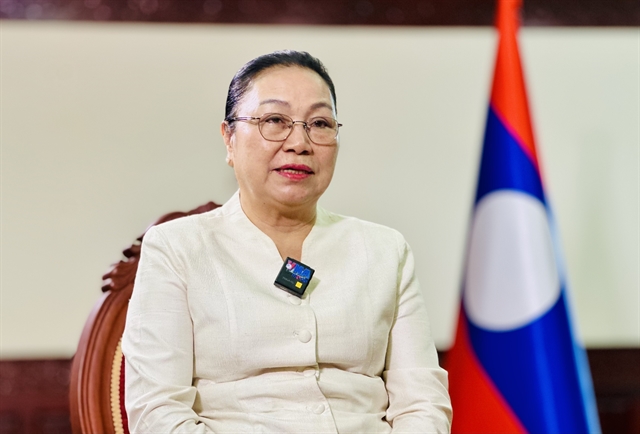
| Lao Ambassador to Việt Nam Khamphao Ernthavanh. — VNA/VNS Photo Việt Đức |
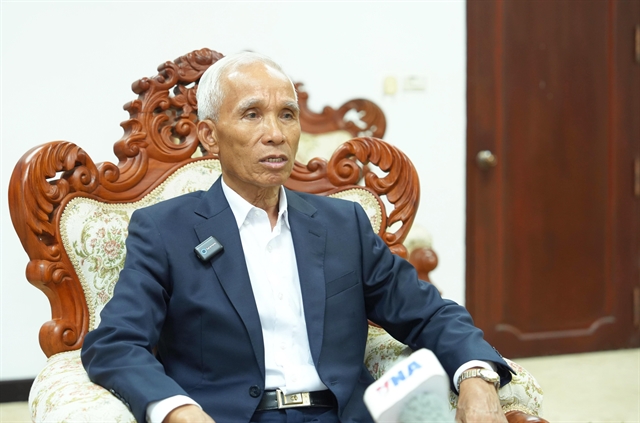
On the occasion of Lao National Assembly President Sonexay Siphandone’s official visit to Việt Nam, Lao Ambassador Khamphao Ernthavanh spoke to the Vietnam News Agency about its significance and prospects for parliamentary cooperation between the two countries.
How do you assess the significance and importance of Lao National Assembly President Sonexay Siphandone's official visit to Việt Nam?
I firmly believe that the official visit by the President of the National Assembly of the Lao People's Democratic Republic, Sonexay Siphandone, is of great significance. It reflects the Lao Party, State and National Assembly's special regard for consolidating, nurturing and developing the great friendship, special solidarity, comprehensive cooperation and strategic cohesion between Laos and Việt Nam.
In particular, Comrade Sonexay Siphandone was elected President of the 10th Lao National Assembly on October 5, 2026. His visit is therefore especially important in strengthening ties between the legislative leaders of the two countries in this new period. It will lay the groundwork for the effective implementation of existing cooperation agreements while opening up new avenues of collaboration in line with each country's development needs.
I believe the visit will provide an opportunity for the two parliamentary leaders not only to exchange views and review the results of bilateral cooperation but also to agree on specific orientations and measures to improve the quality and effectiveness of parliamentary activities. These include strengthening coordination in law-making, supreme oversight and decision-making on major national issues.
At a time when regional and global developments are increasingly rapid and complex, closer exchanges, experience-sharing and coordination in improving the legal systems of the two countries are particularly important. Such efforts will help establish a solid political, legal and institutional foundation for their respective socio-economic development.
I would also like to emphasise that national assemblies represent the will and aspirations of the people and their right to exercise mastery, while shouldering major responsibilities in legislation, supreme oversight and decisions on important national matters.
Cooperation between the two legislative bodies is therefore significant not only for their institutional operations but also for directly strengthening political trust, deepening the bonds between the two peoples and advancing comprehensive bilateral cooperation.
I am confident that the visit will reaffirm the strong political determination of the two countries' senior leaders and provide fresh impetus for cooperation between the Lao and Vietnamese National Assemblies to become increasingly substantive, in-depth and effective, in keeping with the special relationship between Laos and Việt Nam.
What new milestones and momentum do you expect the visit to generate in promoting cooperation between the two National Assemblies and further deepening Việt Nam–Laos relations?
I expect the visit to mark an important milestone, ushering in a new phase of deeper and more effective cooperation between the Lao and Vietnamese National Assemblies. In my view, we should focus on the following key areas.
First, further consolidating cooperation mechanisms and stepping up exchanges of delegations between the two National Assemblies. Through these activities, the two sides can share experience in organising parliamentary sessions, legislative procedures, reviewing draft laws, conducting question-and-answer sessions and thematic oversight, meeting voters, handling citizens' petitions and complaints, and improving the performance of National Assembly deputies. I highly appreciate the cooperation achieved between the Offices of the National Assemblies of Việt Nam and Laos in recent years. Annual seminars and exchanges between the two agencies have become practical channels of cooperation, enabling their officials and civil servants to share professional experience directly, strengthen their advisory capabilities and improve the support they provide for parliamentary activities.
Second, strengthening legislative cooperation and promoting the implementation of high-level agreements. This is one of the defining features of bilateral parliamentary cooperation. The two National Assemblies should continue sharing experience in drafting, amending and improving their respective legal systems while ensuring consistency between legal provisions and the policies, guidelines and cooperation agreements reached by the two countries. In particular, parliamentary oversight should be further strengthened to monitor, urge and assess the implementation of agreements signed between the two governments, ministries, sectors and localities. This would help identify difficulties and obstacles relating to mechanisms, policies and legislation in a timely manner, enabling the competent authorities to consider and address them.
I believe we need to move beyond exchanging views and reaching agreement on policy orientations to closely monitoring implementation, clearly assigning responsibilities to each agency and assessing the actual effectiveness of cooperative projects. Building on the spirit of special solidarity and high political trust between the two countries, we can translate these strong ties into tangible results that bring practical benefits to their people and businesses.
Third, linking bilateral cooperation with closer coordination at multilateral parliamentary forums. Alongside bilateral engagement, the two National Assemblies should continue working closely together at regional and international parliamentary forums, particularly the Inter-Parliamentary Union (IPU), the ASEAN Inter-Parliamentary Assembly (AIPA), the Asia-Pacific Parliamentary Forum (APPF) and other parliamentary cooperation mechanisms. I consider this a particularly important channel of cooperation. Through multilateral parliamentary forums, the two legislative bodies can not only enhance their respective standing and voices but also contribute actively to promoting ASEAN centrality and building a peaceful, stable and cooperative regional environment.
Fourth, stepping up experience-sharing and improving the capacity and quality of parliamentary personnel in both countries. This is a matter of long-term strategic importance that requires sustained attention. Parliamentary work demands highly qualified officials, researchers, experts and National Assembly deputies with in-depth legal knowledge, strong policy analysis capabilities, oversight skills, technological proficiency and the ability to work in an international environment. The two sides should continue organising exchange programmes, thematic seminars, professional training courses, expert exchanges and short- and long-term training programmes for staff of the National Assembly offices.
These activities should focus on legislative skills, policy analysis and impact assessment, budget oversight, supervision of public investment projects, the organisation of question-and-answer sessions, voter communications and research to support National Assembly deputies. Particular attention should be paid to training young officials, women officials and specialists with in-depth expertise, thereby developing a new generation of personnel capable of meeting the requirements of modernising parliamentary operations in the future.
Fifth, accelerating digital transformation and developing digital parliaments. I believe this represents a new area of cooperation with strategic significance for the two legislative bodies at the present stage. Digital transformation is not simply about introducing computers and software into administrative work. It is a process of reforming how information is organised, managed and processed, how policies are researched, and how the National Assembly performs its legislative, oversight and decision-making functions on major national issues.
The Vietnamese National Assembly has accumulated considerable experience and achieved notable results in applying information technology, developing databases, digitising documents, managing official records and supporting the work of National Assembly deputies. These are valuable lessons that the Lao National Assembly can study and adapt to its own circumstances.
The two sides could expand cooperation in specific areas, including developing digital parliamentary libraries; digitising legal documents and records of parliamentary sessions; establishing electronic document management systems; applying technology to support debate, voting and oversight; developing information platforms for National Assembly deputies; and improving the capacity to search, access and connect information across parliamentary bodies.
They should also explore the application of artificial intelligence (AI) to support legal document searches, compile voter feedback and analyse data for oversight and policy research. However, technological applications must go hand in hand with information safety, cybersecurity, data protection, and the accuracy and transparency of information.
I understand that, under the cooperation framework between the Offices of the Lao and Vietnamese National Assemblies, the two sides have already exchanged experience in developing digital parliamentary libraries, establishing parliamentary television channels and applying information technology to advisory work, staff training, and the management and operation of parliamentary facilities. These practical experiences should be further expanded and enhanced. I hope that, in the coming period, the two National Assemblies will explore more comprehensive digital transformation cooperation programmes, organise expert delegations, training courses and technical exchanges, and help Lao parliamentary officials gain access to modern governance models and approaches. This will support the gradual development of a digital parliament suited to Laos's conditions.
I believe that successful cooperation in this area will not only improve the internal efficiency of the two legislative bodies but also contribute to national digital transformation, including the development of digital government, a digital society and a digital economy in each country. Overall, the visit should help translate the political trust, special solidarity and close bonds between the two countries into concrete cooperation programmes with clear objectives, comprehensive plans and transparent results. This will enable cooperation between the Lao and Vietnamese National Assemblies to develop on an increasingly firm footing, commensurate with the great friendship and special solidarity between the two countries. — VNS
Opinion
 Opinion
 Opinion
 Opinion
 Opinion
 Opinion
 Opinion
 Opinion
 Opinion
 Opinion
 Opinion
 Opinion
 Opinion
 Opinion
 Opinion