 Economy

84 individuals investigated for transnational online frauds
1.
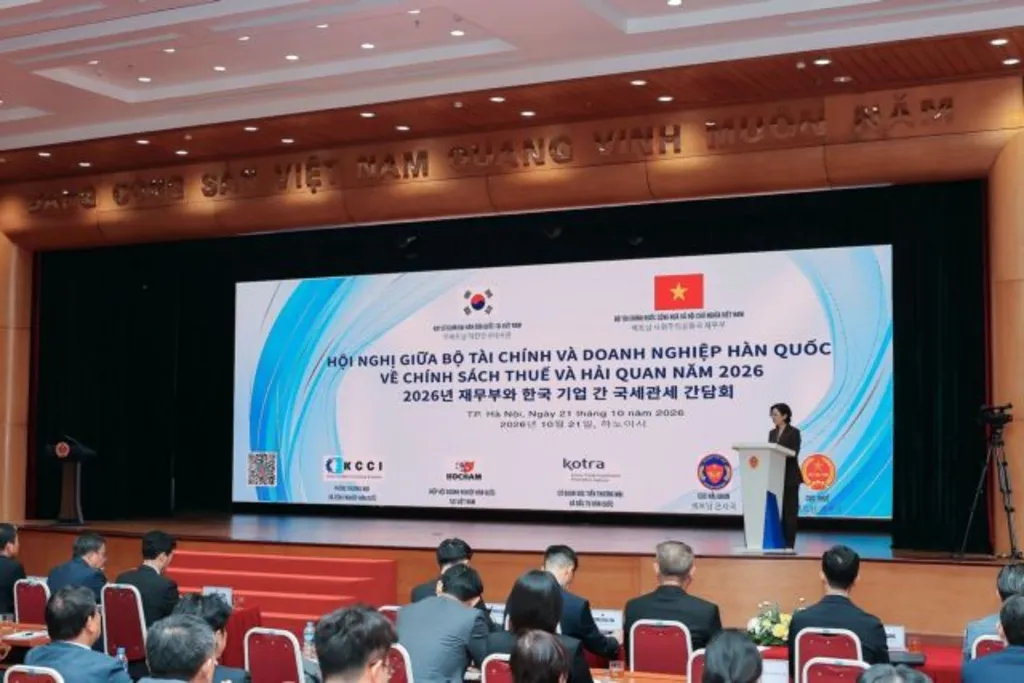 |
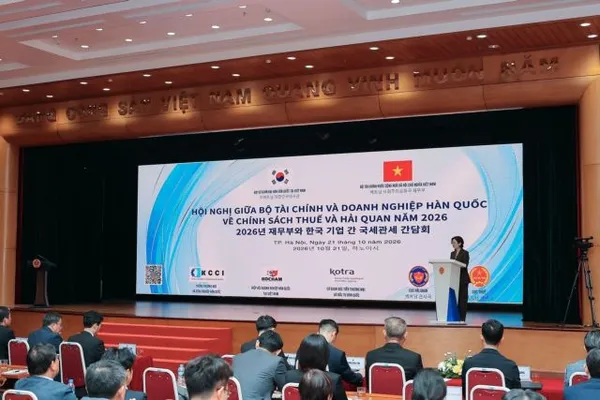
| At the annual dialogue between the Ministry of FInance and South Korean businesses on Wednesday in Hà Nội. — VNA/VNS Photo Phạm Hậu |
HÀ NỘI — Việt Nam will continue to improve its tax and customs policies, streamline administrative procedures and address businesses’ concerns to create a more transparent and predictable investment environment, Deputy Minister of Finance Cao Anh Tuấn said on Wednesday.
Speaking at an annual dialogue between the Ministry of Finance and South Korean businesses in Hà Nội, Tuấn said the ministry would work to ensure that regulations were transparent, stable and aligned with international practices, while responding promptly to business recommendations.
The event, co-organised by the ministry, the Embassy of the Republic of Korea (RoK) in Việt Nam, the Korea Trade-Investment Promotion Agency (KOTRA) and the Korean Chamber of Commerce in Việt Nam (KOCHAM), brought together more than 100 South Korean companies operating in the country.
Tuấn said that the ministry has made effort to improve the legal framework, simplify procedures, accelerate digital transformation and remove obstacles to production and business activities.
Tax authority has met their target of cutting administrative procedure costs and processing time by at least 50 per cent while customs authority have simplified 11 administrative procedures and abolished 21 together with modernisation of electronic tax services and adoption of information technology such as artificial intelligence chatbot to support businesses.
The ministry is also refining regulations on tax administration for related-party transactions, implementing the global minimum tax and providing guidance on double taxation avoidance agreements.
Tuấn said the ministry will strengthen risk-based inspections of transactions between related parties, drawing on centralised data, and expand international cooperation.
South Korean Ambassador to Việt Nam Lee Mi Yon said the annual tax and customs dialogue, held regularly since 2008, had provided an important channel for businesses to raise concerns and discuss practical solutions with regulators with policy discussions translated into concrete measures, Lee said.
Koo Bon Kyung, CEO of KOTRA Southeast Asia and Oceania, welcomed Việt Nam’s efforts to improve the business environment and support foreign-invested enterprises.
The introduction of e-invoices, upgrades to automated customs clearance systems, regular policy dialogues and business support measures had helped improve transparency, speed up administrative processing and reduce the burden on companies, he said.
For businesses, the most meaningful incentive was not simply a tax reduction but an advanced business environment in which technology and investment were protected, and administrative procedures were transparent and predictable, he said.
At the meeting, South Korean businesses raised concerns about the clarity and consistency of investment incentives, intellectual property protection, technology transfer, faster value-added tax refunds and consistent application of tax rules, customs valuation methods and product classification codes.
In response, the ministry said it would continue reviewing business feedback and coordinating with relevant agencies to improve the practicality and effectiveness of tax and customs policies, with the aim of building a more transparent, stable and predictable business environment in Việt Nam.
The RoK is Việt Nam’s largest foreign investor, second in official development assistance and third among Việt Nam’s trading partners. — VNS
Economy
 Economy
 Economy
 Economy
 Economy
 Economy
 Economy
 Economy
 Economy
 Economy
 Economy
 Economy
 Economy
 Economy