 Sci-Tech

"Thai Night Busan 2026" Makes a Grand Return, Connecting Thai Content with Global Partners to Create Business Opportunities and Strengthen Industry Collaboration
1.
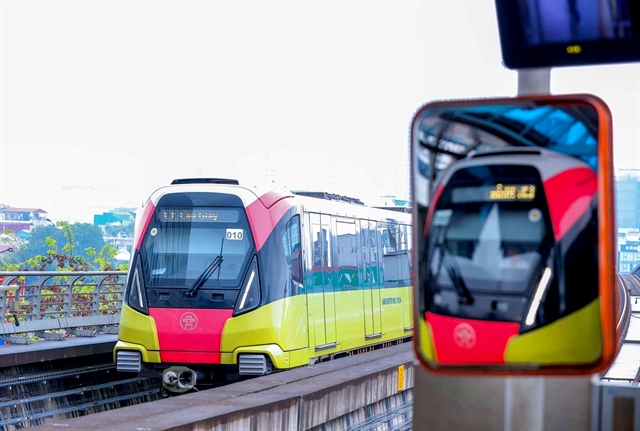 |
| Cát Linh - Hà Đông metro line in Hà Nội. Việt Nam is seeking to develop a dedicated 5G network and a computer-based system to help ensure safe train operations. — VNA/VNS Photo Hoàng Hiếu |
HÀ NỘI — The Ministry of Construction is seeking to develop new technologies for high-speed and urban railways, including a dedicated 5G network and a computer-based system to help ensure safe train operations.
The ministry approved two research and development projects in September, proposed by Viettel Group and Vietnam Posts and Telecommunications Group (VNPT).
The first project, proposed by Viettel, aims to develop a dedicated 5G network for high-speed rail, known as 5G Rail. The system will include a core network and base stations designed to support railway communications.
The network will connect with other railway service and application systems to help form an integrated communications and signalling system.
The project must reach Technology Readiness Level 8 (TRL 8), meaning the system must be fully developed, tested and certified. Its planned outputs include one 5G core network software system and eight base stations.
The network must meet international railway communications standards, support train speeds of up to 350km per hour, and work with both handheld 5G devices and equipment installed on trains. It must also ensure reliable data transmission, fast service connections and low delays.
The second project, proposed by VNPT, aims to develop a computer-based interlocking (CBI) system to control train movements at urban railway stations.
The system will manage signals, track switches and train routes, while preventing conflicting routes that could lead to accidents.
The project plans to develop two systems for two stations with three tracks. It will also include software, development tools, laboratory facilities and physical and 3D models for designing and testing the technology.
The system must support at least 24 train movement scenarios and meet strict requirements for safety, reliability and maintenance. It must also be tested in laboratories, simulated environments and suitable real-world operating conditions.
The system functions must meet Safety Integrity Level 4 (SIL 4), the highest level in this safety classification. The completed system must reach TRL 8 and receive independent assessment and certification.
The two projects aim to strengthen Việt Nam’s ability to develop its own railway technologies and support safer, more reliable communications and train-control systems for high-speed and urban railways. — VNS
Sci-Tech
 Sci-Tech
 Sci-Tech
 Sci-Tech
 Sci-Tech
 Sci-Tech
 Sci-Tech
 Sci-Tech
 Sci-Tech
 Sci-Tech
 Sci-Tech
 Sci-Tech
 Sci-Tech
 Sci-Tech
 Sci-Tech