 Opinion

Jazz evolves through national academy’s 70-year journey
1.
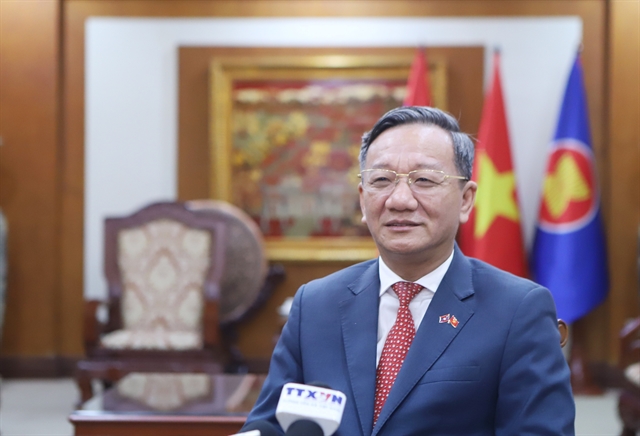
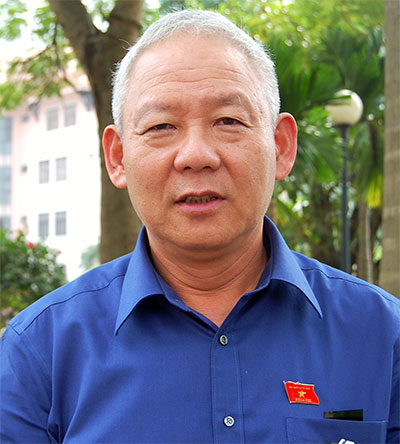
Nguyễn Việt Dũng, deputy director of the Việt Nam Agency of Seas and Islands, speaks to the Vietnam News Agency about strategic directions to attract investment, develop the marine economy and transform Việt Nam into a strong maritime nation.
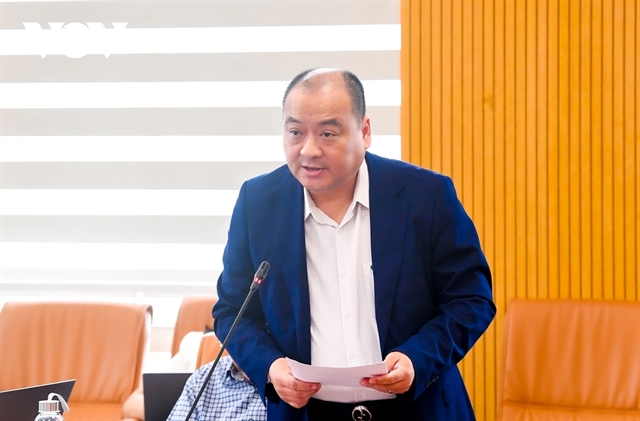 |
| Nguyễn Việt Dũng, deputy director of the Việt Nam Agency of Seas and Islands. — Photo vov.vn |
Resolution 20-NQ/TW on developing Việt Nam into a strong maritime nation, adopted at the third plenum of the 14th Party Central Committee, has elevated the strategic thinking surrounding maritime nation-building. What are the new aspects of the resolution that will drive marine economic development?
The most significant new aspect of the resolution is the switch in wording from 'marine economic development' to the broader vision of 'building and developing Việt Nam into a strong maritime nation'. This is not only a change in terminology, but a fundamental shift in development thinking, in which the marine domain is defined as a strategic space for development, a vital resource and an integral component of the nation's comprehensive strength.
While Resolution 36-NQ/TW (issued in 2018) laid the groundwork for the sustainable development of the marine economy, Resolution 20-NQ/TW advances this foundation in a new context. It emphasises the need for modern marine governance, efficient use of marine space and the development of modern, green and smart marine economic sectors, marking a mindset transition from exploiting the sea to one of modern marine governance, with science, technology and innovation serving as the primary drivers.
In terms of marine governance, Resolution 20-NQ/TW moves from fragmented, sector-specific or area-based management to modern, integrated governance grounded in marine spatial planning and inter-sectoral and inter-regional links, which aim to minimise overlaps and conflicts in the use of marine space.
Its requirements for refinement of legal regulations and the planning, allocation and use of marine space will foster a more transparent and stable environment for marine investment.
Another significant new element is the identification of science, technology, innovation and digital transformation as primary drivers of growth. From now on, the value derived from the sea will stem not only from resource extraction, but from knowledge, technology, data and governance capabilities. The establishment of a national marine database will lay the foundation for data-driven marine management and development.
The resolution also expands the scope and modalities of marine economic development and strengthens links between the sea, the mainland and among regions. Their connections will foster the creation of marine economic hubs with strong spillover effects, paving the way for the formation of high value-added marine economic chains and ecosystems.
It also requires that marine economic development be modern, green, smart and sustainable, while prioritising ecosystem protection, climate change adaptation and the assurance of national defence and security.
To turn the marine economy into a new growth engine, which sectors should Việt Nam prioritise for investment, and how can we attract investments without compromising the environment and marine ecosystems?
Green and smart development sectors should be prioritised for investment, including those in the renewable energy and emerging marine industries.
Technology transfer should be prioritised for projects that generate offshore wind power, floating solar power and wave energy. Those that develop marine pharmaceuticals, marine biotechnology, seawater desalination, green hydrogen and ammonia should also be prioritised.
Focus should be put on developing environmentally friendly, smart and modern seaport systems, especially gateway ports and international transshipment hubs, alongside merchant fleets, maritime logistics services and eco-friendly shipbuilding industries.
The fisheries sector should be restructured to prioritise industrial-scale, high-tech and offshore mariculture, while encouraging smart farming models that integrate renewable energy and digital technology.
Marine tourism and services also require investment to enhance international competitiveness and establish large-scale marine tourism hubs and clusters.
Investment is also needed for the extraction of oil, gas and marine minerals using advanced technology, linked with the development of deep-processing value chains, technical services and offshore infrastructure.
These investments must comply with the National Marine Spatial Planning rules to ensure a balance between development and environmental and ecosystem protection.
Priority should be given to projects involving the green transition, the circular economy and low-emissions practices. Activities posing risks of pollution or environmental degradation, such as land reclamation or the allocation and use of marine space, must be strictly controlled.
Given the mounting pressure on marine ecosystems, what solutions are needed to balance economic development with the protection of the environment and biodiversity?
This challenge requires the consistent implementation of various solutions.
It’s essential to expand and effectively manage the network of marine protected areas, aiming for these areas to cover at least 6 per cent of the country’s marine territory by 2030. Unique ecosystems such as mangrove forests, coral reefs, seagrass beds, tidal flats and lagoons should be protected and restored.
We must also safeguard aquatic resources and take decisive action to prevent and combat illegal, unreported and unregulated fishing, by restructuring the fishing fleet, reducing near-shore fishing and facilitating occupational transitions to maintain livelihoods for fishermen.
Other critical tasks are controlling plastic waste, promoting a circular economy and improving waste collection, sorting and recycling.
Technology should be used to enhance monitoring, surveillance, forecasting and early warning systems for natural disasters and ecological risks.
Most importantly, marine environmental protection must be linked to livelihood improvements and the active participation of coastal and island communities. People must be placed at the centre of these efforts, serving as both beneficiaries and active participants in the protection and sustainable development of marine spaces. — VNS
Opinion
 Opinion
 Opinion
 Opinion
 Opinion
 Opinion
 Opinion
 Opinion
 Opinion
 Opinion
 Opinion
 Opinion
 Opinion
 Opinion