 Opinion

Việt Nam, EU and Belgium seek deeper, practical cooperation
1.
Science, technology and innovation are key growth drivers in Việt Nam's new era. With over 12 years of experience in education, Dr Phạm Đình Trực, known abroad as Truman Pham, member of the Academic Board and Learning Designer at The Open Polytechnic of New Zealand, inaugural chair and current Executive Council member at the Education Technology Association of New Zealand, speaks with Việt Nam News reporter Nguyễn Khánh Chi on this topic.
 |
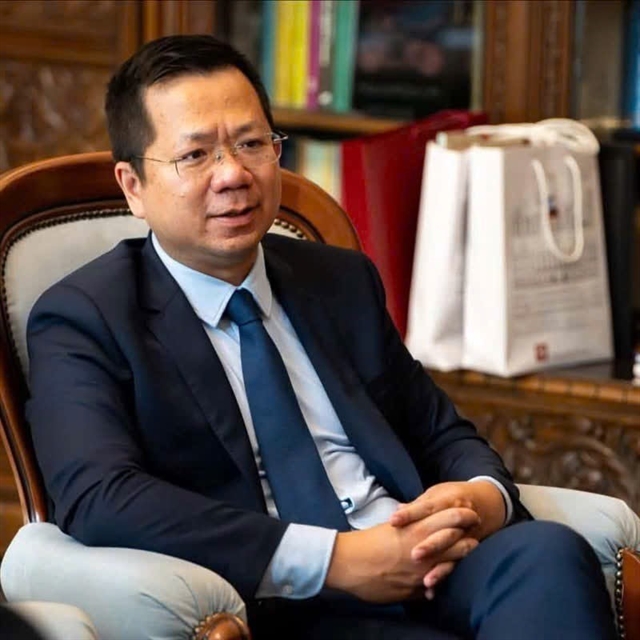
| Dr Phạm Đình Trực, member of the Academic Board and Learning Designer at The Open Polytechnic of New Zealand and inaugural chair and current member of the Executive Council at the Education Technology Association of New Zealand. Photo courtesy of Dr Phạm Đình Trực |
Could you provide an overview of VietTechNZ?
When I was the inaugural Chair of EdTechNZ (2016–2018), I recognised significant challenges faced by Vietnamese technology professionals in New Zealand, many of whom were newly arrived immigrants. They often had limited professional networks within the New Zealand technology industry, were unfamiliar with workplace cultures and practices, and struggled to secure employment, particularly during interviews, due to unfamiliarity with local workplace and communication norms.
Another important factor is that 70 per cent of jobs in New Zealand are filled through word of mouth and personal referrals, rather than public advertising. Building strong professional networks is therefore particularly important for career success in New Zealand.
In response to these challenges, I suggested to my older brother Mitchell Pham, a successful and highly decorated tech entrepreneur who had lived in New Zealand for more than 30 years, that he establish a network to support Vietnamese people working in technology sectors. As he met many of them in his line of works in New Zealand, he was well placed to initiate such a community.
VietTechNZ was subsequently established in 2019 with the purpose of helping Vietnamese technology professionals build networks, understand the local industry and workplace culture and address some of the barriers I had identified. The network is run by my wife Darcy Vo and Jesse Le. I have provided support at every event and activity whenever needed.
More recently, VietTechNZ has organised a range of initiatives, including the panel discussion 'AI Three Years On: Hype, Reality and What’s Next' and a mentorship programme. The panel discussion brought together technology entrepreneurs, managers and academics to share their perspectives on the development and impact of AI.
The mentorship programme was designed to support students and recent graduates as they begin their careers, as well as mid-career technology professionals seeking to transition into new roles or career directions. As a VietTechNZ mentor, I supported mid-career tech experts to explore new directions and opportunities for their professions.
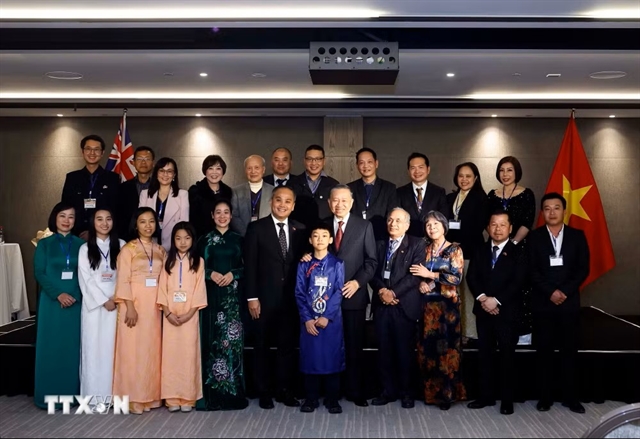 |
| Party General Secretary and State President Tô Lâm meets with representatives of staff at Việt Nam's Embassy and Vietnamese community members in New Zealand on August 12 during his state visit to the country. VNA/VNS Photo |
Việt Nam has identified strategic sectors such as semiconductors, AI and green energy as key drivers. In your opinion, what is a specific high-value niche where Việt Nam holds a significant competitive advantage?
In my experience as a member of the EdTechNZ Executive Council, different areas of the technology sector are closely interconnected and should not be considered in isolation. AgriTech, HealthTech and EdTech, for example, share many fundamental requirements, including a skilled workforce, reliable and high-speed internet connectivity and robust data and privacy protections.
Any emerging technology, such as blockchain or AI, is applied across these sectors. These commonalities highlight the importance of viewing AgriTech, EdTech, HealthTech and AI as interconnected components of a broader technology ecosystem, which is Tech New Zealand.
In response to your question, AI requires advances in semiconductor technologies to support increased computing capabilities, as well as green energy solutions to meet its growing electricity demands. These three areas should therefore be key focuses of a technology development strategy.
With the large young population of Việt Nam and the fast-moving nature of technology, the high-value niches that will help Việt Nam make use of its significant competitive advantages are innovation, education, regulations, collaborations, infrastructure and especially talent ecosystems.
A major challenge today is the disconnect between academic research and practical application in Việt Nam. What would you propose to bridge the gap between Vietnamese talent abroad and domestic corporations, to ensure that technology transfer is substantive, rapid and effective, rather than being limited to theoretical seminars?
New Zealand also faces a persistent challenge in translating academic research into practical applications and commercial outcomes. Experience has shown that universities, schools and businesses cannot bridge this gap by themselves.
A sustainable solution requires the active involvement and long-term commitment of a broader ecosystem, including the New Zealand government, industry associations such as EdTechNZ, the AI Forum and Tech New Zealand, as well as universities, polytechnics, schools and businesses. Stronger connections across this ecosystem can help create pathways for research, innovation, knowledge transfer and commercialisation.
Similarly, bridging the gap between Vietnamese talent abroad and domestic corporations in Việt Nam requires sustainable relationships and mechanisms for collaboration. This relationship building should be supported by the governments of both countries, Vietnamese professional networks overseas, New Zealand businesses operating in Việt Nam and business associations such as the ASEAN New Zealand Business Council and the New Zealand Vietnam Business Council.
As discussed above, meaningful and sustainable outcomes require active participation, coordination and long-term commitment across the entire ecosystem. Relationships with Vietnamese talent abroad should be a key component of domestic corporations’ go-to-market plans.
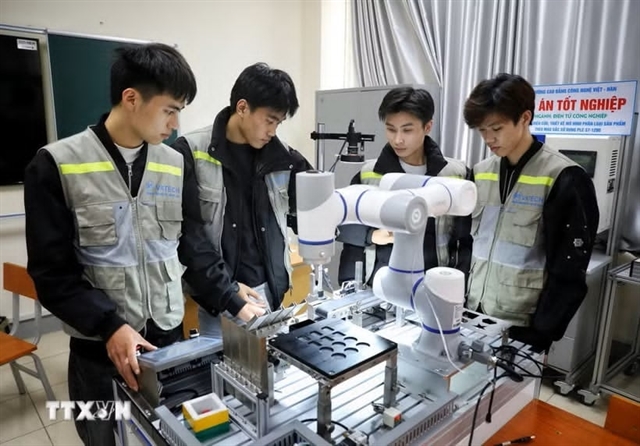 |
| Intern students on the Microcontroller Programming course at the Vietnam-Korea Vocational College of Technology in Bắc Ninh Province. To achieve strategic goals in this new era, a skilled workforce is essential for Việt Nam. VNA/VNS Illustrative photo |
To achieve strategic goals in this new era, a skilled workforce is essential for Việt Nam. What role do you believe the overseas expert community can play in establishing training standards or a tech education ecosystem in Việt Nam, enabling domestic workers to participate directly in the global value chain?
To enable Việt Nam’s domestic workforce to participate more effectively in global value chains, its technology training and education ecosystem should align with internationally recognised standards relevant to each industry. One example is ABET accreditation in the US for engineering programmes, which provides internationally recognised benchmarks for the quality of engineering education.
Overseas experts who have worked in environments that comply with international standards, or their equivalents, can play an important role in explaining the significance of these standards and sharing international best practices.
A high-quality workforce requires more than just technical knowledge and skills. Technology training and education in Việt Nam should also develop learners’ transferable capabilities, such as critical thinking, problem-solving, communication, collaboration and organisational skills. These capabilities are essential for enabling Vietnamese professionals to work effectively in international environments and participate competitively in global value chains.
What policy recommendations do you and VietTechNZ have to serve as a bridge for cooperation between Việt Nam and New Zealand, especially in workforce training in fields such as HealthTech and EdTech?
Before talking about policy recommendations, I would like to share a short story about infrastructure development.
Before COVID-19, there were concerns that the broadband network being developed by the New Zealand government to reach at least 90 per cent of the population across such a large geographic area was too expensive and unnecessary. At the time, it was predicted that it would take many years for the network to reach full capacity.
However, when COVID-19 struck, the network demonstrated the value of having sufficient capacity and resilient digital infrastructure. Following the pandemic, the emergence of generative AI created even greater demand for high speed and high-capacity internet connectivity.
This story demonstrates that a policy needs to be just right — neither too ambitious nor too limited. Either extreme can result in missed opportunities or inefficient use of public resources. To develop policies that are just right, it is important to learn from the experiences of other countries, including both their successes and their failures.
 |
| Vietnamese community members in New Zealand celebrate the 2026 Lunar New Year, organised by Việt Nam's embassy in the country. VNA/VNS Photo |
As a network of Vietnamese technology professionals working across diverse areas of New Zealand’s technology sector, we are keen to share our experiences, insights and perspectives on one of the world’s most dynamic and innovative technology ecosystems with Vietnamese Government leaders and senior officials, as well as stakeholders across the education and industry sectors, domestic experts and students.
In 2024, we had such an opportunity to share with then-Prime Minister Phạm Minh Chính during his visit to New Zealand.
We are also willing to collaborate with relevant agencies or organisations to build sustainable relationships and develop effective mechanisms for ongoing knowledge exchange, collaboration and partnership.
In the current geopolitical context, how do you view the role of bodies such as VietTechNZ in helping Việt Nam reposition itself within the global technology supply chain, particularly in attracting tech giants (anchor investors) to invest in the country?
Both Việt Nam and New Zealand would like to have peaceful, friendly and constructive relationships with other countries around the world, while improving the prosperity and well-being of their people. The economies of both countries also rely heavily on international trade, particularly the export of goods and services.
Vietnamese communities overseas, particularly professional networks, can help to build valuable bridges between Việt Nam and their countries of residence. They can facilitate connections between local businesses, from SMEs to large corporations, and Vietnamese entities.
These networks can also assist international businesses in navigating cultural differences, better understanding the needs and demands of Vietnamese markets and addressing skills gaps. Collectively, these capabilities can contribute to creating a more attractive environment for technology investment in Việt Nam.
As discussed above, Vietnamese professional networks overseas can also play an important role in facilitating knowledge exchange, technology transfer and international collaboration with Vietnamese industries. By connecting Vietnamese businesses and professionals with global expertise, networks and markets, they can help strengthen domestic capabilities and enable Vietnamese industries to participate more effectively in global value chains. VNS
Opinion
 Opinion
 Opinion
 Opinion
.jpg) Opinion
Opinion
 Opinion
 Opinion
 Opinion
 Opinion
 Opinion
 Opinion
 Opinion
 Opinion
 Opinion