 Society

Agoda Makes Bangkok Its Largest Office Worldwide, with More Than 4,500 Staff
1.
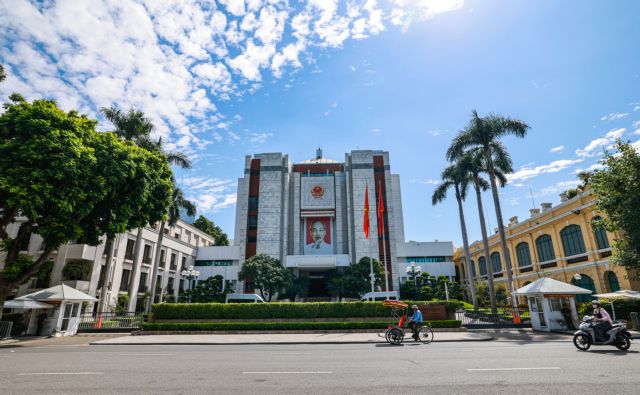 |
| PREPARED:The underground C9 station was designed and approved for under the current City Hall, but now the site will boast a four-storey commercial centre. VNS Photo Trương Vị |
Nguyễn Mỹ Hà
At an exhibition hall on the corner of Tràng Tiền and Đinh Tiên Hoàng streets in Hà Nội sits a thick pile of laminated documents for public review and scrutiny.
Even for professional architects and designers, engineers and planners, grasping the vast amount of information in the documents would be a challenge.
But these challenges have not been able to deter Hanoian Lê Thị Uyển Chi, a pharmacist by profession, who graduated from Hà Nội University of Pharmacology in the beautiful Indochina-style heritage building on Lê Thánh Tông Street, a few blocks away from Tràng Tiền.
"From the first day this project was announced, I wanted to read it all," she told Việt Nam News Weekend. "I had all the documents reprinted in a large format at a photocopy shop to look at them closely at home. At night I'd only sleep for an hour or so, as the massive changes seemed horrendous to me, and I just couldn't sleep."
Chi read all 148 pages and filled out the survey form at the centre, but she also typed up her opinions on each change suggested in the documents.
"This is very emotional for me, as we need to preserve Hà Nội not only for us Hanoians, but for everyone living elsewhere in the country and even abroad," Chi explained.
"When visitors come to Hà Nội, they don't want to see a city that looks just like a neighbourhood in Europe or America; they want to see Hà Nội as it is."
Chi, 64, said after she filed her survey answers, she read in the newspapers on September 27 that 92 per cent of people who also participated agreed with the proposed new changes on Hồ Gươm or Hồ Hoàn Kiếm (Returned Sword Lake) and its surroundings.
"This 92 per cent, what did they agree with? That is the question that needs to be asked," she said.
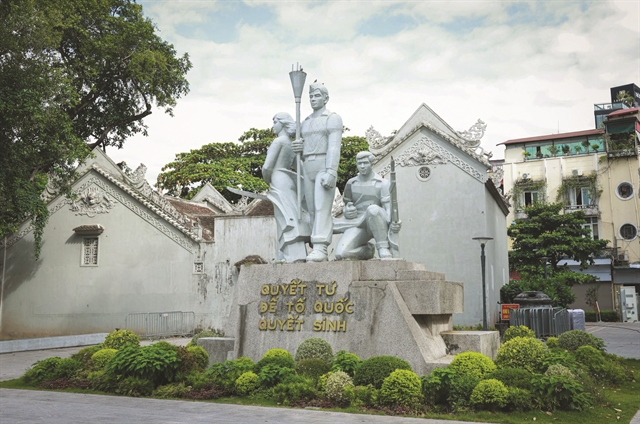 |
| HISTORY: The Determined to Die for the Homeland to Live Monument at Bà Kiệu Temple by Hồ Gươm. — VNS Photo Trương Vị |
Agree to disagree
"When I was still working, when we'd discuss a matter among our staff, we would all carefully examine all the pros and cons. If the opinions proved valid, then the leadership would make their decision taking into account all the matters everyone worked on," Chi said.
"It's a tried and true method to reach a final decision that's going to benefit us all, when we all work towards a common good," Chi said. This was why she seriously studied and wrote up her opinions on the proposed changes to her locality.
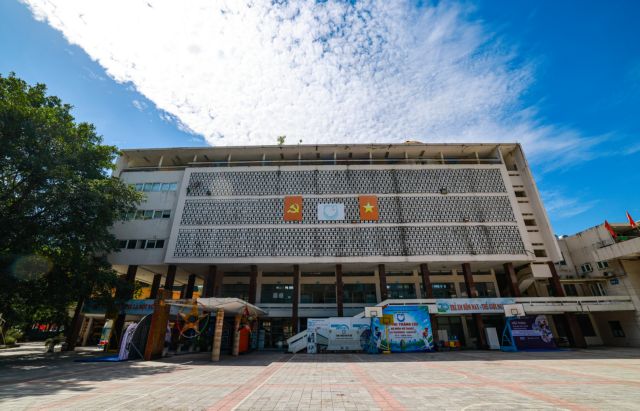 |
| FOR THE YOUTH: Hà Nội's Children's Palace, designed by Lê Văn Lân, boasts a five-storey building with a theatre for children's film screenings and arts performances. VNS Photo Trương Vị |
"Which questions in the poll did the survey results count? Have they screened all the separate additional papers? Were they read, counted and classified? None of this information was announced," Chi said.
"The poll didn't ask if we agree to relocate the Determined to Die for the Homeland to Live Monument, dismantle the Children's Palace and the Red Scarf Theatre, or if we agree to a new giant financial tower to be on the ground of the current Museum of History," she said.
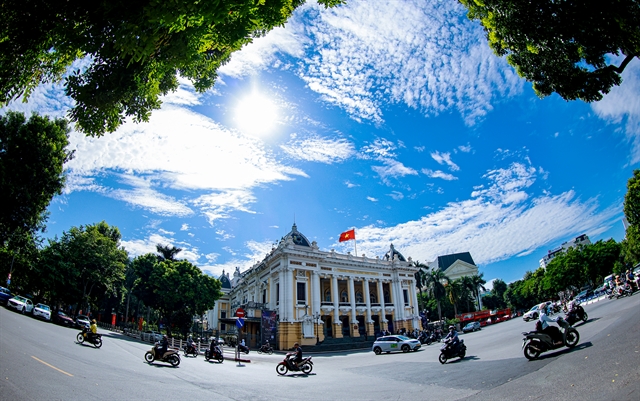 |
| REFORM: The Hà Nội Opera House, built in 1911, shall get an open stage that can host 5,000 people in a single event. VNS Photo Trương Vị |
The list of questions was deemed very misleading by Chi, as participants could agree with the first question on re-arranging Hồ Gươm and its environs in general, but then disagree with every single other proposal.
"Agreeing with brushing up Hồ Gươm doesn't mean agreeing with all the changes listed," Chi explained.
The proposal suggests two new hotels on Tràng Tiền and Tràng Thi streets; the Determined to Die for the Homeland to Live Monument to be moved from Bà Kiệu Temple by Hồ Gươm; the Children's Palace and Red Scarf Theatre to be taken down entirely; a new Victory Gate to be built on the northern bank of Hồ Gươm; and a new financial tower to be built on the site of the National Museum of History on Tôn Đản Street.
The underground C9 station which was also designed and approved has been suggested to be under the current City Hall. Underground four-storey commercial centre has been proposed at this site without any geological or hydrological assessment reports.
On the ground of Hà Nội Drama Theatre behind the current Opera House, there shall be an open stage that can host up to 5,000 spectators at a time, and an underground theatre with 850 seats.
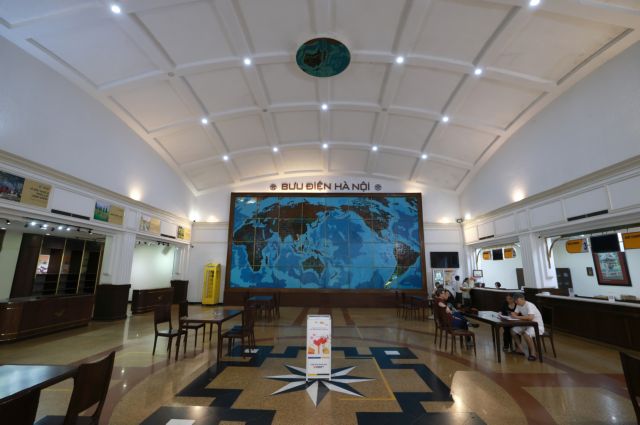 |
| IMPOSING: A giant world map adorns the wall facing the entrance to the Post Office. VNS Photo Trương Vị |
Common values
In June 1955, right after Hà Nội was liberated, President Hồ Chí Minh signed a decree to use Ấu Trĩ Viên (Kindergarten) strictly for children's activities.
In 1973, architect Lê Văn Lân designed a new five-storey building with an electric lift that gracefully connected to the existing French classical-style building on the site. His use of the brick wall facing west gives the whole building a heat-diverting tool on the facade, and his carefully calculated acoustic effect inside the Red Scarf Theatre still makes it a top-notch venue for the performing arts.
Some of Việt Nam's top singers and actors grew up in the clubs, whereas some leading diplomats and politicians also had their first training in these areas.
"For the benefit of 10 years, we plant trees; for the benefit of 100 years, we need to train people," President Hồ Chí Minh once said.
If the education of our children is not the centre of our attention, then what will our future look like? What we sow today will be reaped in a future that we cannot see in our lifetime, but our children's children can thrive in it. How we see our children 100 years from now leads to our actions today.
A hundred years from now, the monument paying tribute to those who were ready to sacrifice their lives to defend Hà Nội in 1946 still needs to be visibly present by the lake.
Looking forward to the timeline for the strategic goals set forth by the country's leadership, it's clear that Việt Nam is steering itself toward a developed society with wealth, health and happiness for its people.
In 2030, when the Vietnamese Communist Party commemorates its 100th anniversary, Việt Nam seeks to be a developing country with modernised industries and upper-middle income.
In 2045, marking the 100th anniversary of the founding of modern Việt Nam, the ambition is to become a developed country with high income, with the country enjoying peace, independence, democracy, wealth, prosperity and happiness.
As far away as 2100, a secret letter written by those who built the Hòa Bình Hydropower Plant shall be opened. Then, our future generations of leaders will learn that by taming the powerful Đà River, the country was making enough electricity to help power its industries and economy, and help energise farming tools to grow rice, catch fish, and raise enough cattle and poultry for our own needs and exports.
Hà Nội is the country's capital and Returned Sword Lake is a beautiful oasis of water, green foliage and a thousand-year-long tale of returning the legendary sword to the mythical turtle after war to make lasting peace. It is named Returned Sword Lake but no real sword is visible. Our forefathers set aside their weapons when they were no longer needed.
One thing may not change, and for the better. A hundred years down the road, Vietnamese people shall still have rice with fish sauce and lots of veggies and seafood, and we will still thrive on the sea-faring trade.
Brush up Hoàn Kiếm, yes, but do keep the best buildings bearing the socialist imprint of Hà Nội, like the lyrics of the song, Bài ca xây dựng, or Ballad about Construction, by the great composer Hoàng Vân in 1973, the same year architect Lân designed the Children's Palace:
"My dear life companion
Do have faith, have love and sing along with us
We, the builders who believe in and love this new life.
Amidst the smoke of bombs and the glow of moonlight,
Through every season, we continue to build;
A joyful song for us, a joyful song for you,
For today, for tomorrow and for generations to come." — VNS
Society
 Society
 Society
 Society
 Society
 Society
 Society
 Society
 Society
 Society
 Society
 Society
 Society
 Society
 Society