 Society
Đà Nẵng aims to rank among Asia’s leading cities by 2075
1.
|
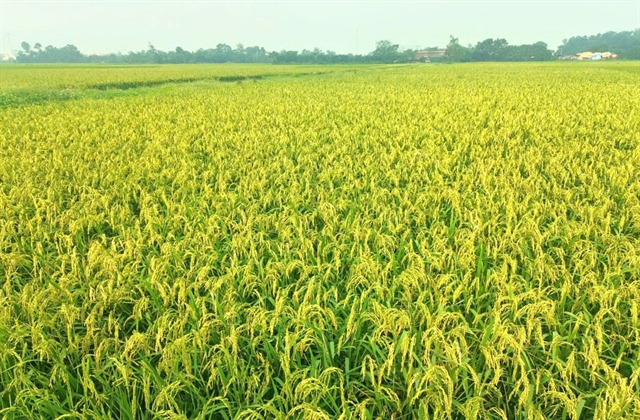
| Thụy Lâm yellow-flower sticky rice in Thư Lâm Commune, Hà Nội, has received a three-star OCOP rating and collective trademark protection. — Photos courtesy of the Office for Coordination of National Target Programmes of Hà Nội. |
HÀ NỘI — From distinctive agricultural products to culturally rich traditional handicrafts, Hà Nội is focusing on improving quality, building brands and expanding markets for products under the One Commune, One Product (OCOP) programme.
Digital transformation and links with tourism are opening up new opportunities for the capital’s products to reach international consumers.
Enhancing the value of local products
Hà Nội currently leads Việt Nam in the number of products evaluated and rated under the OCOP programme, with 3,531 products. Of these, 18 have received five-star ratings, 22 are potential five-star products, 1,584 have been rated four stars and 1,907, three stars.
The diversity of agricultural produce, local specialities and handicrafts provides a strong foundation for rural economic development, drawing on the distinctive strengths of individual communities. The city is shifting its focus from increasing the number of certified products to improving quality, building brands and creating greater added value.
In Bát Tràng Commune, the OCOP programme is helping local producers modernise production while preserving the cultural heritage of the traditional pottery village. According to Phạm Văn Quang, head of the commune’s Economic Division, Bát Tràng has 70 OCOP products rated between three and five stars, around 50 of which are ceramics.
One notable example is the jade-stream-glaze ceramic line produced by Tân Thịnh Ceramics Production and Business Cooperative. Rated five stars under OCOP, the products are sold in many provinces and cities across Việt Nam and exported to India. OCOP recognition has helped strengthen their reputation and facilitate trade promotion and business partnerships.
Trần Anh Tuấn, Secretary of the Bát Tràng Commune Party Committee, said the locality encourages artisans to develop creative designs that reflect their own identity, ranging from unique, high-value artistic ceramics to finely crafted souvenirs for visitors.
This approach offers considerable potential for Hà Nội’s craft villages, combining traditional craftsmanship with contemporary design and incorporating cultural stories into products to distinguish them in the marketplace.
In agriculture, Đồng Phú Organic Agriculture Cooperative in Hòa Phú Commune has developed organic rice and soybeans that have both received four-star OCOP ratings. The cooperative has around 65 hectares of land under organic-oriented cultivation. Partnerships with businesses, market-oriented production and the purchase of freshly harvested paddy help maintain stable raw-material supplies and ease farmers’ marketing pressures.
|
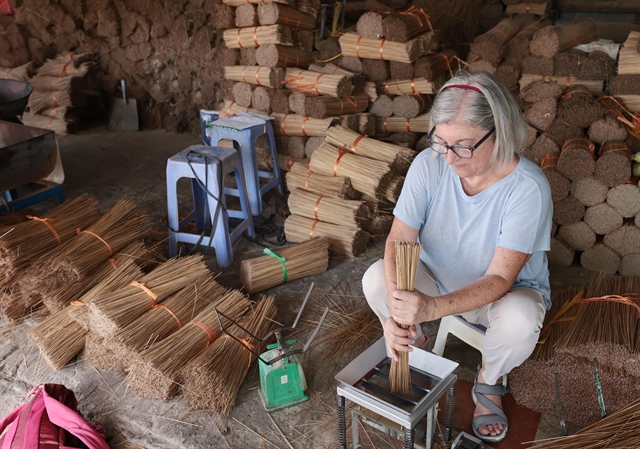
| Foreign visitors experience traditional incense-stick making at a production facility whose products have received a four-star OCOP rating in Quảng Phú Cầu incense-making village, Ứng Thiên Commune, Hà Nội. |
Meanwhile, Thụy Lâm yellow-flower sticky rice in Thư Lâm Commune has received a three-star OCOP rating and collective trademark protection. Improved cultivation techniques have helped raise yields to around 180kg per sào (a traditional Vietnamese land unit of approximately 360sq.m). Paddy sells for VNĐ35,000 (US$1.35) per kilogramme, providing growers with incomes two to three times higher than those from conventional sticky-rice varieties.
These examples demonstrate that OCOP not only increases the value of agricultural produce and handicrafts but also helps reorganise production, improve rural livelihoods and preserve local identities. This provides a foundation for sustainable development and greater access to wider markets.
Digital transformation opens new market opportunities
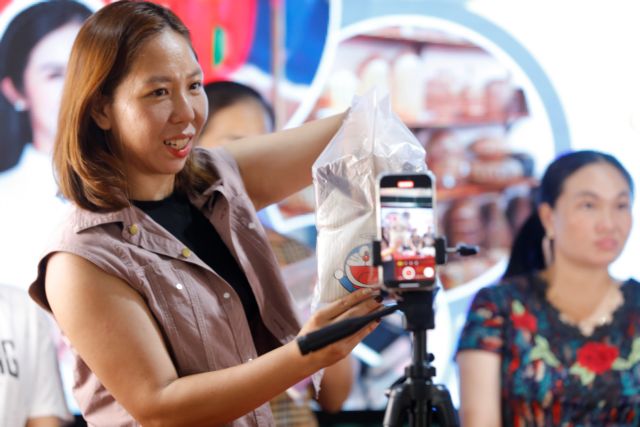
Alongside quality improvements, Hà Nội is embracing digital platforms to promote and sell OCOP products. Producers and cooperatives are increasingly using social media, livestream sales and e-commerce platforms to showcase their goods and reach consumers directly.
As part of the city’s digital transformation drive, 126 communes and wards have organised livestream sessions to promote OCOP products, local agricultural produce, handicrafts, cultural attractions and tourism offerings.
In Thường Tín Commune, four livestream sessions in August 2026 showcasing local products, including bedding from Trát Cầu, carved wooden items, horn combs from Thụy Ứng and wooden furniture from Nhị Khê, generated around 150 orders and nearly VNĐ200 million ($7,740) in revenue. A livestream session in Thượng Phúc craft village attracted nearly 600 orders, generating approximately VNĐ400 million ($15,480).
In Hoài Đức Commune, four-star OCOP products such as arrowroot vermicelli, sweet-potato vermicelli, potato vermicelli and rice noodles have also been promoted through livestream sales. In Mê Linh Commune, roses, seedlings, Đông Cao red pomelos and other local specialities are marketed through Facebook, TikTok, YouTube, Zalo and e-commerce platforms.
These initial results show how digital technology is creating flexible sales channels and helping OCOP producers reach a wider customer base. Sustainable competitiveness, however, depends on consistent quality, appropriate packaging, transparent product traceability and effective distribution networks.
|
| Many rural localities in Hà Nội are organising livestream sessions to introduce traditional craft products to domestic and international consumers. |
Hà Nội is also focusing on production standards, brand development, intellectual property rights protection and support for products with the potential to achieve higher OCOP ratings. The city is strengthening links with modern retail networks and organising trade fairs and exhibitions at home and abroad. Logistics and cold-chain development are also receiving attention to help maintain product quality.
One of Hà Nội’s key advantages is the potential to connect OCOP products with culture and tourism. In craft villages such as Bát Tràng, products embody not only practical value but also generations of craftsmanship, technical knowledge and cultural traditions.
Developing souvenirs, offering traditional craft experiences, using QR codes to tell product stories and establishing sales outlets linked to tourism can all enhance product value. For international visitors, these products offer an opportunity to learn about Hà Nội’s culture, people and way of life.
Hà Nội is also moving to develop creative design centres that promote OCOP products and traditional handicrafts in conjunction with tourism, while expanding product display and sales outlets. These initiatives help connect local producers with consumers, business partners and potential distribution channels.
For OCOP products to gain a stronger foothold in international markets, the city must translate its numerical advantage into quality, credibility and competitiveness. Combining sustainable production, professional branding, digital technology and cultural value will help Hà Nội’s products establish a stronger market presence.
From finely crafted ceramics to distinctive agricultural produce, OCOP is opening up new opportunities for Hà Nội’s products to reach wider markets while introducing Vietnamese cultural identity to friends around the world. — VNS
This article was produced in collaboration with the Office for Coordination of National Target Programmes of Hà Nội.
Society
 Society
 Society
 Society
 Society
 Society
 Society
 Society
 Society
 Society
 Society
 Society
 Society
 Society
 Society