 Society

Tây Ninh province seeks Japanese investment in high-value industries
1.
|
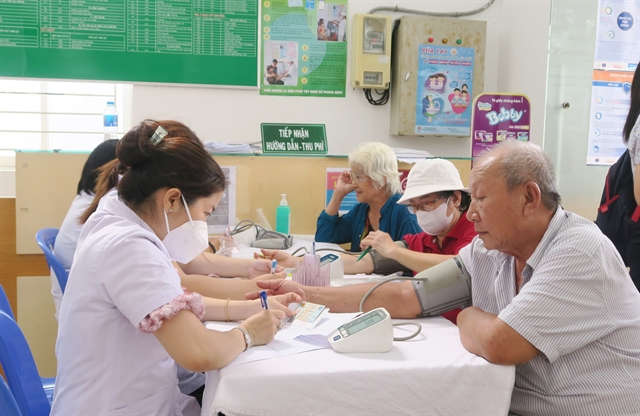
| HCM City could have more than 4.6 million residents aged 60 and over by 2048, putting growing pressure on healthcare and social services as the city prepares for a rapidly ageing population. |
HCM CITY — HCM City is preparing for a rapidly ageing population as the city could have more than 4.6 million residents aged 60 and over by 2048, putting growing pressure on healthcare and social services.
The city had nearly 1.57 million people aged 60 and over in 2025, accounting for 11.4 per cent of its population, according to a plan recently approved by the municipal People's Committee.
If fertility rates and migration patterns remain broadly unchanged, the number of older residents is projected to exceed three million by 2038, when the city is expected to enter the “aged population” stage, before reaching the “super-aged” stage in 2048.
The projections highlight the need to expand services for older people, including long-term care, rehabilitation and support with daily activities, as well as improve coordination between hospitals, local health stations and community services.
Under the city's plan for 2026-30, with a vision to 2045, each ward and commune is expected to establish at least one day-care point for older people by 2030.
The city also aims for 90 per cent of local health stations to have teams providing continuous care in their communities and for 80 per cent of general hospitals of grade 2 or higher to have geriatric departments.
The plan calls for electronic health records for 90 per cent of older residents and the development of 50 care facilities or service points.
It also envisages training more care workers and mobilising public and private resources to expand services.
However, existing services remain limited compared with the potential demand.
By the end of 2025, the city had created health records for more than 629,000 older people, or about 40 per cent of the group.
Although 98 per cent had health insurance cards, access to coordinated long-term care remains a challenge.
The city had 15 hospitals with dedicated geriatric departments, while six had combined geriatric departments and 11 incorporated geriatric services into other departments, according to figures cited in the plan.
There were also 42 public and private social assistance facilities caring for more than 4,000 older people.
The existing healthcare system is largely designed to treat acute illnesses, while many older residents need ongoing management of chronic conditions, rehabilitation and help with daily activities.
This can leave families responsible for much of the care, while hospitals face pressure from patients whose conditions could be managed more effectively through community-based services.
The city’s plan proposes a five-tier care model, prioritising support that allows older people to live independently and receive care close to home, with referral to residential facilities or hospitals when necessary.
It also seeks to strengthen links between hospitals, local health stations, families and social assistance facilities, while developing services suited to different levels of need and ability to pay.
The challenge will be to turn these targets into accessible services as the number of older residents rises.
The city’s ability to expand its care workforce and provide affordable support outside hospitals will be central to meeting demand in the coming decades. — VNS
Society
 Society
 Society
 Society
 Society
 Society
 Society
 Society
 Society
 Society
 Society
 Society
 Society
 Society
 Society