.jpg) Society
Hà Nội changes mindset in attracting high-quality capital
1.
|
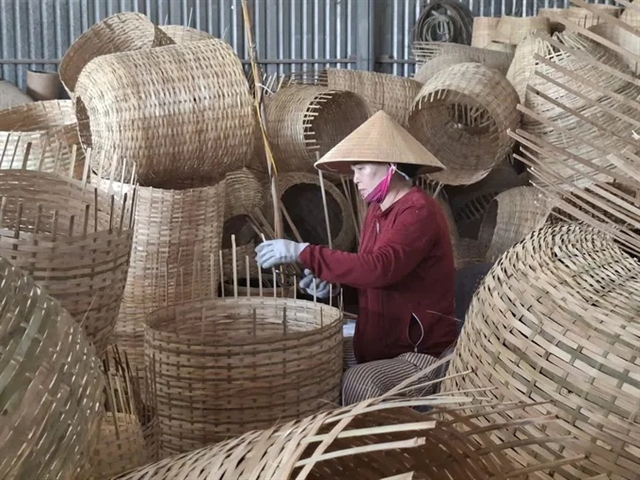
| A traditional weaving establishment in Thái Mỹ Commune in HCM City keeps age-old craftsmanship alive while adapting to modern product demands. The city plans to turn these craft facilities into interactive cultural stops to boost local incomes through experiential tourism. — Photos www.sggp.org.vn |
HCM CITY — HCM City is step-by-step refining its master plan to preserve and develop rural industries and traditional craft villages for the 2026-30 period, placing human livelihoods, market expansion, cultural digitisation, and environmental protection at the core of sustainable growth.
The initiative was extensively discussed during a consultation workshop on Thursday, organised by the city’s Department of Agriculture and Environment, gathered representatives from municipal agencies, trade authorities, industry experts, and local communes.
According to a comprehensive survey by the municipal Department of Agriculture and Environment, the southern metropolis currently boasts nearly 12,000 rural industrial establishments.
The sector employs over 36,300 workers and generates an annual output value of nearly VNĐ9.5 trillion (about US$368 million).
Primary operational groups encompass agricultural, forestry, and fishery processing; handicraft manufacturing including wooden furniture, bamboo weaving, ceramics, glassware, textiles, and embroidery; small-scale mechanical engineering; and ornamental plant cultivation.
The city has formally recognised 11 traditional crafts, one craft village, and three traditional craft villages.
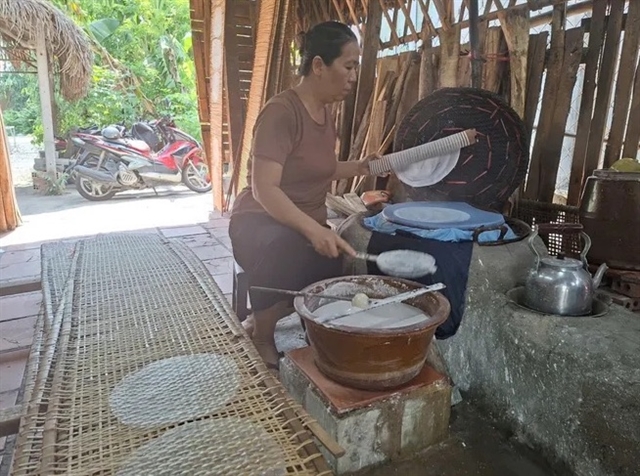
Iconic centres include the rice paper-making craft in Phú Hoà Đông Commune, traditional weaving in Thái Mỹ Commune, salt processing in Thiềng Liềng, and mai (yellow ochna) flower cultivation in Bình Lợi.
Despite these achievements, local authorities acknowledge that most establishments operate on a small, fragmented scale with limited supply chain linkages.
Unstable supply of raw materials, slow equipment upgrades, outdated designs, and missing workforce succession present ongoing operational bottlenecks.
Empowering master artisans and digital preservation
To resolve workforce constraints, the draft project for 2026-30 places heavy emphasis on vocational training, trade transmission, recognising master artisans, and attracting young workers.
"Developing and submitting criteria to the municipal People's Committee to recognise master artisans is one of the most critical factors in preserving craft villages," Trần Thị Loan, Head of the Rural Industries Division under the Ministry of Agriculture and Environment, said.
She described skilled craftspeople as the "living soul of traditional trades."
Under the strategy, the city authorities will collect, document, and digitise craftsmanship techniques, trade secrets, historic patterns, and cultural narratives to support vocational instruction and long-term archiving.
The city aims to seek official recognition for 14 additional traditional crafts and three traditional craft villages by 2030.
“The city will execute a fundamental shift from supporting individual households to backing entire industrial clusters, craft villages, and complete value chains," Loan said.
Nguyễn Văn Đa, deputy director of the city’s Department of Agriculture and Environment, said: “It is essential to strengthen linkages across the entire value chain from raw material suppliers to distributors, while investing in design, branding, and OCOP certification to unlock substantial market potential.”
This strategy is especially vital for handicrafts, which account for just 4.4 per cent of establishments but generate 22.5 per cent of total output value, he added.
|
| The traditional rice paper-making craft in Phú Hòa Đông Commune in HCM City is being preserved and developed as part of the city's master plan for 2026-30. |
Integrating eco-tourism with green production standards
Developing craft village tourism offers a vital avenue to increase local earnings through hands-on activities, production demonstrations, and direct sales.
The city plans to form seven specialised tour routes combining craft villages, eco-tourism, and experiential journeys, alongside preserving five specific traditional trades linked directly to tourism.
Dr Lê Đức Minh from the city Department of Tourism advocated introducing craft village destinations into national and international promotional campaigns, encouraging the rollout of a "One Craft Village, One Distinctive Tourism Product" model.
Representatives from the city’s Department of Industry and Trade further asked leveraging multimedia communications and creating global brand identities for high-potential export handicrafts across e-commerce platforms and modern retail networks.
“Addressing environmental issues remains a mandatory condition for long-term survival and tourism appeal.”
Vũ Ngọc Đăng, head of the city’s Rural Development Sub-Department, said the city targets 100 per cent of craft village establishments meeting environmental protection regulations by 2030.
“Solutions will focus on centralised wastewater and solid waste management, technological innovation, and energy efficiency.”
Polluting units incompatible with spatial planning will face structured relocation plans that safeguard both local livelihoods and cultural spaces.
With 26 prioritised tasks, the project anticipates a total execution budget of approximately VNĐ181 billion (US$7 million) for the 2026-30 period.
Workshop participants called on the city’s People's Committee to allocate annual state funding, combine capital resources, and prioritise urgent interventions for endangered trades, environmental remediation, and infrastructure upgrades linked with rural tourism. — VNS
Society
 Society
 Society
 Society
 Society
 Society
 Society
 Society
 Society
 Society
 Society
 Society
 Society
 Society
 Society
.jpg)




