 Economy
Government considers easing market access conditions for foreign investors
1.
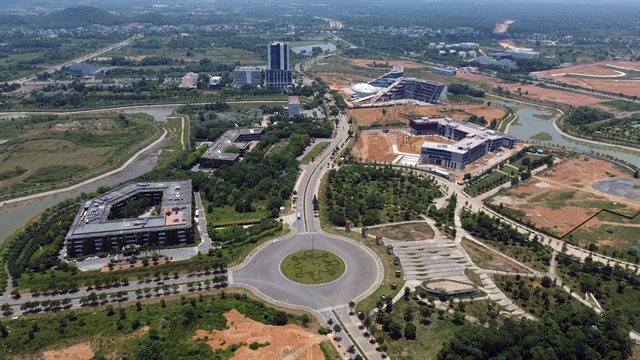 |
| The Hòa Lạc High-Tech Park, located in Thạch Thất and Quốc Oai districts in Hà Nội, covers a total planned area of nearly 1,600ha. Investment projects there help form a technology ecosystem and created a favourable environment for innovation, with the goal of developing the area into a science and technology city. — VNA/VNS Photo Huy Hùng |
Thu Trang
HÀ NỘI — Standing before a wave of global supply-chain restructuring and an era of exploding technology, Hà Nội is entering a watershed shift in mindset.
The capital is positioning itself as the ‘chief architect’ of an ecosystem, opening the way for high-quality capital flows in artificial intelligence (AI), semiconductors and the green economy.
Sustainable development
A decade ago, a locality’s success in attracting foreign direct investment (FDI) was measured by figures such as billions of dollars disbursed and tens of thousands of ordinary jobs created. But the wind has changed direction.
As environmental, social and governance (ESG) standards become increasingly stringent, and as the opportunity cost of land and natural resources rises, global technology giants are seeking cities capable of providing intellectual talent, modern digital infrastructure and a compatible research ecosystem.
Hà Nội understands this very well.
A new question has been placed on the agenda: How can every dollar of FDI flowing into the capital create not merely a new factory, but also help an entire chain of Vietnamese enterprises grow stronger?
The strategic focus has decisively pivoted: from broad dispersion to depth and concentration. The goal is no longer to pursue land-hungry projects, but to attract the ‘core technology project’ – semiconductor chips, chip design, AI, data centres, smart logistics and specialised healthcare.
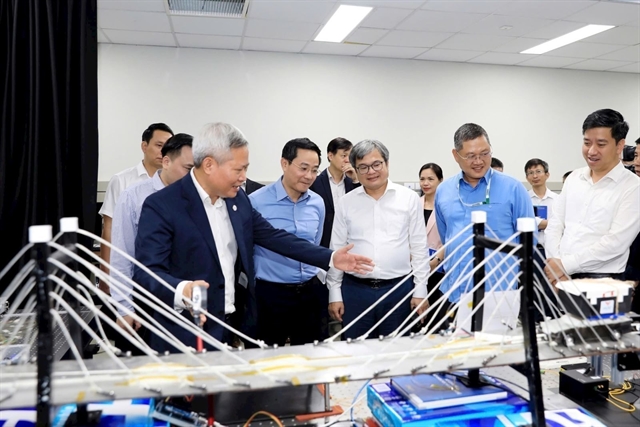 |
| A working delegation, led by Trương Việt Dũng, deputy chairman of the Hà Nội People’s Committee, pays a visit to and has a working session with the Việt Nam–Korea Institute of Science and Technology at the Hòa Lạc High-Tech Park. — VNA/VNS Photo Quốc Lũy |
At the end of December 2022, when Samsung’s largest research and development (R&D) centre in Southeast Asia officially opened at the West Lake West urban area, it was not simply the inauguration of an office building. It was the opening shot of a new era: Hà Nội becoming a meeting point for elite researchers.
From that milestone, development strategies have been activated by the Hà Nội Support Centre for Enterprise and Investment Promotion (SCE) under the city’s Department of Finance, together with specialised agencies.
Rather than waiting for investors to knock on its door, the capital has proactively sat at the negotiating table with major corporations from Silicon Valley in the US, Tokyo in Japan, Seoul in the Republic of Korea, and leading technology centres across the European Union.
Dual vision
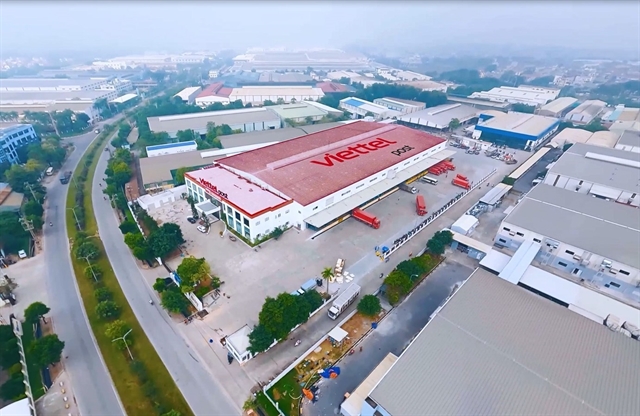 |
| The Viettel Post Corporation officially commences operation of Việt Nam’s first intelligent sorting technology complex. The country sets to develop e-commerce and logistics technologies. — VNA/VNS Photo Minh Quyết |
One of the biggest obstacles facing foreign investors has long been land procedures, industrial power supply and technical connection capacity. To break through this bottleneck, databases of clean land available in Hòa Lạc High-Tech Park, Nam Hà Nội Industrial Park (HANSSIP), Quang Minh Industrial Park and elsewhere are being rapidly digitised.
Today, an investment director on the other side of the world can obtain a complete picture of the power-transmission network plan, water supply, telecommunications indicators and technical connection progress for each land plot through a single point of contact. Maximum transparency is the most compelling invitation.
Speaking at the conference “Addressing bottlenecks for science and technology enterprises, innovative start-ups and digital technology,” organised in Hà Nội on September 30 by the Department of Science and Technology, Trương Việt Dũng, deputy chairman of the Hà Nội People’s Committee, emphasised the key tasks for enterprises.
The Department of Industry and Trade is strengthening programmes to support digital-technology exporters and connect them with markets. The Department of Science and Technology (DoST) is preparing a plan for Hà Nội to become the first customer and support enterprises’ products. The Department of Finance (DoF) and specialised management departments are studying the application of technical, performance and product life-cycle criteria in public procurement under the bidding law.
In addition, the DoST is working urgently with the DoF to complete the organisational conditions and professional regulations needed for the city’s Science, Technology and Innovation Development Fund to begin operations and receive support applications, while accelerating capital mobilisation and the selection of investment projects.
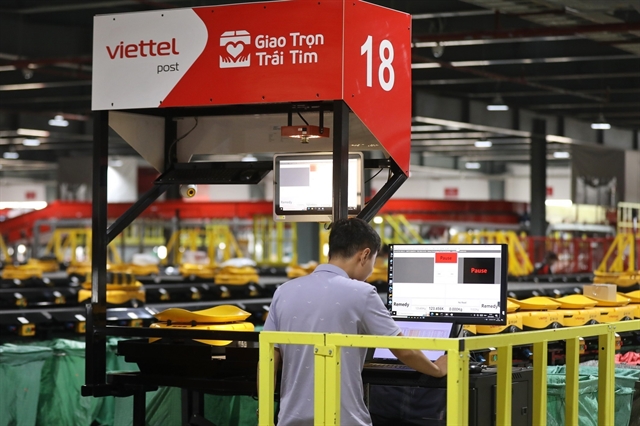 |
| A worker operates the logistics ecosystem including warehouse and transport management software, app and web-based systems, and a suite of delivery technologies for weight monitoring, conveyor-belt monitoring, smart locks and more. — VNA/VNS Photo Minh Quyết |
“The technology business community should continue to accompany the city in a spirit of proactively making proposals; proactively presenting products and committing to results; and proactively connecting with institutes and universities to form proposals of sufficient scale,” said Dũng.
That is also the most substantive test of Hà Nội’s policies supporting science and technology enterprises, innovative enterprises and businesses undergoing digital transformation: not how many policies have been issued, but how far enterprises have actually progressed because of them, according to Dũng.
Hà Nội’s strength lies in its dual vision: attracting international capital while using those capital flows as leverage to activate endogenous strength from hundreds of thousands of small- and medium-sized enterprises (SMEs).
The SME support programme for 2026–2030, developed under the lead of the DoF, has outlined a comprehensive transformation.
One paradox is that SMEs have often been pushed aside because they lack the financial capacity to compete for industrial-park land. Hà Nội has decided to intervene with specific policies: reserving at least 5 per cent, or 20ha, of land in each industrial park for SMEs to lease, accompanied by a mechanism reducing land rent by at least 30 per cent during their first five years.
In addition, household businesses – among the most dynamic groups but also those bearing considerable legal risks – will receive completely free advice on converting into enterprises. For the first three years, they will be protected with entirely free tax and accounting advisory services.
Another important task is promoting the application of AI and digital transformation. Instead of leaving enterprises to ‘swim’ alone in the technology wave, the city will cover part of the cost of renting or purchasing digital solutions, adopting artificial intelligence and connecting with a network of strategic consultants.
Superior special mechanisms
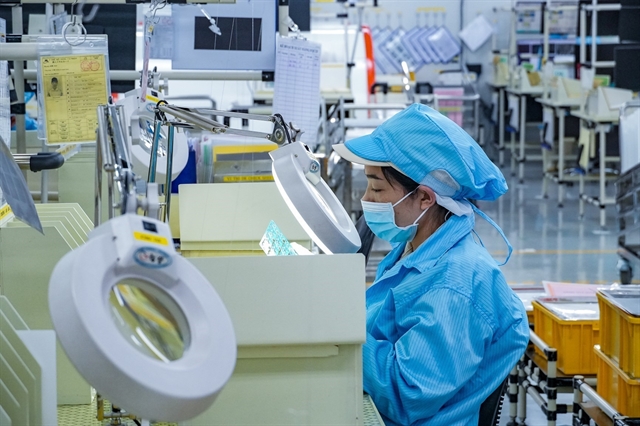 |
| Production at the Meiko Electronics Việt Nam Co Ltd in the Thạch Thất-Quốc Oai Industrial Park in Hà Nội. Technology business community accompanies the city in proactively making proposals and committing to results. — VNA/VNS Photo Trung Nguyên |
Every political commitment and every reform programme will remain on paper without a sufficiently flexible legal framework to overcome outdated inertia. And a ‘golden key’ has appeared: the Capital Law, with its superior special mechanisms.
The city has not hesitated to introduce revolutionary legal levers.
The first is super preferential tax and land policies. R&D centres, integrated-circuit design projects and chip fabrication facilities in Hòa Lạc High-Tech Park are eligible for long-term land-rent exemptions or reductions, as well as preferential corporate income tax rates within the framework of decentralised authority.
Next is the fast-track green channel. No longer will dossiers circulate for months through a series of departments, boards and agencies. For strategic investors, Hà Nội applies an expedited approval mechanism and thoroughly cuts intermediate review steps.
Third is the regulatory sandbox. Innovation cannot go hand in hand with fear of failure. Through the sandbox mechanism, Hà Nội has boldly opened the door for digital-economy models and entirely new technology products to be tested in real urban infrastructure before the legal framework is refined for large-scale commercialisation.
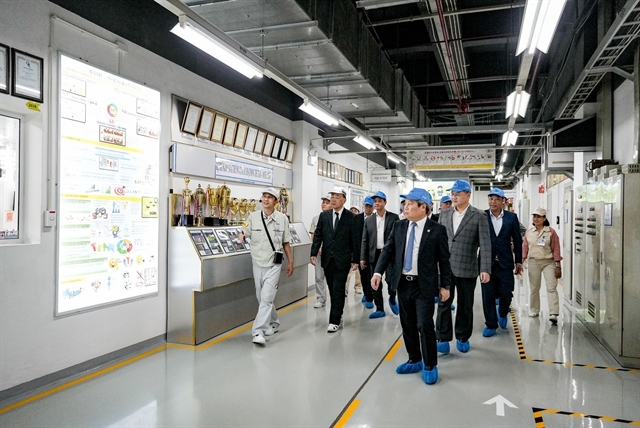 |
| Hà Nội People’s Committee Chairman Vũ Đại Thắng (first, centre) visits the Meiko Electronics Việt Nam Co Ltd in the Thạch Thất-Quốc Oai Industrial Park. Hà Nội has policies supporting science and technology enterprises, innovative enterprises and businesses undergoing digital transformation. — VNA/VNS Photo Trung Nguyên |
Speaking at the opening ceremony of the “Chief Executive Officer – CEO 2026” training course for the capital’s business community, held on June 20 by the Hà Nội Support Centre for Enterprise and Investment Promotion (SCE) in coordination with KINGSMAN Consulting and Training Joint Stock Company, Ngô Minh Toàn, SCE director, emphasised that the Party and State always identified the private economy as an important driving force of the national economy.
“In the country’s new development phase, the private business sector is expected to continue playing a pioneering role in innovation, enhancing competitiveness and contributing strongly to economic growth,” he said.
Toàn said that, as one of the country’s largest economic centres, Hà Nội has always focused on improving the investment and business environment and accompanying enterprises in their development.
For many consecutive years, the city has been among the localities with high results in the “Enterprise Support Policy” component index of the Provincial Competitiveness Index (PCI), reflecting its determination to build an increasingly effective enterprise-support ecosystem.
According to Toàn, recognising that human resources are the key factor determining enterprise competitiveness, the city has devoted considerable budget resources to funding 70-100 per cent of the cost of training and development programmes for entrepreneurs and workers.
This is one of the standout support policies, helping enterprises access high-quality training programmes at an appropriate cost.
Final chord
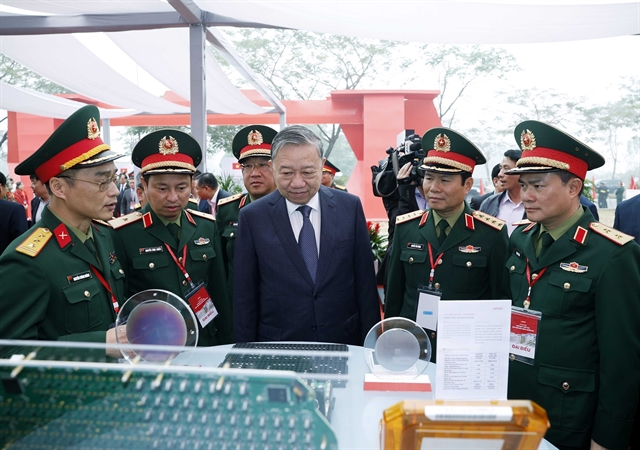 |
| Party General Secretary and State President Tô Lâm visits an exhibition area at the ground-breaking ceremony for Việt Nam’s first semiconductor chip manufacturing plant at the Hòa Lạc High-Tech Park in Hà Nội. The capital opens way for high-quality capital flows in artificial intelligence, semiconductors and the green economy. — VNA/VNS Photo Thống Nhất |
Investment promotion reform is ultimately not about flowery slogans in air-conditioned conference rooms. It is the courage to reject polluting billion-dollar projects in order to persistently pursue promising million-dollar semiconductor projects; the patience to sit down with each start-up and resolve each tax-related obstacle; and the willingness to empower experimentation with the new.
From the brightly lit laboratories in Hòa Lạc to the precision-mechanics supporting-industry workshops, a new-generation industrial landscape is taking shape.
Hà Nội today is not only a thousand-year-old capital of culture, rich in memory, but is also clearly shaping itself into a knowledge-based growth pole – a place where global high-quality capital finds a safe, transparent and ambitious foothold.
This translation aligns with Hà Nội’s publicly reported strategy of shifting FDI attraction from quantity to quality, prioritising semiconductors, AI, digital infrastructure, R&D and green industry. — VNS
Economy
 Economy
 Economy
 Economy
 Economy
 Economy
 Economy
 Economy
 Economy
 Economy
 Economy
 Economy
 Economy
 Economy
 Economy
.jpg)
.jpg)



