 Society
Bach Mai Hospital becomes Việt Nam’s first to win top WSO stroke certification
1.
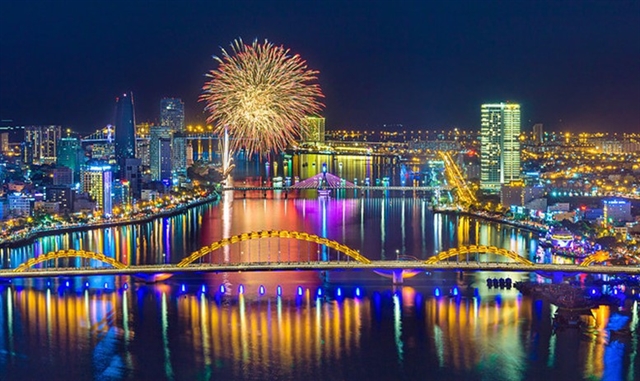 |
| An overview of centre Đà Nẵng City. The city is set to become a globally connected coastal city, ranking among Asia’s leading urban areas. — VGP/VNA Photo |
ĐÀ NẴNG — By 2075, Đà Nẵng is set to become an ecological, modern, smart and globally connected coastal city with a distinct identity, ranking among Asia’s leading urban areas and gradually meeting the criteria for a special-class urban area.
The targets are set out in Decision No. 2016/QĐ-TTg, signed by Permanent Deputy Prime Minister Phạm Gia Túc on Wednesday.
By 2050, the plan aims to make Đà Nẵng an ecological, modern, smart, safe, liveable and attractive coastal city with a distinct identity and a strong international profile.
The city is to become a key national growth pole and a national and regional hub for start-ups, innovation, logistics, the marine economy, trade, finance, free trade, and science and technology.
The plan also covers the city’s development in digital transformation, the digital economy, data, tourism and heritage, culture and sport, education and training, and high-quality healthcare.
Major socio-economic centre
In terms of its urban character, Đà Nẵng is a centrally run city and a major socio-economic centre of both Việt Nam and Southeast Asia.
It holds a strategic position in the national urban system as a key transport and telecommunications hub linking all modes of transport.
Đà Nẵng is to become a centre for free trade, finance, culture and international events; a hub for connecting and promoting world heritage sites; and a centre for cargo transhipment and international transport via its seaports and airports.
It will also serve as an important gateway to the sea for the Mekong Subregion, connecting with ASEAN and the wider world.
Three main tourism spaces
Under the plan, tourism will be developed across approximately 9,700–10,200ha of the city, covering marine, inland waterway, ecological, community-based, experiential, resort, and cultural, historical and spiritual tourism.
Three main tourism spaces will be established.
The first covers Sơn Trà, Cù Lao Chàm and Bà Nà, which have the potential to become national tourist areas. They will be developed along ecological lines, with growth kept in check by conservation.
The second is the Hội An–Mỹ Sơn cultural and heritage tourism space, together with the city’s Chăm relics and revolutionary historical sites.
The third is a sea and bay tourism space, with a chain of urban areas for tourism, resorts and the night-time economy along the eastern coast.
Innovation and digital technology
In trade and finance, the city will develop trading centres of national and international stature, international exhibition and convention centres, and commercial and financial streets.
The Đà Nẵng Free Trade Zone will be linked to major transport hubs. A Central Highlands–Central Việt Nam agricultural wholesale market and an associated logistics centre, covering about 130ha, will be built in Thăng Bình Commune.
The Đà Nẵng branch of the International Financial Centre in Việt Nam will be developed alongside an innovation and digital technology ecosystem, covering about 300–320ha.
For industry and logistics, the city will build a network of integrated multimodal logistics centres. These include the Hòa Nhơn Logistics Centre, the Kim Liên Station Logistics Centre, the Đà Nẵng International Airport Logistics Centre and the Hòa Vang Commune Logistics Centre.
Industry, including dual-use defence industry linked to logistics, will follow a green, smart, energy-efficient, low-emission and environmentally friendly model. It must also keep a safe distance from residential areas and use land efficiently.
The plan also calls for industrial clusters to help restructure the rural economy. Polluting facilities will be moved away from residential areas to meet environmental protection requirements and make better use of land. — VNS
Society
 Society
 Society
 Society
 Society
 Society
 Society
 Society
 Society
 Society
 Society
 Society
 Society
 Society
 Society