 Society
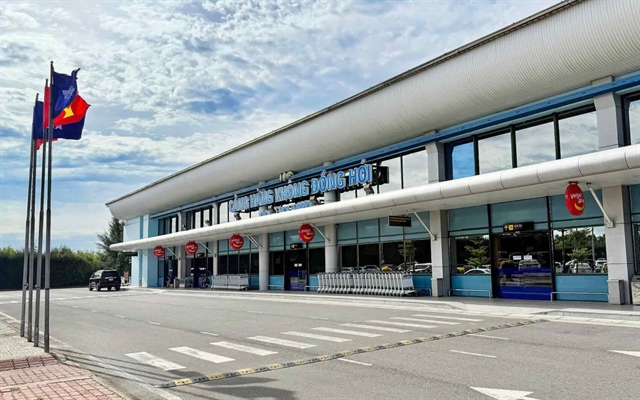
Direct flights boost tourism links across central Việt Nam
1.
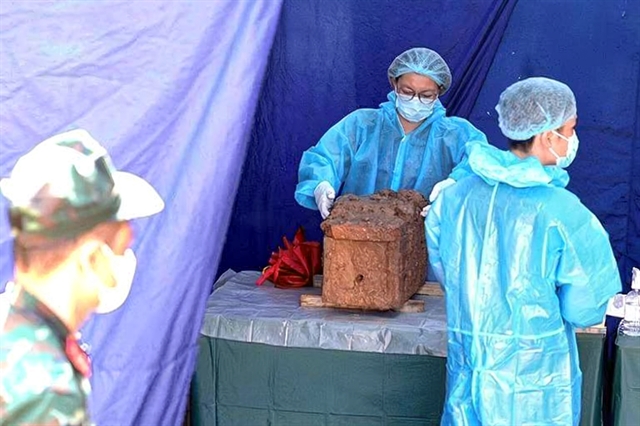 |
| CAREFUL WORK: Dương Thị Thảo My examines a casket before selecting remains for DNA testing. |
HÀ NỘI — A tooth, a fragment of bone buried deep in the soil – such tiny remnants can hold the key to identifying a fallen soldier whose name a family has been waiting decades to hear.
At Mai Lâm War Martyrs’ Cemetery in Đông Anh Commune on the outskirts of Hà Nội, forensic specialist Dương Thị Thảo My and her colleagues work meticulously, knowing that behind every sample they collect lies a life, a family and a story left unfinished by war.
From early morning, My was at the cemetery, working alongside local authorities to collect remains for DNA identification as part of the “500-Day Campaign to Accelerate the Search, Recovery and Identification of War Martyrs’ Remains”, a national drive launched to locate, recover, identify and return the remains to their families and home localities.
Inside a separate field tent, case files, special equipment, protective gear and disinfectants had been carefully arranged before the first grave of an unknown soldier was opened.
There is no room for haste. Before each grave is opened, My and the team check the relevant records, assign a case code and agree on the sampling procedure.
Every grave is given a unique code corresponding to the sample collected from it, ensuring that each fragment of remains can be traced back to the correct resting place.
“Before carrying out the work, we have to cross-check the records, verify the information and prepare all the necessary special equipment,” My said.
Every stage is documented, marked and checked with painstaking care. A small mistake in coding, recording or storage could compromise subsequent DNA testing and identification.
Preventing cross-contamination is equally important. Everyone entering the sampling tent must wear protective clothing, a face mask and gloves and follow strict disinfection procedures.
“We have to minimise the risk of biological material from living people contaminating the remains samples,” My said.
The sampling equipment is also strictly controlled, with every procedure carried out to ensure both accuracy and respect for the remains.
Exacting work
My said forensic work was demanding and still carried certain social preconceptions, particularly for women.
For women pursuing careers in forensics, the path can be made more difficult by family concerns and social preconceptions that the profession is too demanding, harsh and emotionally taxing.
Her parents were sometimes not entirely comfortable with her career. “But I cherish it and take pride in what I do,” My said.
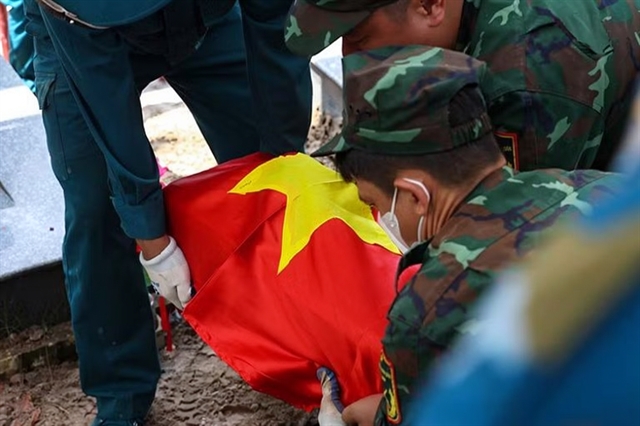 |
| FOR THE NATION: Search and recovery team members drape the national flag over the casket containing a fallen soldier’s remains after completing the excavation. VNA/VNS Photos Lê Phú |
When a burial casket is brought up, the forensic doctor carefully examines its condition, assesses the remaining material and selects the most suitable specimen for DNA testing. Teeth are generally the first choice, particularly the roots. If teeth cannot be found, long bones are preferred. Flat bones are considered only when no more suitable material is available.
“The greatest challenge comes with graves where the remains have lain underground for many years,” she said.
Time can leave bones fragile and deteriorated, while teeth may have fallen out and become lost in the surrounding soil. In some cases, officials must painstakingly examine handfuls of earth in the hope of finding a single tooth or a tiny fragment of bone capable of yielding DNA.
Every selected specimen is collected using special equipment, then labelled, coded and stored separately. The work has to be meticulous because the quality of the original sample is crucial to the analysis that follows.
“The aim is not simply to obtain a usable specimen, but to do so while preserving the dignity and integrity of the grave,” she said.
Personal traces
For My, some of the most powerful moments come not from the scientific process itself, but from the personal belongings discovered inside the graves. Some still contain everyday objects or distinctive personal items that have survived alongside the remains.
“Whenever I see these items, I feel more deeply the sacrifice and dedication of the fallen soldiers to the country,” she said.
Such discoveries are a reminder that every set of remains once belonged to an individual – someone with a family, a home and a life interrupted by war.
Throughout the process, the team remains conscious that behind every sample is a person and a family that may have spent decades waiting for an answer.
“That is why, despite carrying out the same procedures repeatedly, the specialists approach each case with the same care and sense of responsibility as if it were the first,” she said.
Once collected, each sample is packaged, coded, sealed and checked against the relevant records before being handed over to the specialist unit.
Back at the site, the specialists and technicians continue reviewing the records, counting the samples and completing the necessary procedures.
Restoring names
“We always hope that every sample collected correctly, every record entered accurately and every handover completed precisely will provide another piece of evidence to help establish a war martyr’s identity and return their name to their family,” My said.
"It is deeply meaningful work and a way of expressing our gratitude to the fallen, who sacrificed their lives for national independence and freedom.
“I feel proud to contribute to this campaign. This is not simply the responsibility of one organisation; it reflects the desire of many people to contribute.”
During the 500-day campaign, forensic specialists will visit many more cemeteries to examine graves in an effort to identify unknown soldiers.
But no two cases are the same. Each set of remains carries the story of one person and the unanswered hopes of a family that has waited years, sometimes generations, for confirmation of their loved one’s fate.
For My and her colleagues, the ultimate goal is simple: from these tiny fragments recovered from the earth, more fallen soldiers will be identified, more graves will be given their proper names and more families will finally have an answer. — VNS
Society
 Society
 Society
 Society
 Society
 Society
 Society
 Society
.jpg) Society
Society
 Society
 Society
 Society
 Society
 Society
 Society