 Society
Lotte, Phát Đạt combine strengths in Thu Thiem project
1.
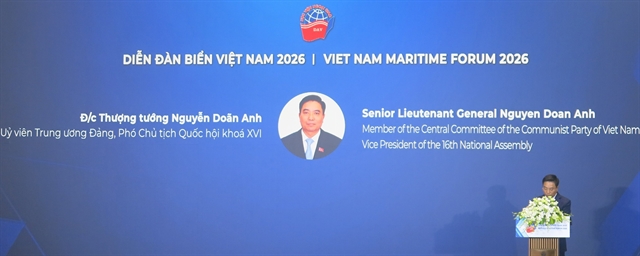 |
| Senior Lieutenant General Nguyễn Doãn Anh, member of the Party Central Committee and Vice President of the National Assembly delivers his speech at the Việt Nam Maritime Forum 2026 in Hà Nội on October 2. — VNS Photo Nguyễn Hằng |
HÀ NỘI — For Việt Nam to become a strong maritime nation, experts say it is vital to first ensure a strong domestic maritime capacity.
But to do this, a shift is required from a growth model heavily reliant on expanding investment towards one driven by productivity, knowledge, technology and human resources, while effectively mobilising and using international resources to strengthen the country’s self-reliance.
Nguyễn Duy Hưng, deputy head of the Central Commission for Policy and Strategy, said at the Việt Nam Maritime Forum 2026 held in Hà Nội on Friday, with the theme of 'Building Việt Nam into a Strong Maritime Nation through International Cooperation and Integration'.
The forum, organised by the Diplomatic Academy of Việt Nam under the Ministry of Foreign Affairs, seeks to discuss and recommend directions and solutions for cooperation to implement Politburo's Resolution No. 20 on building and developing Việt Nam into a strong maritime nation, turning the country’s potential into tangible and sustainable development resources.
Hưng also said the immediate priority was to translate the strategic orientations set out in the resolution into concrete action programmes, resources, capabilities and results.
Senior Lieutenant General Nguyễn Doãn Anh, member of the Party Central Committee and Vice President of the National Assembly told the forum that building Việt Nam into a strong maritime nation is a long-term development strategy closely linked to the country’s aspirations for national advancement.
Anh emphasised that the resolution marked a strategic shift in thinking about the sea, identifying the maritime domain as an important foundation of national comprehensive strength.
Anh also said that the forum is being held as the country begins implementing the resolution, providing an opportunity to share development visions, learn from international experience and receive cooperation initiatives and proposals from partners.
He called on the forum to focus on identifying concrete contributions that international cooperation could make to the implementation of the resolution as well as Việt Nam’s role in shaping the maritime domain as a space for peace, cooperation, connectivity and sustainable development.
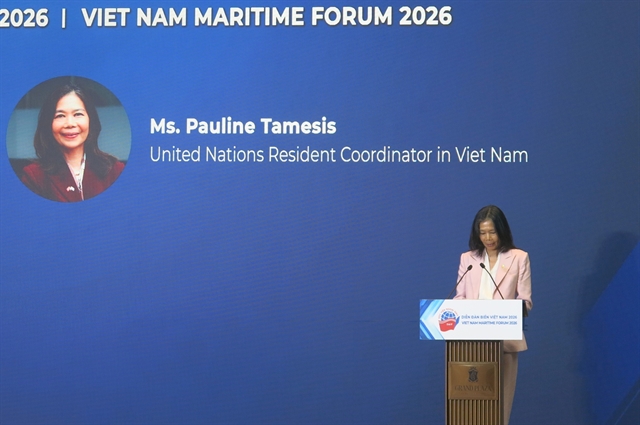 |
| United Nations Resident Coordinator in Việt Nam Pauline Tamesis at the forum. — VNS Photo Nguyễn Hằng |
Science, technology roles
Deputy Minister of Science and Technology Trần Trung Tính highlighted science, technology, innovation and digital transformation as key drivers for Việt Nam to accelerate maritime development.
The sea constitutes an interconnected global space, he said, noting that issues related to resources, the environment, climate change and sustainable development are increasingly transboundary in nature.
“This makes international cooperation a strategic pillar of marine science and technology,” Tính said.
Marine science diplomacy can serve as a bridge enabling Việt Nam to access advanced knowledge and technologies, participate more deeply in international research networks and contribute initiatives to address shared challenges concerning the seas and oceans, he added.
For 2026-30, the science and technology sector plans to regard marine data as strategic national infrastructure while shifting from technology application towards technological mastery.
The effectiveness of marine science and technology tasks will be assessed based on technologies mastered, products developed and national capabilities built, rather than simply the number of research projects or reports produced.
Meanwhile, United Nations Resident Coordinator in Việt Nam Pauline Tamesis affirmed the UN’s commitment to supporting Việt Nam in implementing its action programme and strengthening its capacity to implement the United Nations Convention on the Law of the Sea (UNCLOS) and the Agreement on the Conservation and Sustainable Use of Marine Biological Diversity of Areas Beyond National Jurisdiction (BBNJ).
The UN will also support efforts to mobilise finance and technology and ensure that the benefits of maritime development reach coastal communities, fishers, women and young people, she said.
Resolution 20 calls for a profound shift in thinking, from exploiting the sea to governing it, from a coastal economy to a strong maritime nation, from managing sector by sector to governing national maritime space as one integrated whole.
“Việt Nam has set itself an ambitious mission to become a strong maritime nation," she said.
"The ocean is one, our responsibility is shared, and our action must be joined. The United Nations is proud to be your partner in that endeavour.” — VNS
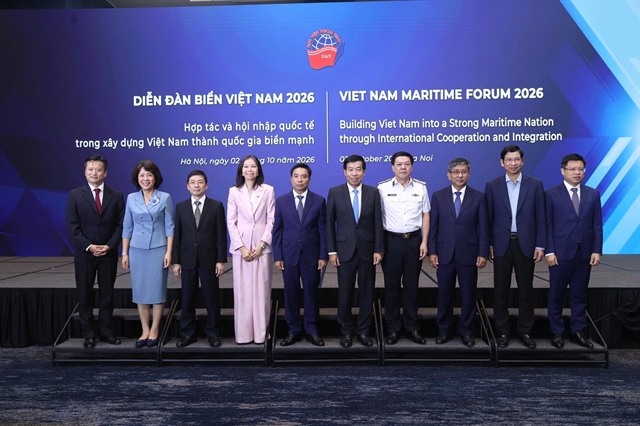 |
| Delegates at the Việt Nam Maritime Forum 2026 on October 2, with the theme of 'Building Việt Nam into a Strong Maritime Nation through International Cooperation and Integration'. — VNA/VNS Photo |
Society
 Society
 Society
 Society
 Society
 Society
 Society
 Society
 Society
 Society
 Society
 Society
 Society
 Society
 Society