 Society
Việt Nam–Denmark ties gain fresh momentum with comprehensive strategic partnership
1.
|
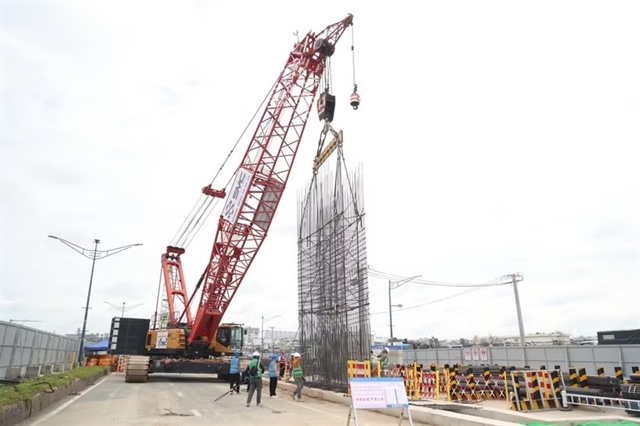
| Workers on site at an underground station ST10 (Phạm Văn Bạch Station) under the metro line No. 2 project in HCM City. — VNA/VNS Photo Hồng Đạt |
HCM CITY — HCM City is accelerating work on metro line No. 2 while finalising plans to break ground on three more urban railway lines by late 2026.
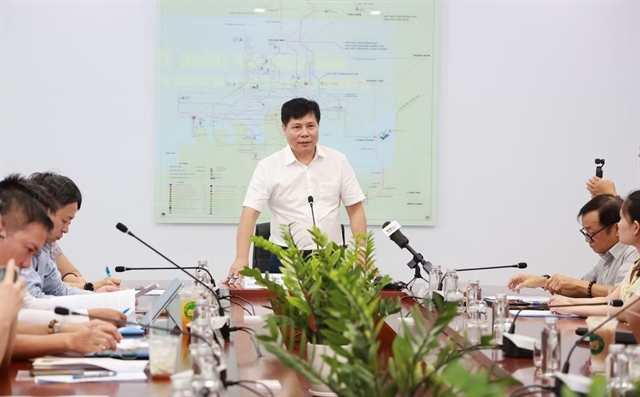
Speaking at a press briefing on Friday, Phan Công Bằng, head of the HCM City Management Authority for Urban Railways (MAUR), said the city is simultaneously advancing multiple urban railway projects across various stages, from civil construction to investment preparation.
In the 2026–30 period, the city has identified eight priority urban railway projects for investment, four of which are managed directly by MAUR.
Relevant agencies are currently finalising dossiers regarding technological solutions, technical standards, route alignments, facility locations, land compensation, and resettlement procedures.
The projects leverage special mechanisms to streamline site clearance and procedural approvals under the transit-oriented development (TOD) model.
The metro line No. 2 between Bến Thành and Tham Lương spans nearly 11.3km, featuring 10 underground stations, one elevated station, and one depot, with a total investment of around VNĐ55.2 trillion (US$2.1 billion).
Groundbreaking took place on January 15, followed by the signing of the EPC (Engineering, Procurement, and Construction) contract on April 8.
The main EPC contractor, a joint venture between Trường Hải Group Corporation (THACO) and China Railway Group Limited (CREC), is accelerating surveying, engineering design, traffic management, and site execution.
Geological surveys were completed on June 19, covering 506 boreholes across 11 stations, the Tunnel Boring Machine (TBM) section, transition zones, elevated structures, and depot areas.
Following Front-End Engineering Design (FEED), MAUR has approved diaphragm wall designs for ST04 (Hòa Hưng), ST05 (Lê Thị Riêng), ST06 (Phạm Văn Hai), and ST10 (Phạm Văn Bạch) stations.
Design dossiers for the remaining stations are being finalised for approval to enable simultaneous construction this year.
At ST05 (Lê Thị Riêng), guide wall construction has reached 42 per cent (207/491.5m) and diaphragm walls nearly 46 per cent (40/87 panels).
At ST06 (Phạm Văn Hai), guide wall excavation stands at 37 per cent (101.5/280m), while ST09 (Bà Quẹo) has reached 7.4 per cent (20/270m).
Meanwhile, ST10 (Phạm Văn Bạch) completed Phase 1 guide walls at 43 per cent (229/533m), with diaphragm walls reaching 30.7 per cent (27/88 panels).
For ST02 (Tao Đàn) and ST07 (Bảy Hiền), construction permits were issued on September 12, and contractors are mobilising equipment to the sites.
|
| Phan Công Bằng, head of the HCM City Management Authority for Urban Railways (MAUR), speaks at a press briefing on urban railway project progress held in the city on October 2. — VNA/VNS Photo |
Alongside civil works, traffic diversion schemes and temporary bypass road arrangements are being implemented along the vital Cách Mạng Tháng Tám (August Revolution) – Trường Chinh corridor connecting central districts to the northwestern gateway.
Traffic management setups have been completed at ST04 (Hòa Hưng), ST05 (Lê Thị Riêng), ST06 (Phạm Văn Hai), ST09 (Bà Quẹo), and ST10 (Phạm Văn Bạch) stations.
Similar arrangements for ST02 (Tao Đàn) and ST07 (Bảy Hiền) are scheduled for implementation on October 10 following Department of Construction approval, while schemes for ST01 (Bến Thành), ST03 (Dân Chủ), and ST08 (Nguyễn Hồng Đào) are being refined.
Temporary road widening and hoarding layouts are tailored to local site conditions, maintaining carriageway capacity and property access for residents to minimise congestion.
The contractor must deploy 24/7 traffic wardens and adjust plans dynamically based on real-time traffic flow.
Three new lines scheduled for ground-breaking late this year.
The city is finalising investment preparations for three additional urban railway routes to boost regional connectivity across the southern economic zone.
Urban railway line No. 1 (Bình Dương - Suối Tiên) spans 32.8km from Phú Chánh Depot to Suối Tiên Bus Station, connecting with Metro Line No. 1 (Bến Thành - Suối Tiên). MAUR is finalising technical standards, feasibility studies for land compensation, and alignment dossiers.
Urban railway line No. 2 (Thủ Dầu Một - central HCM City) spans 35km from S5 Station (intersecting with Line 1) to Tao Đàn Station (connecting with Metro Line No. 2). Technical standards, compensation studies, and alignment dossiers have been submitted for appraisal.
Urban railway line No. 6 (Inner Ring - Phase 1, Tân Sơn Nhất - Phú Hữu section) extends 23km from the Bà Quẹo intersection (connecting at Metro Line No. 2's ST09 station) to Phú Hữu station, with planned connections to the Thủ Thiêm - Long Thành railway.
Technical standard frameworks have been submitted to the Ministry of Construction for consensus.
All three projects are scheduled for official project approval in December, with construction planned to begin before the end of the year.
In addition, MAUR is studying investment plans for Line 3 connecting to Vũng Tàu, Bà Rịa, and Phú Mỹ. The city's Department of Construction has proposed studying an extension to Long Thành International Airport to bolster regional transit connectivity with key transport hubs.
By late 2026, MAUR will focus on managing the EPC contract, accelerating guide wall and diaphragm wall construction across six underground stations, and initiating work on viaducts, elevated stations, and depot facilities starting in November.
According to the master schedule, the metro line No. 2’s first TBM will begin tunnelling in October, 2027.
Main station structures are targeted for completion by March 2029, track laying by late 2029, and full commercial operations by late 2030. — VNS
Society
 Society
 Society
 Society
 Society
 Society
 Society
 Society
 Society
 Society
 Society
 Society
 Society
 Society
 Society
.jpg)



