 Society

Việt Nam fosters comprehensive cooperation with Uruguay
1.

|
| An art programme at the ceremony announcing the resolution of the National Assembly’s Standing Committee on the establishment of Hiệp Hòa Ward, Bắc Ninh City. — Photos courtesy of Bắc Ninh City |
BẮC NINH — Bắc Ninh officially became Việt Nam’s ninth centrally-run city from September 20 this year, following a resolution passed by the National Assembly.
In its new status, Bắc Ninh City is focusing on completing its technical infrastructure, improving residents’ quality of life, and accelerating digital transformation, while building a dynamic and professional cadre of officials capable of meeting the demands of a modern governance model under the new administrative structure.
To achieve these goals, localities across Bắc Ninh must not only fulfil criteria relating to infrastructure, population scale, and socio-economic development, but also enhance the operational capacity of the urban government apparatus, improve the quality of public services, and meet the rising expectations of residents and the business community.
Completing infrastructure

|
| Phạm Hoàng Sơn, Chairman of the Bắc Ninh City People’s Committee, presents certificates of merit to individuals with outstanding achievements in advising, leading, directing and implementing tasks under the Bắc Ninh Urban Master Plan to 2050, with a vision to 2075. |
In Hiệp Hòa Ward, Bắc Ninh City, the local authority has conducted a comprehensive review of the current infrastructure status and drawn up an investment roadmap for the 2026–2030 period.
Bùi Huy Khánh, Secretary of the Hiệp Hòa Ward Party Committee, said the locality had proactively reviewed all required criteria and prepared the necessary conditions for its new development phase.
Accordingly, Hiệp Hòa plans to expand urban areas, social housing projects, and concentrated commercial–service zones. The ward aims to develop civilised streets meeting the “bright – green – clean – beautiful” criteria, while studying the development of a night-time economy linked to local cultural identity to create distinctive features for the future city.
Digital transformation has been identified by Hiệp Hòa Ward as one of its key tasks to innovate leadership and operational methods.
The locality issued a “100-day digital transformation” plan, launched in August this year, with the goal of becoming the leading unit in Bắc Ninh City in this field.
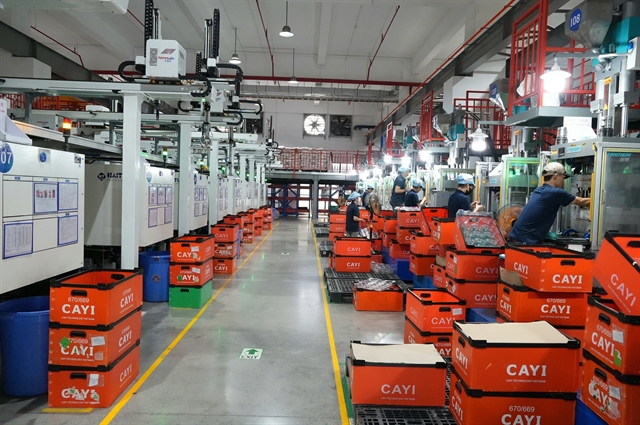
|
| Industrial production is the main growth driver of Bắc Ninh City. |
At present, Hiệp Hòa is striving to fully cover its smart broadcasting system, implement online meetings down to the village party cell level, and equip all necessary digital devices to serve residents’ transaction needs.
In Nếnh Ward, Bắc Ninh City, the requirement to enhance urban governance capacity is even more evident against the backdrop of rapid industrialisation.
With four operating industrial parks and several large projects such as Quang Châu 2 and Việt Hàn Phase 2, Nếnh Ward currently contributes around 30 per cent of Bắc Ninh City’s growth rate.
But, the rapid increase in mechanical population is putting significant pressure on urban infrastructure.
The permanent population in the area stands at about 60,000, while the temporary population reaches up to 130,000, creating urgent demands for transport, housing, schools, and social institutions.
According to Lê Hoàng Bách, Chairman of the Nếnh Ward People’s Committee, the locality is orienting its development towards a “compact urban” model, concentrating on high-rise apartment blocks and modern new urban areas, while still allocating suitable land funds for schools, green parks, and commercial zones to serve workers and employees settling long-term.
Alongside infrastructure development, Nếnh is promoting the digitisation of baseline data, studying the application of artificial intelligence (AI) in state management, and applying a key performance indicator (KPI) system to assess officials’ responsibilities and competencies in a fair and transparent manner.
In Việt Yên Ward, Bắc Ninh City, the completion of Grade 2 urban criteria is also being implemented decisively.
Although it has inherited facilities from the former administrative centre, Việt Yên still falls short on two criteria: population density on constructed land and average income per capita.
The rapid pace of urbanisation has also brought pressure on land management and construction order.
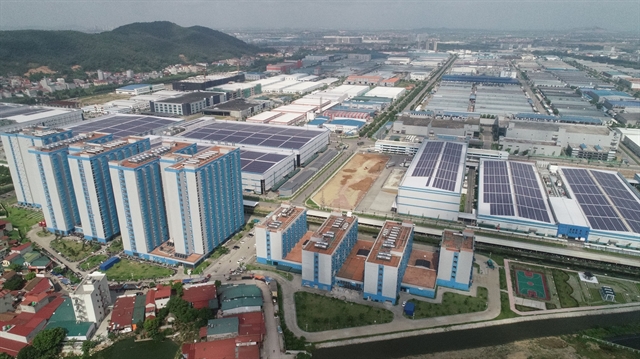
|
| The Vân Trung Industrial Park – home to major FDI projects in Bắc Ninh City. |
Trần Mạnh Xâm, Deputy Chairman of the Việt Yên Ward People’s Committee, said the locality identified industrial development as the main driving force, while attaching importance to ensuring social welfare.
The ward has set a target to eliminate poor households by next year, moving towards sustainable development.
Effective staff
Alongside infrastructure investment and digital transformation, Bắc Ninh City has identified building a system of officials as a key factor in enhancing the effectiveness and efficiency of state management during urbanisation.
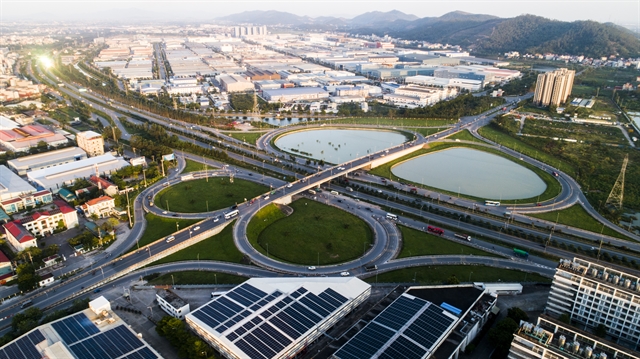
|
| Completed and well-connected transport infrastructure – a driving force for Bắc Ninh’s economic development. |
Nguyễn Đăng Khang, Deputy Director of the Bắc Ninh Department of Home Affairs, stated that, alongside the rapid pace of urbanisation, the quality of the cadre and civil service is the decisive factor in the effectiveness and efficiency of the apparatus and the quality of service to the people.
According to Khang, Bắc Ninh is aiming for an urban government model that is “streamlined, professional, modern, incorrupt, and development-oriented”.
The city will continue to review and reorganise the apparatus according to job positions, with particular attention to the cadre of advisory officials and commune- and ward-level civil servants, who directly handle daily tasks for residents.
To prepare for these new requirements, Bắc Ninh City is focusing on in-depth training in urban governance, digital government, data governance, and land planning, while attracting high-quality human resources, including experts and scientists in the fields of technology, innovation, and public administration.
The style of serving the people is also identified as an area requiring continued innovation.
Deputy director Khang said that, in the new period, officials need to be firm in politics, standard in public ethics, proficient in expertise, and skilled in digital competencies.
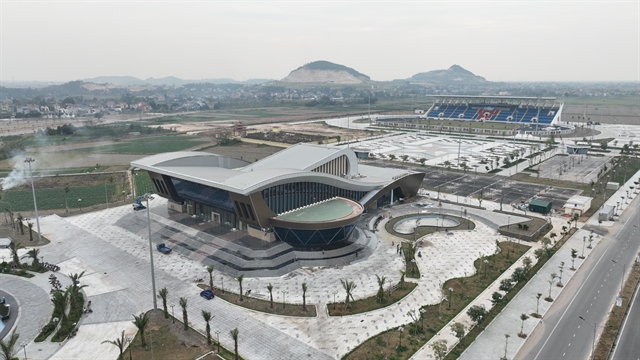
|
| Socio-economic infrastructure in Việt Yen Ward, Bắc Ninh City, is being increasingly invested in and built to more modern and better-equipped standards. |
More importantly, officials must be close to the people, understand their needs, and take the effectiveness of serving the people as the measure of their work.
Practical experience from localities shows that Bắc Ninh is gradually forming an urban governance method that is modern, flexible, and people-centred.
The synchronisation of infrastructure investment, industrial development, digital transformation, and improvement of human resource quality will create the foundation for the province to enhance urban quality and meet the development requirements in the new phase of a centrally-run city. — VNS
Society
 Society
 Society
 Society
 Society
 Society
 Society
 Society
 Society
 Society
 Society
 Society
 Society
 Society
 Society