 Society
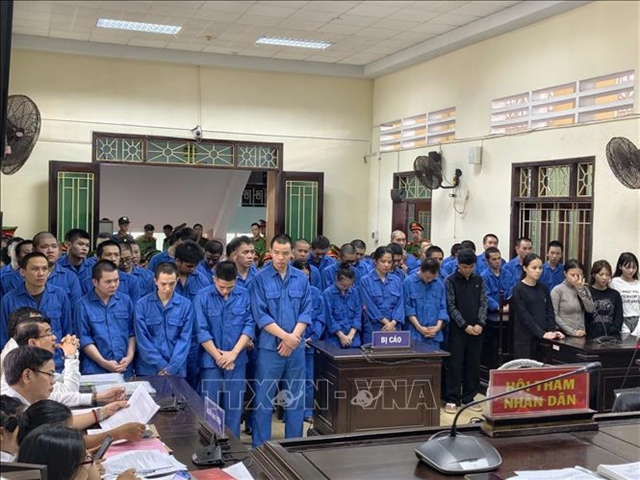
84 individuals investigated for transnational online frauds
1.
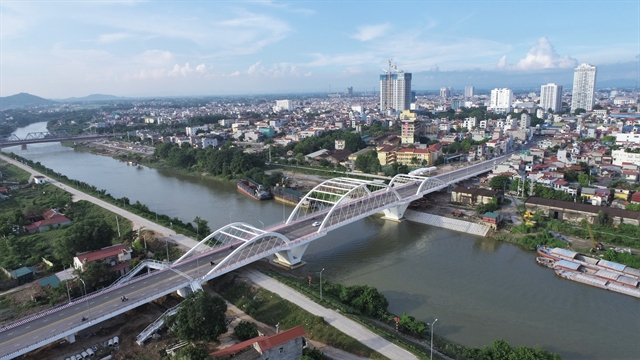 |
| Bắc Giang urban area – the administrative centre of Bắc Ninh City. — Photos courtesy of the Bắc Ninh City Department of Culture, Sports and Tourism |
BẮC NINH — The northern city of Bắc Ninh is actively implementing its urban development plan to 2030, said Vice Chairman of the Bắc Ninh City People's Committee Phạm Văn Thịnh.
The move is an important strategic step towards the goal of making Bắc Ninh a first-tier urban area and a centrally governed city, with a vision of making it a green, smart and modern city rich in Kinh Bắc cultural identity.
By 2030, Bắc Ninh's urban system will be developed under a polycentric model, with clear levels and administrative divisions, closely connected with major economic corridors and the Hà Nội metropolitan area.
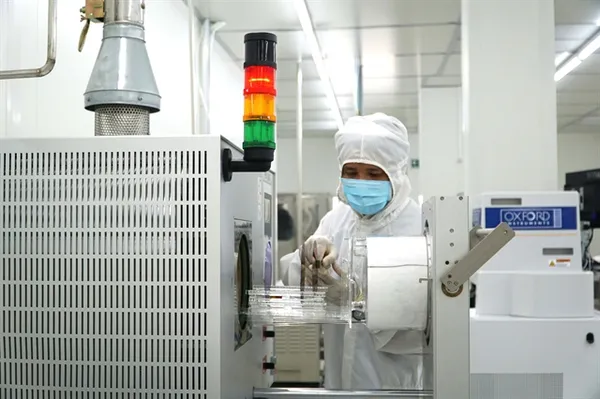
Bắc Ninh also aims to become an economic growth pole in northern Việt Nam, with a focus on electronics, semiconductors, artificial intelligence (AI), multimodal logistics and airport urban development, particularly Gia Thuận urban area associated with Gia Bình Airport.
Key urban development targets for Bắc Ninh by 2030 include an urbanisation rate of 65 per cent, higher than the average for the Red River Delta, urban transport land accounting for 25 per cent of urban construction land, average housing space of 40 sq.m per person, or 42 sq.m per person in urban areas.
The city also targets 96.4 per cent of its population having access to clean water meeting regulatory standards, with the rate reaching 100 per cent in urban areas.
All industrial, hazardous and medical waste and 98.5 per cent of domestic solid waste is expected to be collected and treated in accordance with regulations.
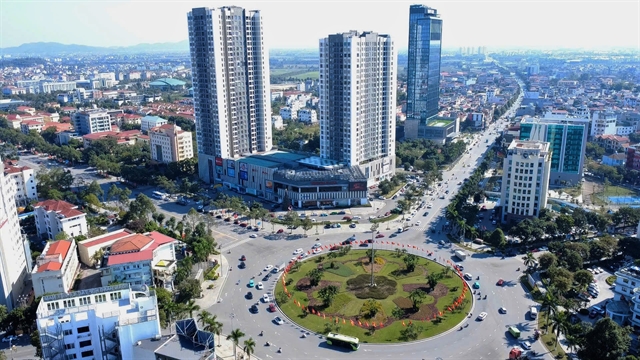 |
| Six-way intersection in Kinh Bắc Ward, Bắc Ninh City. |
Bắc Ninh has mapped out a systematic roadmap for urban classification.
In 2026, it plans to prepare dossiers seeking recognition of Bắc Giang, Kinh Bắc and Từ Sơn as second-tier urban areas, as well as a dossier seeking recognition of Bắc Ninh as a first-tier urban area and a centrally governed city, with a network of 25 urban areas, including three second-tier and 22 third-tier urban areas.
By 2030, Bắc Ninh aims to complete and improve the criteria for a first-tier urban area and centrally governed city with urban network covering Bắc Ninh central urban area and eight second-tier urban areas and an expanded urbanisation area comprising four urban areas meeting second-tier urban criteria.
From now until 2030, Bắc Ninh will focus on developing its urban system towards becoming a model of green and smart urban development while preserving Kinh Bắc's cultural identity. It will promote transit-oriented development (TOD), expand green and water areas, and introduce waste sorting at source.
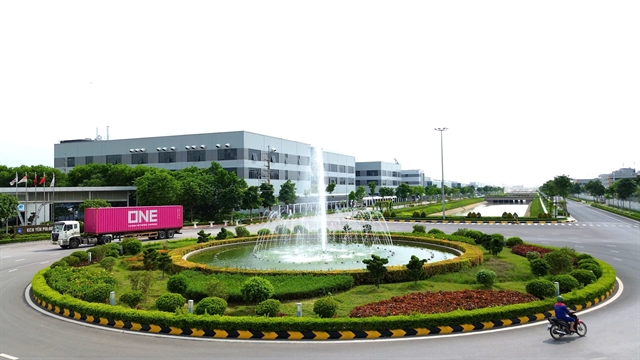 |
| Yên Phong II-C Industrial Park – a typical green industrial park in Bắc Ninh City. |
Alongside the development of modern technical and digital infrastructure, including AI, Big Data and the Internet of Things (IoT), Bắc Ninh will place particular emphasis on preserving and promoting its eight UNESCO-recognised cultural heritages such as the Yên Tử-Vĩnh Nghiêm-Côn Sơn, Kiếp Bạc Complex of Monuments and Landscapes, Quan họ folk singing, Ca trù, the practices related to the Vietnamese Mother Goddesses of the Three Realms, the practices of Then of the Tày, Nùng and Thái ethnic groups, the tugging rituals and games, the woodblocks of Vĩnh Nghiêm Pagoda and Đông Hồ folk woodblock printing.
These heritages will be linked with the development of cultural, historical and spiritual tourism.
With the eight UNESCO-recognised cultural heritages mentioned above, Bắc Ninh and Huế are currently the two localities leading the country in the number of World Heritage sites. The convergence of unique tangible, intangible and documentary heritage has made the Kinh Bắc-Bắc Ninh area one of Việt Nam's prominent and distinctive cultural centres.
Vice Chairman of the Bắc Ninh City People's Committee Pham Van Thinh further stressed that, to successfully achieve these goals, Bắc Ninh will focus on breakthrough solutions in science and technology development, innovation and environmental protection while improving urban planning and development management, developing mechanisms and policies, mobilising financial resources, developing land resources and developing human resources.
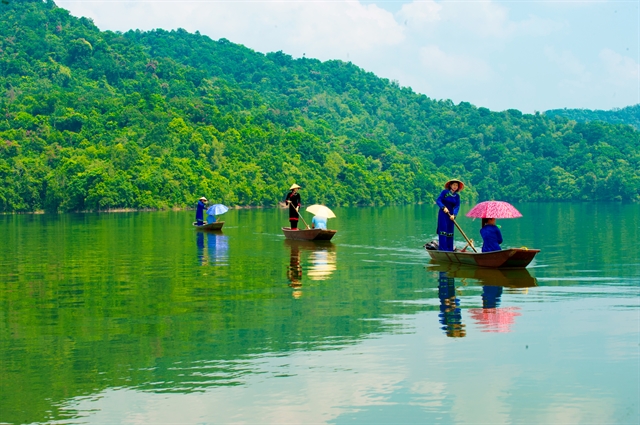 |
| Cấm Sơn Lake – dubbed Hạ Long Bay on land, an attractive tourist destination in Bắc Ninh City. |
Under a resolution of the National Assembly, Bắc Ninh officially became a centrally governed city of Việt Nam on September 20.
The milestone is regarded as an important foundation for Bắc Ninh to enter a new phase of development.
Permanent Vice Chairman of the Bắc Ninh City People's Committee Mai Sơn said the significance of the central government's approval of Bắc Ninh City lies not only in establishing a new administrative status, but also in requiring Bắc Ninh to make stronger changes in its development thinking, growth model and governance methods.
Becoming a centrally governed city cannot merely mean a change in name, but must bring substantive improvements in the quality of growth, infrastructure, competitiveness, public services and people's living standards, he said.
The recognition identifies the development of Bắc Ninh into a green, smart, modern, civilised and prosperous city owning a strong Kinh Bắc cultural identity, with science and technology, innovation and digital transformation serving as the key drivers.
It also calls for the development of high-tech industries, particularly electronics, semiconductors, integrated circuit manufacturing and AI.
This is considered a major development orientation suited to Bắc Ninh's potential, advantages and position in the capital region, the Red River Delta and major economic corridors.
The inter-sectoral appraisal council, chaired by the Ministry of Construction, also held a conference to appraise the scheme for recognising Bắc Ninh as a first-tier urban area.
Having met 12 of the 15 prescribed criteria, Bắc Ninh received broad support from the council, providing an important basis for its official establishment as a centrally governed city.
According to the Bắc Ninh City People's Committee, 102 social housing projects with a combined scale of around 117,000 apartments are currently under development in the locality, along with 47 commercial housing projects and 182 urban and residential area projects.
In the first six months of this year, the Bắc Ninh City People's Committee directed relevant agencies to appraise nine planning tasks, 17 planning schemes and seven planning boundary-marker dossiers.
The local authority has completed adjustments to the Bắc Ninh City’s Planning for 2021-30, with a vision towards 2050, while accelerating the preparation of the Bắc Ninh Master Urban Plan, laying the foundation for the goal of turning Bắc Ninh into a centrally governed city.
Đậu Anh Tuấn, deputy general secretary of the Vietnam Chamber of Commerce and Industry (VCCI), said: “Bắc Ninh has many conditions conducive to industrial development, particularly high-tech industries and to becoming a growth pole of Việt Nam in the coming period. Bắc Ninh has all the conditions needed to become a development pole.”
Đỗ Xuân Thủy, chairman of the Bắc Ninh Association of Architects, said “What is noteworthy this time is that the planning scheme covers the entire administrative territory of the province, creating an urban structure that integrates industrial urban development, rural areas and trade and services while preserving cultural identity.” — VNS
Society
 Society
 Society
 Society
 Society
 Society
 Society
 Society
 Society
 Society
 Society
 Society
 Society
 Society
 Society