 Society
Top leader Tô Lâm’s EU visit to focus on trade, investment, energy security: ambassador
1.
|
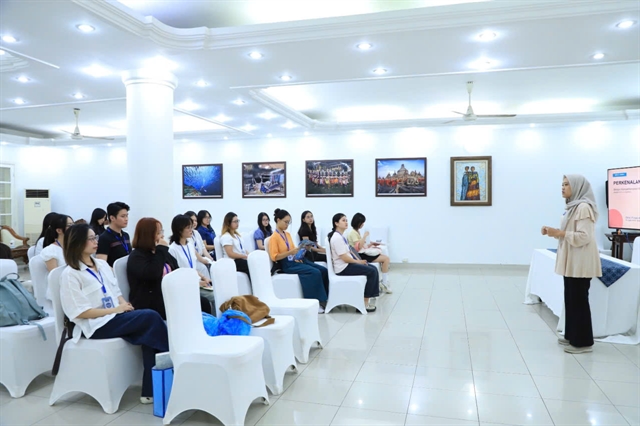
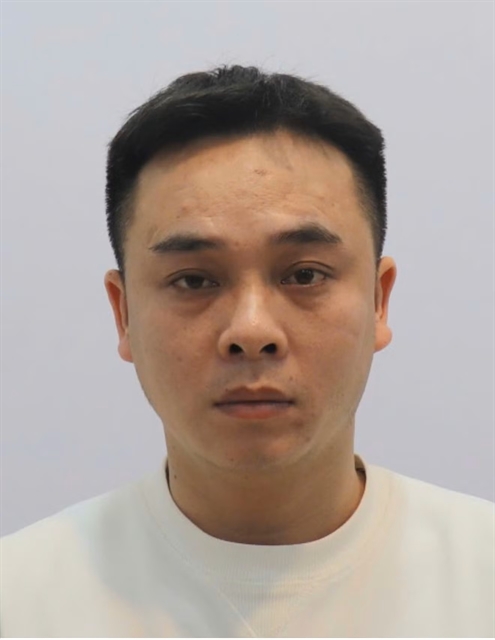
| Dewi Puspa Arum, known as Puspa, a lecturer at Universitas Pembangunan Nasional “Veteran” Jawa Timur (UPN “Veteran” East Java), has been assigned a BIPA teacher in Việt Nam. |
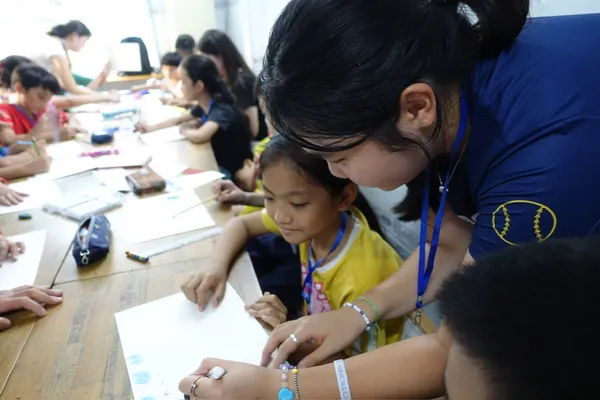
HÀ NỘI — More than 300 Vietnamese people are studying Bahasa Indonesia in Hà Nội this year, reflecting growing interest in Indonesia's language and culture while contributing to closer people-to-people ties between the two countries.
The Bahasa Indonesia for Foreign Speakers (BIPA) programme is being conducted at three locations in the capital – the Embassy of Indonesia in Hà Nội (KBRI Hà Nội), the University of Social Sciences and Humanities under the Việt Nam National University, Hà Nội (USSH-VNU), and Hà Nội University (HANU).
Courses' levels range from BIPA 1 to BIPA 6, enabling Vietnamese learners from different backgrounds to develop practical Bahasa Indonesia skills while gaining greater understanding of Indonesian society, culture and everyday communication.
As part of the 2026 BIPA initiative, the Indonesian Agency for Language Development and Cultivation (Badan Pengembangan dan Pembinaan Bahasa) has assigned Dewi Puspa Arum, known as Puspa, a lecturer at Universitas Pembangunan Nasional “Veteran” Jawa Timur (UPN “Veteran” East Java), as a BIPA teacher in Việt Nam.
Her three-month assignment runs from September to November 2026. She is working under Badan Bahasa to provide Bahasa Indonesia and cultural education as part of Indonesia's educational and cultural diplomacy in Việt Nam.
The assignment was facilitated by Pusdaya (Center for Language and Literature Empowerment), Badan Bahasa, under Indonesia's Ministry of Primary and Secondary Education, with permission and institutional support from UPN “Veteran” East Java.
At KBRI Hà Nội, more than 200 participants are taking BIPA classes. Hà Nội University has around 70 students studying the language, while approximately 40 students are enrolled at USSH-VNU.
The learners at KBRI Hà Nội come from a wide range of professions and backgrounds, including university students, restaurant and coffee-shop operators, bank employees, freelancers, video editors, tour guides, homemakers, teachers, lecturers, souvenir-shop owners, micro, small and medium-sized enterprise operators, tourism workers, private-sector professionals and people working in the creative industries.
At USSH-VNU and HANU, BIPA learners are university students, highlighting the role of language learning in academic and educational cooperation between the two countries.
Language as a bridge
The scale and diversity of participation demonstrate that BIPA extends beyond classroom-based language instruction, serving as a channel for people-to-people diplomacy through language, culture and education.
For Vietnamese learners, Bahasa Indonesia provides an entry point to Indonesian society, from everyday communication and social interaction to traditions, arts, food, tourism, and contemporary life.
The programme is also part of broader efforts by KBRI Hà Nội to strengthen people-to-people connections. At an Alumni & Friends of Indonesia Gathering in May 2026, Indonesian Ambassador to Việt Nam Adam Mulawarman Tugio highlighted cultural affinities between the two countries, describing them as “cultural cousins”.
The embassy also introduced the Indonesia–Việt Nam Association Network (I-VAN), an initiative aimed at strengthening people-to-people links. Representatives from HANU and USSH also discussed opportunities to expand educational, cultural and people-to-people cooperation.
The growing demand for Bahasa Indonesia classes has prompted some participants to propose establishing a BIPA Study Club, which would provide additional opportunities for speaking practice, informal communication and continued interaction among learners outside regular classes.
The demand for greater continuity also follows challenges identified by KBRI Hà Nội in its 2025 performance report. The embassy said the deployment of BIPA teachers to Việt Nam had been delayed that year, with two teachers instead conducting online classes at USSH involving 34 learners.
For 2026, the embassy has placed greater emphasis on coordination with Badan Bahasa to ensure more continuous teacher deployment, strengthen the effectiveness of the programme and support completion of the BIPA curriculum.
The embassy has also highlighted the importance of incorporating Indonesian cultural elements into BIPA teaching, including through teachers with expertise in Indonesian dance and music.
Expanding academic cooperation
Puspa's assignment is also creating opportunities for longer-term academic cooperation with Vietnamese universities.
She is working with professors and academics at USSH-VNU and HANU to explore ways of strengthening Bahasa Indonesia teaching and expanding the development of Bahasa Indonesia programmes in Việt Nam.
The cooperation brings universities, Badan Bahasa and KBRI Hà Nội into a shared ecosystem for language development and international education, while creating opportunities for academic institutions in the two countries to exchange knowledge, develop learning initiatives and establish sustainable networks around Bahasa Indonesia and Indonesian culture.
The initiative comes as Việt Nam and Indonesia continue to deepen bilateral ties following the elevation of their relationship to a Comprehensive Strategic Partnership in March 2025.
The upgraded partnership has opened broader opportunities for cooperation, including stronger people-to-people connections. Within this framework, programmes such as BIPA provide a practical avenue for bringing Vietnamese and Indonesian communities closer through language, education and cultural exchange.
The BIPA initiative also contributes to the broader objectives of the UN Sustainable Development Goals, particularly SDG 4 on Quality Education through access to language and intercultural learning, and SDG 17 on Partnerships for the Goals through cooperation among government agencies, universities, educators and communities in the two countries.
Puspa expressed her appreciation for the support from Ambassador Adam Mulawarman Tugio and Made Santi Ratnasari, Head of Chancery and Function Officer for Education and Socio-Cultural Affairs at KBRI Hà Nội.
She also acknowledged the support of Pusdaya, as well as the leadership, professors and academics at USSH-VNU and Hà Nội University, and the leadership of UPN “Veteran” East Java for facilitating and supporting her assignment in Việt Nam. — VNS
Society
 Society
 Society
 Society
 Society
 Society
 Society
 Society
 Society
 Society
 Society
 Society
 Society
 Society
 Society