 Society

Polish PM Donald Tusk to pay official visit to Việt Nam
1.

|
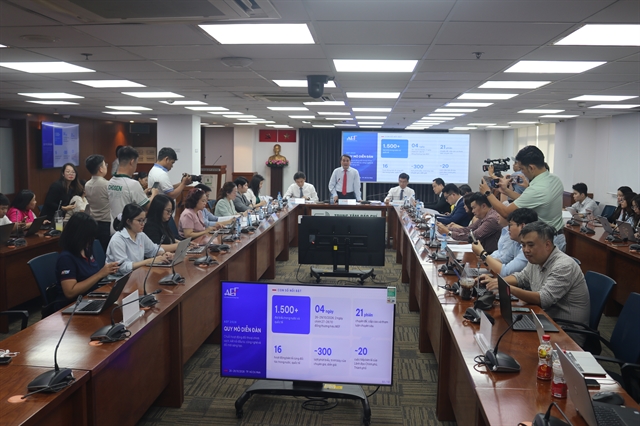
| In the 2026-2027 academic year, all students from 1st to 12th grades are provided AI training. VNA/VNS Photo |
HÀ NỘI Hà Nội has translated the Politburo’s Resolution 57-NQ/TW into concrete action through technological products and models tailored to management requirements and the practical needs of its citizens.
So far, several projects have been implemented such as introducing artificial intelligence (AI) into schools, piloting the 'Hanoi Smart Police' initiative and deploying AI-powered cameras for traffic management to bringing online public services to residential areas via the 'Digital Meeting House' model
In September, the city’s Department of Education and Training began providing education on AI for all students.
In the 2026-2027 academic year, AI education is being implemented across 100 per cent of educational institutions, covering all grade levels from 1 to 12 as well as the continuing education system, with 12 periods of core content per academic year.
The curriculum is structured around four key themes of human-centric thinking, AI ethics, AI techniques and applications, and AI system design.
Nguyễn Văn Hiền, director of the Department of Education and Training, said that AI education is not merely about teaching students how to use generative AI tools but its core objective is to foster a proper understanding of the technology, enabling students to interact with, utilise, evaluate, and, step-by-step, design AI systems.
“Hà Nội's education sector has determined that this initiative will not involve creating new subjects or adding new grading requirements, nor will it increase the academic workload for students,” Hiền said.
“It will utilise existing facilities and equipment to avoid wasteful, superficial investments.
“Notably, at the primary school level, students will not directly operate generative AI tools, instead, they will engage with the concepts through daily activities, games and age-appropriate topics.”
From Hanoi Smart Police to traffic AI cameras
|
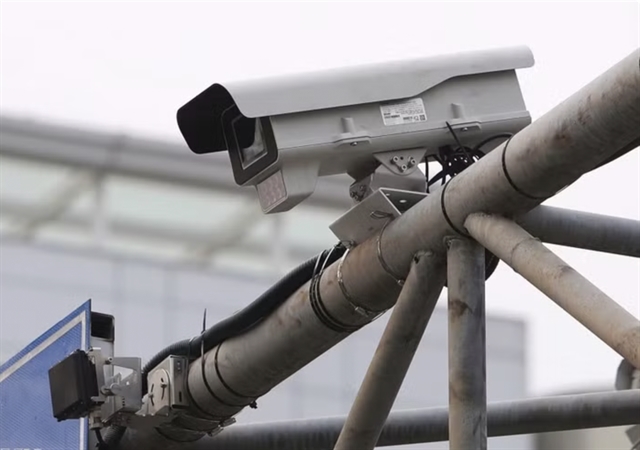
| Since using the AI cameras, Hà Nội has seen positive changes in traffic management. VNA/VNS Photo |
Along with AI education in schools, digital technology has been applied widely in public security and traffic management
Earlier in September, the Hà Nội Police launched three digital transformation solutions: a digitalised production chain for wireless fire alarm equipment, the 'Cảnh sát Hà Nội thông minh – Smart Hà Nội Police' application on iHanoi platform, and the use of drones to monitor security and public order.
The Hanoi Smart Police application was developed by the Hà Nội Police in co-ordination with the city’s Department of Science and Technology, with two main functions: serving the public and supporting the police’s internal operations, command, and management.
People can report information about security and social order, send emergency alerts, make appointments with police agencies, look up information on traffic, fire prevention and control, and other matters.
Lieutenant General Nguyễn Thanh Tùng, director of the Hanoi City Police, said: "Commune or ward police forces are required to step up public outreach and guide residents in installing and effectively using the application, thereby rapidly integrating these technological products and solutions into daily life."
In traffic management, AI is also gradually transforming monitoring and operational methods.
The police has put 36 LED information boards into use to display traffic information and warnings along major crowded routes and at key intersections.
Nearly 5,000 AI cameras, AI virtual assistant tools and a system supporting traffic monitoring, command and control have been deployed.
The virtual assistant is capable of analysing, aggregating, and compiling traffic data in real time to assist law enforcement and traffic authorities.
"Since using the AI cameras, Hà Nội has recorded changes in traffic management, ranging from the establishment of 'green wave' corridors and traffic signal control based on vehicle flow to the detection and handling of violations," Tùng said.
Hà Nội Police are also implementing a project to install more than 21,000 AI-powered cameras along 993 main roads in the inner-city area and at more than 3,000 locations and intersections that are not yet equipped with traffic lights.
By the end of this year, the city aims to complete the transmission infrastructure and the installation of peripheral equipment, and be ready to put all 21,671 cameras into operation.
The system is intended to support public security, public order and urban management.
Bringing digital transformation to residential areas
Digital transformation is not only being deployed through large-scale systems but also reaching the grassroots level through models directly connected with people's daily lives.
Cầu Giấy Ward has launched the 'Digital Meeting House' model at a residential group on Xuân Thủy Street.
The venue provides internet connections, computers, printers and equipment for residents to attend online meetings.
Under the plan, 24 community digital transformation support points have been equipped with devices to assist residents. The ward has also established 27 community digital transformation teams and organised digital skills training for grassroots personnel.
At these locations, residents can receive guidance on using online public services, checking the status of applications, using electronic accounts and accessing digital services.
Residential groups and community digital transformation teams have been asked to make effective use of the equipment, regularly assist residents and promptly report any problems arising during operation.
From schools and residential areas to transport and the maintenance of security and order, the models currently being implemented demonstrate that Resolution 57 is being translated into concrete action across various sectors in Hanoi.
A common feature of these models is that technology is being practically applied to prepare students for AI, create additional channels for interaction between residents and the police, use data to support traffic management, and bring online public services and digital skills support closer to residential communities.
These practical applications also highlight that the task is not simply to continue investing in technology but to ensure that systems operate effectively, are interconnected and are put to practical use, so that science, technology and digital transformation can genuinely contribute to more effective governance and better public services. VNS
Society
 Society
 Society
 Society
 Society
 Society
 Society
 Society
 Society
 Society
 Society
 Society
 Society
 Society
 Society