 Society
Draft law proposes to expand eligible tissue and organ donors
1.
 |
| Residents in Lộc Bình Commune in Lạng Sơn Province complete administrative procedures at a digital public service kiosk at the commune’s Public Administration Service Centre. VNAVNS Photo Quang Duy |
LẠNG SƠN — For many ethnic families living in the mountainous and border areas of northern Lạng Sơn Province, a smartphone was once little more than a device for making calls and staying in touch with relatives.
Today, it is increasingly becoming a gateway to public services, information and new markets.
Across remote villages, authorities and community digital technology teams are helping residents learn how to use digital platforms, access online public services and promote local products. The changes are part of efforts to implement Politburo Resolution No. 57-NQ/TW on breakthroughs in science and technology, innovation and national digital transformation.
With ethnic people accounting for more than 83 per cent of its population, Lạng Sơn has identified digital literacy at the grassroots level as an important means of narrowing the development gap between urban and rural areas.
From ‘learning by doing’ to greater digital access
In Mẫu Sơn Commune, where difficult terrain and scattered settlements have long posed challenges to development, authorities have been working to bring digital technology closer to residents.
Community digital technology teams, made up of officials, police officers, youth union members and representatives of mass organisations, have been established to provide hands-on assistance.
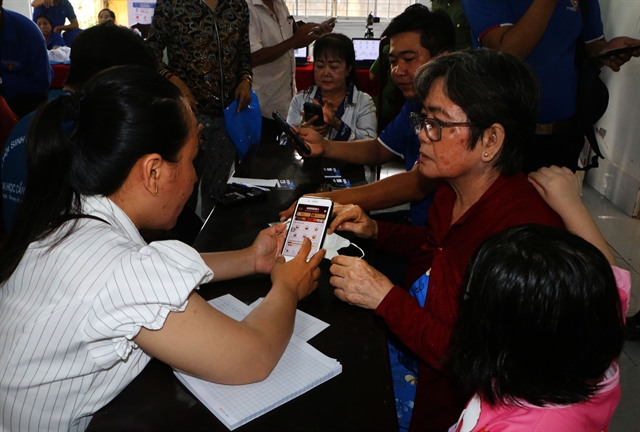
Rather than asking residents to learn new technologies on their own, team members go directly to households and show them how to use smartphones and digital applications step by step.
For Vi Thị Thành, a Dao ethnic woman from Trà Ký Village, this approach has made digital technology much less intimidating.
Previously, Thành's family mainly used mobile phones for basic calls, and online applications and digital public services were largely unfamiliar to them.
Members of the commune's community digital technology team visited her home and patiently guided the family through the installation and use of several applications.
Thành said that, after receiving the face-to-face guidance, she gradually became more confident in using her smartphone.
Her family can now use the VNeID digital identity application, make remote bank transfers, look up information and access official information and other services online.
The experience illustrates a broader change taking place in remote communities: digital transformation is not simply about introducing new technology, but about helping people understand how that technology can solve everyday problems.
According to Đào Thị Mai Hương, Vice Chairwoman of the Mẫu Sơn Commune People's Committee, community digital technology teams have played an important role in promoting digital transformation at the grassroots level, particularly in the development of a digital society.
The commune plans to continue implementing programmes and plans on digital transformation across different sectors, while promoting the application of science and technology and digital tools in administration, production and business.
From local markets to online customers
For mountainous communities, however, the economic potential of digitalisation may be even more significant.
 |
| Đặng Thị Thơ, a farmer over 55 in Lạng Sơn Province, shares her skills in communication, video production and promoting agricultural products on e-commerce platforms. VNA/VNS Photo |
In the past, many farmers relied heavily on traders to purchase their agricultural products. Limited access to markets meant that prices could fluctuate and producers had relatively little control over where and how their goods were sold.
Digital platforms are beginning to change that pattern.
In Mẫu Sơn, households and cooperatives are using social media and e-commerce platforms to introduce distinctive local products such as wild lemons, honey and medicinal herbs to customers beyond the locality.
Hoàng Phúc Thắng, Director of the Mẫu Sơn Ecological Farm Cooperative, said the cooperative had expanded beyond traditional sales channels by promoting its products through social media and establishing fanpages on e-commerce platforms.
The approach has enabled agricultural products to reach a wider pool of consumers and helped producers expand their markets beyond the immediate area.
For producers in remote areas, the significance goes beyond simply having another sales channel. Online platforms allow them to introduce the origin and characteristics of their products directly to consumers, potentially reducing their dependence on intermediaries and connecting small-scale producers with customers in other parts of the country.
In this sense, digital transformation is creating a new development pathway for mountainous communities: technology is being used not only to access information and public services, but also to connect local resources with wider markets.
Bringing digital skills to every household
Mẫu Sơn is not the only locality working to close the digital gap.
In Văn Quan Commune, local authorities have launched the ‘Digital Literacy for All’ movement, mobilising government agencies, mass organisations and residential communities to help residents acquire essential digital skills.
The commune has consolidated 19 community digital technology teams with more than 120 members. Their work includes visiting villages and households to help residents use essential digital platforms, while also raising awareness of online scams and other risks in cyberspace.
For Hoàng Văn Tiệp, Party cell secretary and head of Đức Hinh Village, one of the most visible benefits has been easier access to administrative procedures.
After being shown how to complete procedures on smartphones and at the commune's public administrative service centre, many residents have found that some procedures can be completed in only 10-15 minutes.
"People are pleased because the procedures cabe completed more quickly, saving them time," Tiệp said.
The change may appear modest, but for residents of mountainous communities, saving a trip and reducing the time required to complete administrative procedures can make a significant difference.
According to the Văn Quan Commune People's Committee, nearly 80 per cent of residents aged 14 and above have been issued and activated VNeID accounts. All commune officials and civil servants are proficient in using digital platforms for their work, while the proportion of online applications processed on time remains high.
Hoàng Thị Linh, Vice Chairwoman of the Văn Quan Commune People's Committee, said the movement was gradually raising residents' awareness and changing their habits regarding technology through practical activities.
She described the community digital technology teams as a bridge between digital services and households, helping make digital services more accessible to residents while improving public services and supporting local development.
The changes taking place in villages such as Trà Ký and Đức Hinh reflect a broader strategy being pursued across Lạng Sơn.
Under Resolution No. 57-NQ/TW, dated December 22, 2024, on breakthroughs in science and technology, innovation and national digital transformation, the province aims to create a more favourable environment for people and businesses while supporting its target of achieving double-digit economic growth during 2026-2030.
Administrative reform is a central part of that effort. Lạng Sơn plans to expand digitalisation, reduce the cost and time required for administrative procedures and make greater use of data already held by government agencies.
By 2027, the province aims for all eligible administrative procedures to be provided as fully online public services, with administrative results fully digitised and data reused. All eligible internal administrative procedures are also expected to be conducted electronically.
By 2030, the province aims to ensure that all essential public services can be accessed regardless of administrative boundaries and the satisfaction rate among people and businesses with the performance of state administrative agencies reaches at least 95 per cent.
The province also aims to ensure that all feedback and petitions concerning administrative regulations are received, processed and publicly reported within the prescribed time limits.
Another goal is to reduce the burden on residents and businesses by ensuring that they do not have to repeatedly submit information or documents that are already available in government databases. — VNS
Society
 Society
 Society
 Society
 Society
 Society
 Society
 Society
 Society
 Society
 Society
 Society
 Society
 Society
 Society