 Opinion
Top leader receives Dominican Republic’s United Left Movement delegation
1.
|
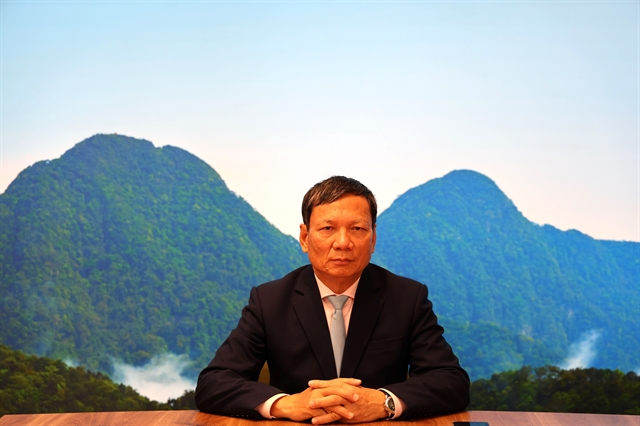
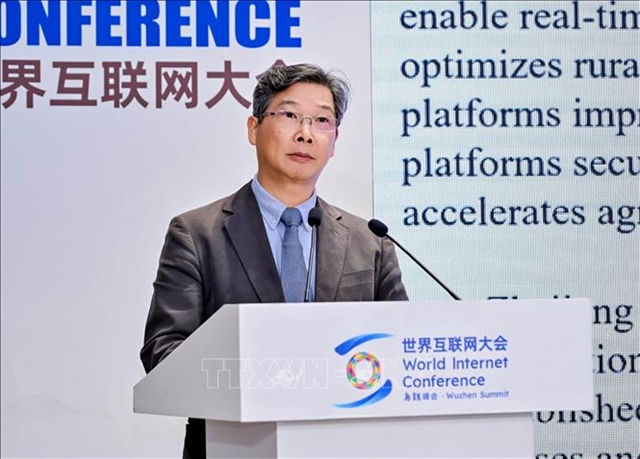
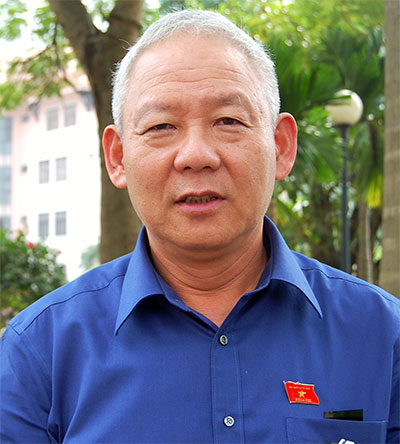
| Prof. Wei Longbao, Director of the Institute of Food and Agribusiness Management at Zhejiang University. — VNA/VNS Photo Công Tuyên |
HÀ NỘI — Agricultural cooperation has always been an important pillar of Việt Nam-China relations, stated Prof. Wei Longbao, Vice Chair of the United Nations Academic Impact Sustainable Development Goals Hub 1 and Director of the Institute of Food and Agribusiness Management at Zhejiang University.
China and Việt Nam are geographically close, sharing mountains and rivers, as well as many cultural similarities and complementary agricultural resources, he told Vietnam News Agency correspondents in Beijing.
China is currently Việt Nam’s largest agricultural export market, while Việt Nam is China’s largest agricultural trading partner in ASEAN. The two sides have established mechanisms including the China-Việt Nam Joint Committee on Agricultural Cooperation and a conference between agricultural authorities of China’s Guangxi Zhuang Autonomous Region and Việt Nam’s four border provinces. They also leverage the Regional Comprehensive Economic Partnership (RCEP) and the China-ASEAN Free Trade Area to promote high-tech agriculture, agricultural market access and cross-border cooperation.
Việt Nam is now at a critical stage of agricultural digital transformation. Despite abundant resources and favourable climate conditions, fragmented small-scale farming and a shortage of digital talent have created demand for advanced, practical technologies. China, meanwhile, has developed comprehensive systems for smart agricultural equipment, digital farming and crop breeding. Similar agricultural conditions in the two countries also offer considerable potential for technology adaptation.
The Chinese scholar identified four major challenges: difficulties in localising technologies amid differences in infrastructure and ecological conditions; limited mutual recognition of standards and customs facilitation, resulting in repeated inspections and higher trade costs; shortages of talent, particularly in AI and digital skills among Vietnamese farmers, alongside a lack of personnel in China combining technical expertise with knowledge of Việt Nam; and competition from countries such as Israel and the Netherlands, as well as cross-border risks involving exchange rates, land and disease.
Regarding prospects for cooperation, Wei noted that China and Việt Nam issued a joint statement in April this year on building a China-Việt Nam community with a shared future that carries strategic significance and deepening their comprehensive strategic cooperative partnership. He said this provides a high-level framework for cooperation across the high-tech agricultural value chain and regional food security.
Agricultural science and technology cooperation is therefore shifting from product trade towards deeper integration of technology, capital, talent and standards.
He highlighted three Chinese models that could provide useful references. The first integrates multiple technologies around specific production needs. Smart farms combine satellite remote sensing, sensors and intelligent machinery for precision field management, while automated environmental monitoring improves resource efficiency in livestock and aquaculture.
The second involves multi-party cooperation, demonstration and promotion. Research institutes provide technologies, enterprises commercialise them, cooperatives and farmers apply them, and demonstration bases promote scalable solutions. For international cooperation, joint research and development, and small-scale trials can precede local adaptation and gradual expansion.
The third is socialised services and shared use. Instead of requiring individual farmers to purchase sophisticated machinery, drones and digital systems, cooperatives or service centres can provide equipment through leasing and other services, lowering entry barriers and addressing operational training through professional teams.
Among China’s notable applications is the “BeiDou+Smart Agriculture Maize Large-Area Yield Improvement Pilot” in Datong, Shanxi province. Integrating autonomous equipment, weather stations and soil-moisture monitoring, the system increased planting density by 33 per cent and average yields by 15.5 per cent, while reducing irrigation by 40 per cent and fertiliser use by 15 per cent.
In Shunchang, Fujian province, IoT and AI technologies are being used across 6,667ha of citrus orchards for real-time monitoring and precision fertilisation and pest control.
Meanwhile, a smart shrimp-farming model in Jiangsu province uses underwater sensors and automated feeding and environmental controls. It has increased output by about 20 per cent and cut farming costs by more than 15 per cent, Wei said. — VNA/VNS
Opinion
 Opinion
 Opinion
 Opinion
 Opinion
 Opinion
 Opinion
 Opinion
 Opinion
 Opinion
 Opinion
 Opinion
 Opinion
 Opinion