 Opinion
Hà Nội seeks boundary change to boost ecotourism, protect heritage
1.
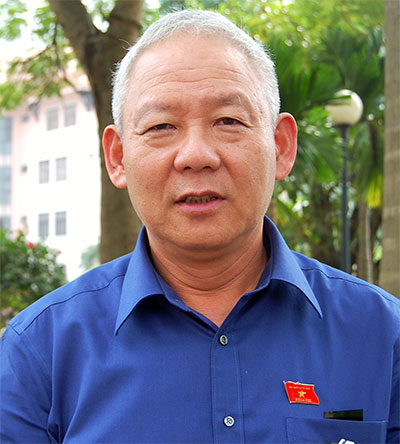 |
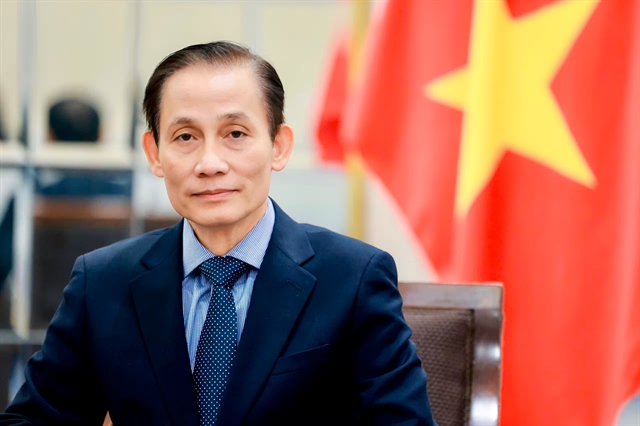
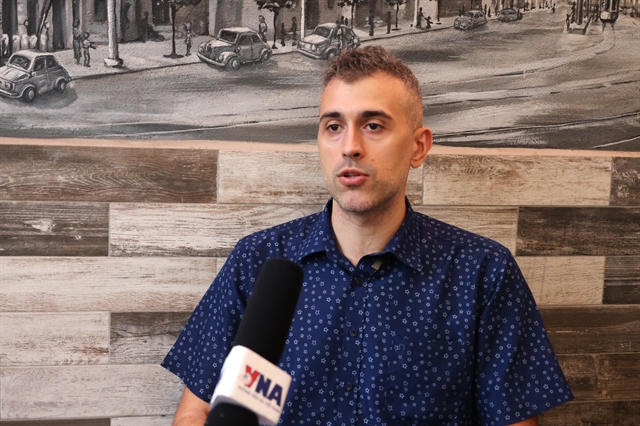
| Trần Văn, a former deputy chairman of the National Assembly's Committee for Financial and Budget Affairs (now the Committee for Economic and Financial Affairs). — Photo qdnd.vn |
Trần Văn, a former deputy chairman of the National Assembly's Committee for Financial and Budget Affairs (now the Committee for Economic and Financial Affairs), spoke with Nhân Dân (the People) newspaper about the forces behind Việt Nam's economic rise since the launch of Đổi mới (Renewal), why its growth model needs to change, and what it will take to unlock the resources for a more self-reliant, prosperous economy.
Looking back on the 40 years since Đổi mới, what do you see as the decisive shifts behind Việt Nam's economic transformation?
There is no single explanation; this is the product of many forces working together. But I would point to four changes that mattered most.
The first was a shift in thinking: the move toward a socialist-oriented market economy. The pivotal moment was abandoning central planning in favour of a multi-sector economy governed by market forces, which freed up productive capacity across the country. Recognising private property rights and the freedom to do business unlocked enormous energy that had been sitting dormant in society.
The second was the decision to open up and integrate with the world, positioning Việt Nam as a reliable partner and a responsible member of the international community. Việt Nam joined the World Trade Organisation and signed a wave of new-generation free trade agreements – the CPTPP, the EU-Việt Nam FTA and RCEP – which turned the country into a magnet for foreign direct investment and drew it steadily into global supply chains.
Third, political and social stability, combined with consistent macroeconomic management – controlling inflation, safeguarding key balances, weathering global shocks – gave both domestic and foreign investors the confidence to commit capital.
And fourth, since the Communist Party's 11th National Congress in January 2011, Việt Nam has consistently pursued three strategic breakthroughs – institutions, infrastructure and human capital – across successive five-year plans.
That sustained effort modernised the legal framework governing the economy, built our transport, energy and digital infrastructure, and shifted the workforce out of agriculture and into industry and services, while raising the skills needed for a digital, knowledge-based economy.
Forty years on, this record reflects a willingness to confront hard truths, to keep innovating, and to hold firm to the goal of national independence bound up with people's welfare. That is the platform Việt Nam is building on now, with the ambition of reaching double-digit average growth in the years ahead.
Việt Nam has set targets of becoming a modern, upper-middle-income developing economy by 2030 and a high-income, developed nation by 2045. What does that mean for how the growth model itself needs to change?
Transforming the growth model, as called for in the Party Central Committee's Resolution 19, is not optional. It is existential.
The essence of the new model is a shift from growth built on scale to growth built on depth, driven by science, technology and innovation. From here, growth has to come mainly from higher labour productivity, wider application of technology, innovation and thoroughgoing digital transformation.
That means raising the share of growth that comes from total factor productivity, making technology and knowledge the leading inputs into production, and pursuing what we call a 'twin transformation' – digital and green – to open new space for growth and deepen Việt Nam's place in global supply chains.
The resolution also calls for restructuring the economy around greater self-reliance and more domestic value added, and for building a strong domestic private sector, including large private conglomerates capable of leading value chains and competing internationally, backed by supportive policy and institutional reform.
Alongside that, Việt Nam needs resilience against external shocks, through diversified markets and supply chains, comprehensive security, and economic development that keeps pace with social progress.
Put simply, the next phase of growth has to be productivity-led, innovation-driven, built on that digital-green transformation, and strategically self-reliant, with the ambition of producing Vietnamese technology brands with real global reach.
None of this can happen without a developmental State, one that extends trust, hands over serious responsibility, and creates a transparent, secure business environment in which entrepreneurs feel safe to innovate. That combination is the key to high growth and genuine resilience to global volatility.
From your work overseeing public finance and the state budget, what bottlenecks stand in the way of mobilising and effectively using Việt Nam's development resources?
Despite the progress, these resources are still not reaching their full potential, and a few bottlenecks explain why.
Public investment remains spread too thinly across too many projects, and preparation work is often not thorough enough, so capital sits idle waiting for projects to be ready.
Site clearance, land valuation and planning delays are major obstacles that keep public investment from mobilising the matching private capital it ought to be able to trigger.
The legal framework governing these resources is also overlapping and fragmented. The National Assembly (NA) is actively revising it, narrowing the law itself to matters that genuinely require legislation, while giving the government and local authorities more flexibility to act through implementing regulations.
At its first extraordinary session of the current term, held this past August, the NA called for sharper focus on strategic national infrastructure. It also agreed to let compensation, support and resettlement work proceed as a stand-alone project ahead of formal investment approval – a change that should shorten the time it takes to prepare sites.
Public-private partnerships, meanwhile, are still not drawing private capital at scale, largely because there is no fair mechanism for sharing risk between the State and investors, so social capital remains underused and insufficiently diversified.
Capital markets, both corporate bonds and equities, are not yet deep enough to take real pressure off the banking system as a source of medium- and long-term financing.
A draft law merging the State Budget Law with the Law on Public Investment is now before the NA. Its aim is a more proactive, sustainable fiscal policy targeted at what matters most: using the safe headroom in public debt and the budget deficit, trimming recurring expenditure to free up more for development investment, and prioritising infrastructure projects that generate the broadest economic spillovers for the shortest social payback period.
The NA has also insisted on managing the budget by results, measuring precisely what economic value each penny of public money generates. In the period ahead, success will not be judged only by whether revenue targets are met and spending follows the rules. What matters more is how quickly resources are released and how effectively they mobilise capital across the wider economy to drive growth that is fast and sustainable.
After 40 years of Đổi mới, what is your hope for Việt Nam's position in this next phase? And how does growth actually translate into stronger businesses and better lives for ordinary people?
This moment, forty years into the reform era, is an occasion not just for pride in what has been achieved, but for setting out a vision for the country's next great push forward.
My greatest hope is that Việt Nam establishes itself, unmistakably, as an independent, self-reliant economy that is building a green and digital future and has become an indispensable link in global supply chains – a country with high international standing, a reliable partner, and an active contributor to peace and prosperity in the region.
However impressive the growth figures become, they remain only a quantitative measure. The true test is whether that value actually reaches every corner of the economy and every household.
The Party has set out three pillars for getting there: an economy that keeps shifting toward productivity, technology and twin transformation; a private sector strong enough to serve as the backbone of that economy, operating on a transparent, level playing field free of informal costs, with small and medium-sized firms able to connect with the supply networks of larger companies; and, most importantly, development that moves in step with social progress, equity and environmental protection.
That last point matters most. Growth should be felt in rising disposable income and purchasing power, backed by a modern, inclusive social safety net. People should have access to better healthcare and education, a cleaner and safer environment, and equal opportunity for stable employment, wherever in the country they live.
The ultimate test of any development strategy is not what shows up in the statistics, but the satisfaction, trust and quality of life of ordinary Vietnamese people.
Looking back across 40 years of reform and 81 years of independence, the biggest lesson is about faith: faith in constant renewal, and in the strength of national unity.
Việt Nam now stands at the threshold of a new stage of growth. With a solid macroeconomic foundation, an increasingly enabling approach to governance, and the ambition of its business community and more than 100 million people behind it, the country has the confidence, the resources and the resolve to build a strong, prosperous nation, one where economic growth and human dignity advance together. — VNS
Opinion
 Opinion
 Opinion
 Opinion
 Opinion
 Opinion
 Opinion
 Opinion
 Opinion
 Opinion
 Opinion
 Opinion
 Opinion
 Opinion