 Opinion
Deputy PM urges Việt Nam National University to lead in technology development
1.
|
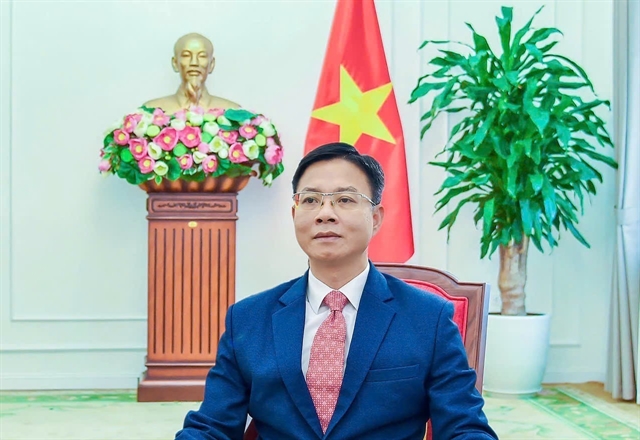
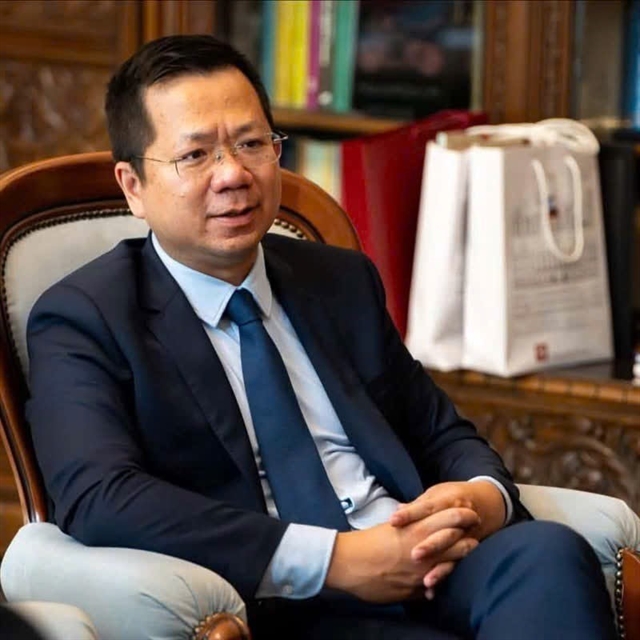
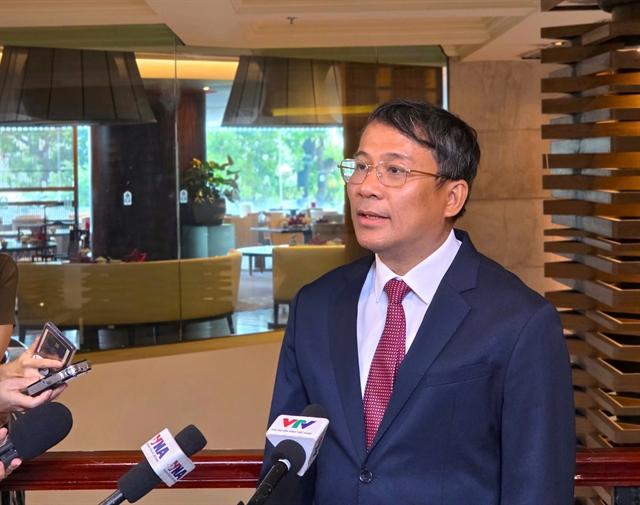
| Deputy Minister of Foreign Affairs Ngô Lê Văn. — VNA/VNS Photo |
HÀ NỘI — Việt Nam-UNESCO cooperation is regarded by UNESCO and its member states as one of the organisation’s successful, dynamic, substantive and effective models of cooperation, Deputy Minister of Foreign Affairs Ngô Lê Văn told the press on the occasion of the 50th anniversary of Việt Nam’s cooperation with UNESCO (1976 - 2026).
Looking back over the past 50 years, Văn noted that Việt Nam has evolved from a member receiving support from UNESCO into a partner that proactively contributes to and initiates initiatives.
He highlighted four major aspects of the relationship.
First, Việt Nam’s position within UNESCO mechanisms has steadily grown. The country has actively and responsibly undertaken a number of key positions within UNESCO mechanisms, including the General Conference, the Executive Board, the World Heritage Committee, the Intergovernmental Committee for the Safeguarding of the Intangible Cultural Heritage, and the Intergovernmental Committee for the Protection and Promotion of the Diversity of Cultural Expressions.
Second, Việt Nam has also moved from participation to initiative-taking. A notable example is the “International Decade of Culture for Sustainable Development” initiative proposed by Việt Nam. It was adopted by the 43rd session of the UNESCO General Conference in November 2025 with the support of 72 countries.
On September 4, 2026, it was subsequently adopted by the United Nations General Assembly, with 103 countries co-sponsoring the resolution and designating 2027-2036 as the International Decade of Culture for Sustainable Development.
For the first time in nearly 40 years, the international community has a dedicated decade for culture, demonstrating that Việt Nam is not only an active member but also has the capacity to put forward initiatives and build consensus at the global level, according to the Deputy FM.
Third, political trust between Việt Nam and UNESCO has increasingly deepened. General Secretary of the Communist Party of Việt Nam (CPV) Central Committee and President Tô Lâm’s visit to UNESCO headquarters in Paris in October 2024 was the first by a CPV leader to UNESCO, transmitting a strong message of Việt Nam’s commitment to multilateralism and cultural dialogue.
During her second official visit to Việt Nam in June 2025, then UNESCO Director-General Audrey Azoulay described Việt Nam as one of UNESCO’s most active members and a “success story” in the preservation and promotion of heritage values. UNESCO Director-General Khaled El-Enany is expected to pay an official visit to Việt Nam in early December this year.
Fourth, the relationship has also produced tangible results. As of September 2026, Việt Nam had 79 titles and heritage pieces inscribed or recognised by UNESCO, with such designations present across all 34 provinces and cities. In 2025 alone, Việt Nam secured seven new UNESCO titles, the highest number in many years.
These recognitions are not merely sources of national pride, but have also become drivers of sustainable development in many localities, while contributing to the common heritage of humanity.
Looking ahead to the next 50 years, the Deputy FM outlined four major priorities for Việt Nam-UNESCO cooperation.
A key focus will be Việt Nam’s role in implementing the International Decade of Culture for Sustainable Development 2027-2036. As the initiator, Việt Nam will work closely with UNESCO, the lead agency for its implementation, together with the core group and partners, to translate the resolution into action.
The priorities are integrating culture into development policies, promoting cultural industries and the creative economy, and linking heritage education with sustainable livelihoods.
Việt Nam will actively campaign for, run for and effectively fulfill its roles as a member of key UNESCO mechanisms, thereby enhancing the country’s image and standing while safeguarding its national interests.
Another focus is to support ministries, sectors and localities in preparing, promoting and protecting UNESCO nomination dossiers. The Vietnam National Commission for UNESCO is currently supporting 23 localities in advancing 48 dossiers covering different types of UNESCO designations.
The objective, however, is not simply to secure more UNESCO titles, but to turn heritage into a resource for socio-economic development and a source of national soft power.
Việt Nam also plans to take a more proactive role in proposing initiatives and hosting substantive UNESCO activities of international stature. From September 28 to October 1, 2026, the country co-hosted with UNESCO the Asia-Pacific Dialogue on Heritage and Authenticity, which brought together 250 Vietnamese and international delegates and resulted in the adoption of the Hanoi Document.
The dialogue marked the first time that the region’s perspectives, knowledge and practices concerning authenticity were brought together in a single document, with implications for the entire implementation cycle of the World Heritage Convention.
From now until the end of the year, the Ministry of Foreign Affairs and the Việt Nam National Commission for UNESCO will coordinate with ministries, sectors and localities to organise the International Conference on the ASEAN+4 Global Network of Learning Cities and the Conference reviewing the Network of Marine and Island Biosphere Reserves, both scheduled for November 2026.
Việt Nam will also welcome UNESCO Director-General Khaled El-Enany on an official visit and sign the Việt Nam-UNESCO Cooperation Agreement for 2026-2030 in December.
If the past 50 years have represented a journey of Việt Nam’s integration and contribution, the International Decade of Culture for Sustainable Development will open a new chapter in which Việt Nam moves towards co-shaping the global cultural agenda, Văn concluded. — VNA/VNS
Opinion
 Opinion
 Opinion
 Opinion
.jpg) Opinion
Opinion
 Opinion
 Opinion
 Opinion
 Opinion
 Opinion
 Opinion
 Opinion
 Opinion
 Opinion