 Opinion
Khánh Hoà Province fines 14 accommodation establishments for foreigner management violations
1.
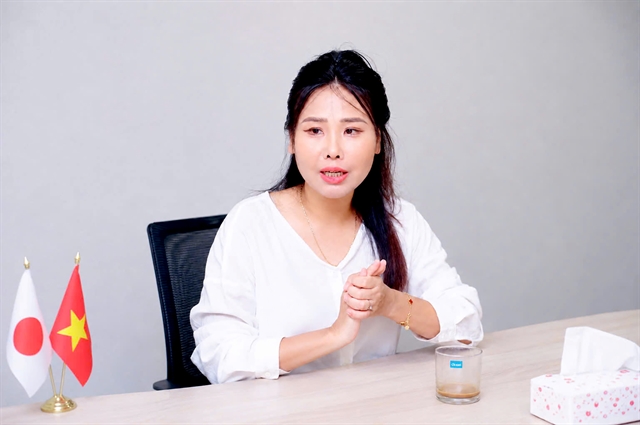 |
| President of the Vietnamese Community in Japan’s Kansai region, Lê Thương. Photos courtesy of Lê Thương |
The mindset on affairs regarding overseas Vietnamese (OVs) has shifted from a focus on gathering and nurturing connections to working with and creating mechanisms for OVs to engage more deeply in national development. In talks with Việt Nam News reporter Nguyễn Khánh Chi, president of the Vietnamese Community in Japan’s Kansai region Lê Thương said that this is a pivotal aspect of the Party's Resolution 23.
How should the approach of working with overseas Vietnamese, creating mechanisms and mobilising their resources be put into practice, or in other words, how do we create a space for the diaspora to contribute?
As far as I’m concerned, a pivotal aspect of the spirit of Resolution 23-NQ/TW is the paradigm shift from gathering and nurturing connections towards active collaboration. This implies that overseas Vietnamese are no longer viewed merely as the recipients of outreach campaigns, but must be fully recognised as proactive agents participating in the country’s development and international integration.
For mechanisms to deliver substantive results, we must first establish concrete participation rather than relying solely on general appeals for contributions. The diaspora needs to know specifically what the country and individual localities require, for example which fields lack experts, and what the precise needs are for market access, technology transfer, educational links or investment capital. There must also be a clearly designated focal point to receive, connect and monitor these initiatives.
Drawing from practical experience in Japan, I believe we can form targeted cooperation programmes tailored to specific sectors and localities. For instance, the Vietnamese community in Japan can help link Vietnamese and Japanese schools, support Japanese language training schools, transfer educational expertise and connect enterprises, local authorities, science and technology institutions, tourism and cultural exchanges.
What the overseas community needs is not merely invitations to attend ceremonial events, but more importantly, to be assigned specific challenges and provided with operational mechanisms to help solve them.
When the State builds an ecosystem where domestic agencies articulate demands, overseas Vietnamese offer their expertise and initiative, and overseas representative missions and associations act as bridges, then this potential to contribute will materialise into concrete projects, programmes and measurable outcomes.
With technological advancements, the space for contributions is no longer confined by geography. What are your proposals for building digital networks of overseas Vietnamese experts and intellectuals to provide counsel on national foreign affairs?
Today, geographical distance is no longer a major hurdle. A Vietnamese specialist working in Tokyo, Osaka or anywhere else in the world can easily provide advisory support to a domestic locality or agency without necessarily having to make frequent trips back to Việt Nam.
I think we should establish a digital network of overseas Vietnamese experts, but it must not be reduced to a static database of names and job titles. What matters most is developing a network capable of substantive, real-world operations.
We can organise specialists into thematic clusters, such as foreign affairs, economics, science and technology, AI and digital transformation, healthcare, education, culture and international communications. Whenever the nation or a locality faces an issue requiring consultation, the system can promptly connect with the right experts in the relevant field.
In the realm of foreign affairs, this can function as an international consultative and networking asset for the overseas Vietnamese community. Long-term expatriates possess a unique dual advantage: they understand Việt Nam while thoroughly comprehending the language, legal frameworks, culture, society and operating environments of their host nations.
If effectively mobilised, this resource will play an indispensable role in helping Việt Nam strengthen people-to-people diplomacy, overseas communications, local-level partnerships, corporate alliances and academic ties, as well as navigate emerging challenges throughout the integration process.
I believe that in the digital age, we must shift our mindset from inviting experts to return home to connecting global Vietnamese intellect with the homeland. When that happens, regardless of where they reside, Vietnamese individuals can contribute meaningfully to Việt Nam.
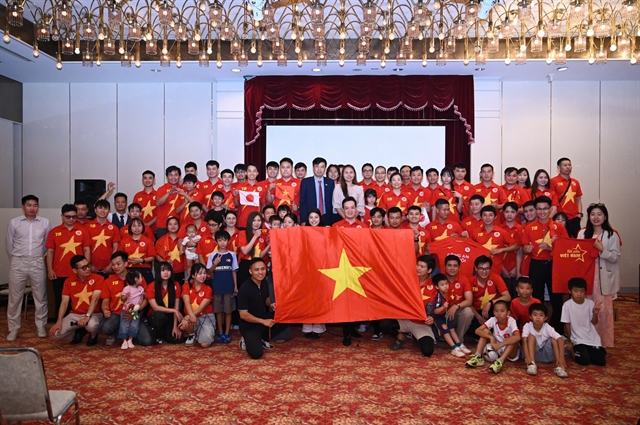 |
| A forum held on September 13 by the Consulate General of Việt Nam in Osaka in coordination with the Vietnam-Japan Centre for Cultural and Educational Cooperation Promotion to disseminate the key contents of Resolution 23. Lê Thương (middle, third row) was one of the key speakers. |
For young generations of Vietnamese born and raised abroad, how can the diplomatic space envisioned in Resolution 23 engage them, as individuals who possess a global mindset while preserving their Vietnamese identity?
This is an issue of particular concern to me, because the younger generations born and raised overseas will determine the vitality and connectivity of the global Vietnamese community for decades to come.
These young people possess an invaluable attribute: Vietnamese heritage combined with a global mindset and outlook. Many speak the host country's language as their mother tongue, are educated in international environments and maintain social networks vastly different from those of their parents' generation.
To engage them, we thus cannot simply tell them to look toward the homeland. Instead, we must help them discover their own role in their relationship with Việt Nam.
I believe the priority is preserving the Vietnamese language, culture and connection to their roots. We must also design contemporary initiatives, such as student exchange programmes, summer camps, internships in Việt Nam, cross-border start-up ventures, innovation competitions, youth ambassador programmes, networks for young expatriate intellectuals and digital community projects.
From practical community work in Japan, I have observed that when children learn Vietnamese, participate in cultural activities, interact with domestic peers and experience Việt Nam firsthand, affection for their ancestral homeland flourishes naturally.
Crucially, we must help the younger generation understand that a Vietnamese identity does not conflict with a global mindset. On the contrary, possessing an additional language, another cultural heritage and an ancestral homeland is a distinct competitive advantage.
While the first generation of overseas Vietnamese primarily set out from Việt Nam into the wider world, today’s younger generation can bring the world closer to Việt Nam, and Việt Nam closer to the world.
I believe this constitutes one of the vast diplomatic spaces that Resolution 23 can unlock: cultivating a generation of global Vietnamese who are deeply integrated into host societies, yet understand, love and take pride in their roots—thus serving as natural, enduring and sustainable bridges connecting Việt Nam with the international community. VNS
Opinion
 Opinion
 Opinion
 Opinion
 Opinion
 Opinion
 Opinion
 Opinion
 Opinion
 Opinion
 Opinion
 Opinion
 Opinion
 Opinion
 Opinion