 |
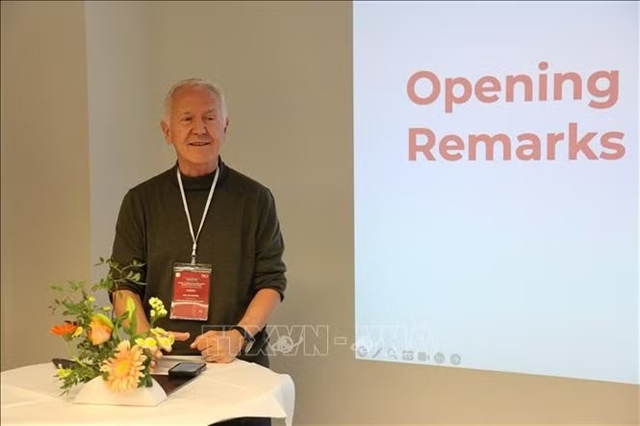
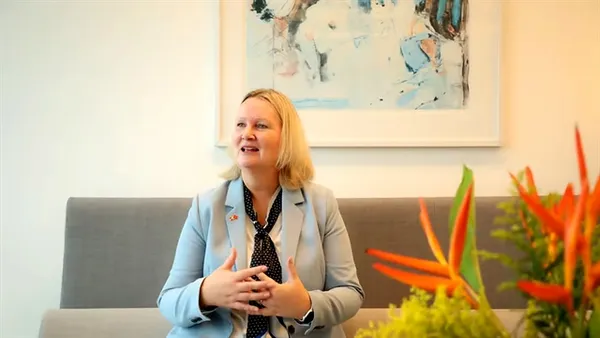
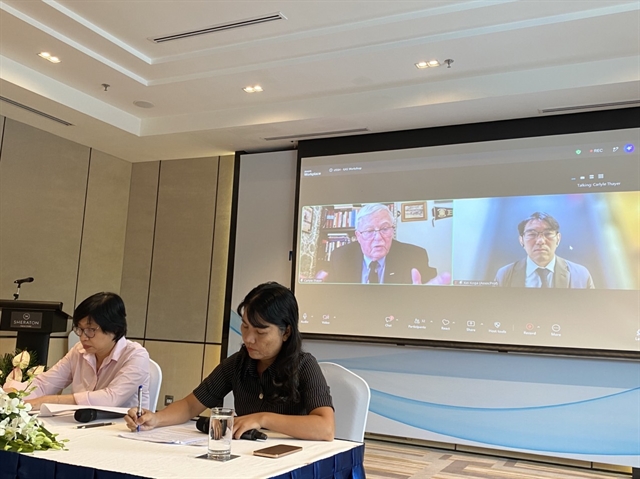
| Professor Carl Thayer (left on screen) talks about Việt Nam's foreign policy of 40 years of Đổi mới. — Photo courtesy of KAS |
Khánh Dương
HÀ NỘI — Việt Nam should pursue foreign policy of flexibility, selectivity, resilience and adaptation in the current context, said diplomatic professors.
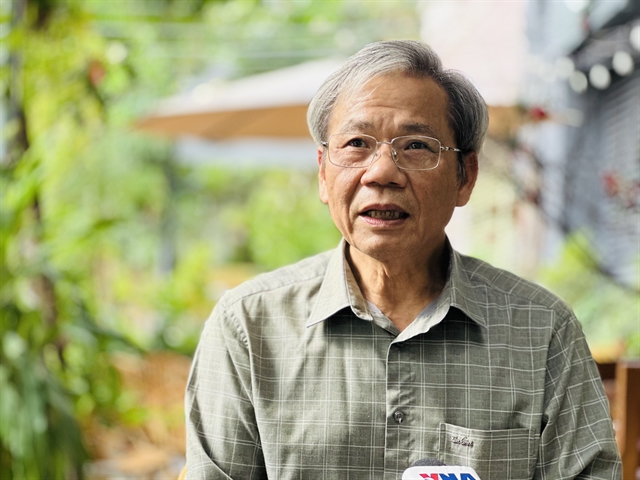
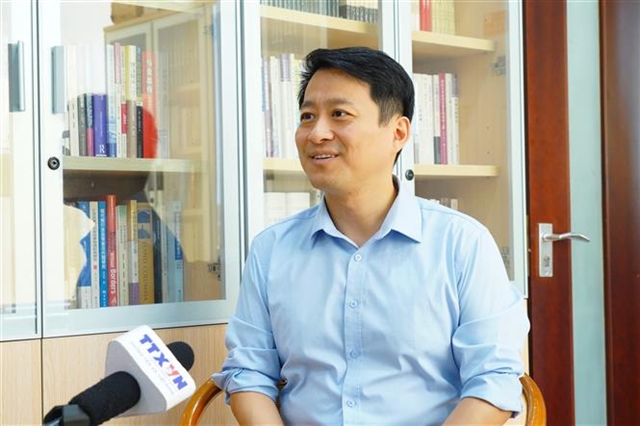
Professor Hoàng Khắc Nam, senior lecturer of the Department of Politics and International Studies, University of Social Sciences and Humanities, Việt Nam National University Hà Nội, said the foreign policy has made a significant contribution to Việt Nam’s development. Domestic reforms and changes in foreign policy mindset are closely intertwined, with changes in foreign policy thinking closely linked to the country’s development.
Discussing Việt Nam’s strategic adaptation, foreign policy and regional positioning after 40 years of Đổi mới (Renewal) process at a recent workshop in Hà Nội, Nam said Việt Nam needs to be consistent with flexibility in external relation policy in the context of rapidly-changing global affairs.
He said: “Our level of flexibility needs to be greater than before. While flexibility must remain grounded in principles, it needs to be exercised to a greater extent. This depends greatly on our understanding and assessment of developments in the world and the region.”
The professor also highlighted selectivity and focus on what is more effective, has a more lasting impact and can make a stronger impression.
Amid rapid changes in global and domestic affairs, adaptation remains extremely crucial, he said, adding that adaptability also requires Việt Nam to correctly understand developments both at home and abroad.
“Only with a proper understanding, can we make appropriate adjustments and ensure that our responses are suitable,” he said.
Adaptation involves both proactive and reactive approaches.
“Proactive adaptation means being flexible," Nam added.
"We should not wait until the house is on fire before we start putting out the flames. Instead, we need to engage proactively from the outset. We should not go it alone, but work together with multiple countries and regional organisations.”
Another factor is resilience, which is essential not only in the economic sphere, which is the most sensitive area and where we are most exposed to external influences, but also politically and in terms of security, and to some extent culturally.
“This is because only when we have strong resilience can we maintain strategic autonomy, preserve our independence and pursue diversification,” Nam said.
“We must continue to follow the principle we have pursued from the outset: moving from the region to the wider world. When we began the process of opening up and reform, we also started at the regional level.
"We joined ASEAN in 1995, then moved to the broader regional framework of APEC in 1998, and subsequently expanded our engagement to the global level by joining the World Trade Organization in 2007.”
Nam said to strengthen strategic autonomy, Việt Nam should continue to maintain the balance it has pursued, while maintaining relations with major countries based on the principle of mutual benefit.
He said: “We must continue to rely on ASEAN, regional institutions and international organisations beyond the region. As these trends develop globally, this will enable us to maintain our strategic autonomy.”
Be selective
Also highlighting selectivity, Professor Carl Thayer from New South Wales University, Australia, recommended making bamboo diplomacy more selective by using Việt Nam’s existing 42 comprehensive strategic partners and 17 free trade agreements more effectively.
He emphasised moving away from ambiguity toward clear signalling to avoid over-reliance on any single power.
After 40 years of Đổi mới, Việt Nam has transitioned from security-centric policies to comprehensive security involving science, technology and the global economy and maintained core principles such as independence, self-reliance, territorial integrity and non-alignment, he said.
Thayer suggested several adjustments to maintain Việt Nam's strategic autonomy while navigating complex global relations.
He advised retaining the 'four noes' defence policy, supporting the UN Charter and continuing diversity and multilateralisation.
Việt Nam should pursue technology diplomacy, specifically regarding digitisation, at a high level while ensuring policies are clarified to maximise national benefit, he said. — VNS
 Opinion