 Opinion
HCM City mass wedding brings happiness to 52 disadvantaged couples
1.
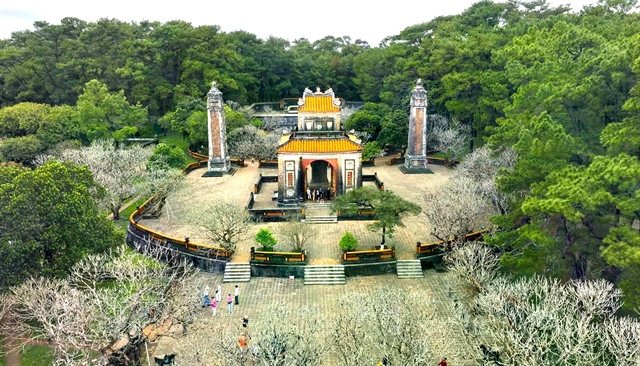 |
| International tourists explore heritage sites in central Việt Nam. — VNA/VNS Photo |
Beyond its goal of attracting more visitors, Resolution No. 26-NQ/TW on developing Việt Nam’s tourism industry into a spearhead economic sector in the new era, recently signed by Party General Secretary and President Tô Lâm, offers a new perspective on Vietnamese tourism: transforming it from a service sector into a new growth driver capable of connecting with and generating value for many areas of the economy.
When every trip not only generates revenue for hotels, travel companies and airlines, but also stimulates agriculture, culture, commerce, the creative industries and the night-time economy, tourism development must be approached from a different perspective.
Speaking to Vietnam News Agency, Phạm Hải Quỳnh, Director of the Asian Tourism Development Institute (ATI), said that to move beyond being a large-scale service sector and genuinely become a spearhead economic sector, Vietnamese tourism must abandon fragmented, volume-driven development in favour of generating greater value from each visitor.
Resolution No. 26-NQ/TW positions tourism as a new growth driver. What do you think of this turning point, and what fundamental changes are needed for tourism to truly become a spearhead economic sector rather than simply a large-scale service industry?
First of all, I consider Resolution No. 26-NQ/TW a landmark policy that opens a new era for Vietnamese tourism by reaffirming its role as a growth driver and establishing the sector’s position within the national economic structure.
The resolution not only lays out the orientation for the development of tourism itself, but also places tourism at the centre of the socio-economic value chain, using it as a lever to promote other production, commercial and service sectors.
This represents a strong shift from extensive growth, measured by visitor numbers, towards intensive growth, measured by quality, spending, length of stay and added value.
For tourism to genuinely become a spearhead economic sector rather than simply a large-scale service industry, I believe localities and businesses must fully embrace the principles of 'Professional – Sustainable – Green – Innovative'.
In particular, we need to completely abandon fragmented, short-term and campaign-based approaches to tourism, replacing them with close linkages and standardised visitor experiences that can actually deliver substantive change.
Resolution No. 26-NQ/TW shifts the focus from increasing visitor numbers to increasing the value generated by each visitor, with a target of total tourism revenue of US$80–90 billion by 2030. What, in your view, should Việt Nam change first to attract high-spending, long-staying visitors and generate greater value for the economy in order to reach the 2030 target?
In order to achieve the revenue target of $80–90 billion by 2030 without placing excessive pressure on infrastructure and the environment, it's imperative to shift the focus towards high-spending visitor segments. But this requires comprehensive change.
I believe the sector needs to strongly develop specialised products with high spending potential, such as high-end leisure tourism, wellness tourism, MICE tourism, golf tourism and personalised heritage experiences.
More importantly, we need to upgrade the entire supply chain, from access – including visas and air transport – to accommodation infrastructure, restaurants and destinations.
This is because high-spending visitors always demand excellence in safety, privacy, sophistication and unique experiences.
To encourage these visitors to open their wallets and stay longer, we need to establish a spending infrastructure and develop a deeper night-time economy.
For years, visitors may have had money to spend but didn't have opportunities to do so. We therefore need to develop duty-free retail complexes in urban areas, luxury shopping streets featuring premium handicrafts, Michelin-standard culinary chains and large-scale evening art performances.
We need to personalise services and professionalise butler services. In the ultra-luxury segment, guests are not simply buying a hotel room; they are buying empathetic, discreet and highly tailored service.
The workforce serving this segment must meet international standards in communication, cultural awareness and flexible problem-solving.
In addition to general visa exemptions, we should soon study specialised visa categories such as Golden Visas, premium retirement visas and visas for experts and digital nomads, allowing stays of three to six months and providing convenient access to healthcare and banking services.
CAPTION: Distinctive, culturally rich and personalised experiences have strong potential to attract high-end visitors.
One of the breakthrough changes from Resolution No. 08-NQ/TW to Resolution No. 26-NQ/TW is that tourism is now viewed as an economic ecosystem rather than an isolated sector. What is the first link Việt Nam needs to unlock if tourism is to genuinely drive growth in other sectors?
While Resolution No. 08-NQ/TW laid the foundation for identifying tourism as a spearhead economic sector in its capacity as an independent service industry, Resolution No. 26-NQ/TW represents a major leap in thinking, viewing tourism as an open economic ecosystem and a comprehensive sector capable of generating spillovers and creating leverage for the entire economy.
Within such an ecosystem, tourism serves as the 'final consumer outlet', transforming products from agriculture, culture, transport, healthcare, real estate and processing industries into direct economic value through visitors' experiences.
In my view, for this ecosystem to operate in a coordinated manner and for tourism to genuinely pull other sectors towards growth, the first and most fundamental bottleneck that needs to be addressed is the establishment of a conductor mechanism to integrate cross-sectoral and inter-regional value chains.
Specifically, this means breaking down the mindset of sectoral 'silos' and establishing an empowered inter-sectoral coordination mechanism.
For a long time, tourism has sought to bring other sectors along, but has itself been divided by administrative and management boundaries. Transport authorities focus on routes and infrastructure; the agricultural sector focuses on production and OCOP products; the Ministry of Industry and Trade and its local counterparts focus on retail commerce; and the cultural sector focuses on heritage preservation, etc.
The absence of a common voice has resulted in a situation where 'everyone does their own thing', preventing sectors from effectively supporting or complementing one another.
Therefore, we need a national-level and region-level Tourism Development Coordination Council with sufficient authority, operating through a substantive inter-sectoral coordination mechanism rather than its members/leaders working concurrently and nominally.
When planning a transport route, an agricultural raw-material region or a cultural conservation area, tourism services and visitor experience must be incorporated from the initial planning stage.
We also need to remove bottlenecks in the 'on-the-spot export' supply chain for agriculture and handicrafts.
When international or domestic visitors arrive at a destination, they are effectively importing that locality’s products on the spot, without having to cross international tariff barriers.
There is also a need to standardise supply chains for safe agricultural products, craft products and four- and five-star OCOP products, allowing them to be supplied directly to hotels, restaurants and high-end resorts.
This means shifting from conventional agriculture towards 'experience-based agriculture' and branded rural tourism.
A kilogramme of tea or coffee sold as a raw commodity may fetch only tens of thousands of đồng, but when it is packaged as a cultural tea experience, including tea-picking activities at a plantation, its added value can increase ten- to 20-fold.
Alongside these necessary conditions, we also need to integrate tourism with the cultural industries and night-time economy.
Tourism is the largest consumer market for artistic products, performances, fashion, design and cuisine. Administrative barriers to licensing performances and organising international-scale music and sporting events should therefore be removed to attract high-quality visitors.
Breakthrough policies are also needed for the night-time economy, including extended operating hours for services and the development of controlled night-time complexes combining commerce, food and street arts with strong security measures.
This is precisely the area with the greatest potential to generate employment and drive rapid growth in retail and urban transport.
Only by removing the bottleneck in value-chain coordination mechanisms can tourism cease to be a lone train and become the locomotive pulling numerous other economic carriages forward at a faster and more sustainable pace.
In particular, I believe we must establish a fair benefit-sharing mechanism within the ecosystem.
An ecosystem can develop sustainably only when every participating component sees tangible economic benefits.
There must be mechanisms requiring travel companies, airlines and accommodation providers to allocate a reasonable proportion of their revenue to reinvest in local communities – the people who directly protect forests and preserve local customs, traditions and cultural heritage.
When local people see tourism revenue improving their children’s access to education and raising living standards, they will become the most active stakeholders in protecting and developing the destination ecosystem alongside other sectors.
Only by removing the bottleneck in value-chain coordination mechanisms can tourism cease to be a lone train and become the locomotive pulling numerous other economic carriages forward at a faster and more sustainable pace.
One of the highlights of Resolution No. 26-NQ/TW is its call for a strong shift towards destination management based on data, technology and AI, alongside the development of green and sustainable tourism. Is this transformation primarily about technology, or is it essentially a change in management thinking across the sector?
I would state categorically that this is not a race to purchase software or technology. At its core, 80 per cent of this is a revolution in management thinking and a restructuring of how the entire sector operates.
Technology, Big Data and artificial intelligence (AI) are ultimately only supporting tools.
No matter how advanced the tools are, if management thinking remains rooted in outdated, manual administrative practices based on subjective judgement and personal experience, technology will either remain on paper or become unused software.
What do you consider the biggest obstacle if tourism is to achieve smart destination management?
Smart destination management, in the spirit of Resolution No. 26, means having the capacity to make decisions based on real-time data.
It means knowing precisely where visitor flows are concentrated so that authorities can proactively manage capacity, prevent overcrowding and avoid damage to ecosystems, in line with the goal of green tourism.
Smart destination management also means accurately analysing visitors’ profiles, behaviour and satisfaction levels to optimise tourism promotion and personalise experiences; and providing early warnings of security, safety and pollution risks while proactively managing destination crises rather than waiting until problems have already occurred.
If Vietnamese tourism wants to achieve genuine smart destination management, we face three major bottlenecks.
First is the 'data silo' problem and the lack of mechanisms for data sharing.
Tourism data is currently fragmented across countless separate 'drawers'. Immigration and entry-exit data is managed by the police; accommodation and revenue data is held by tax authorities and hotels; ticketing data belongs to heritage site management boards; payment data is held by banks; and search behaviour data is controlled by international online travel agencies (OTAs).
As long as sectors, localities and businesses maintain the mindset that 'my data is my private asset' and refuse to integrate it into a shared national tourism data platform, AI will lack the "clean raw material" needed for learning and analysis.
Second is the enormous digital divide between different links in the ecosystem.
A smart destination cannot be limited to major cities and five-star resorts equipped with technology while supporting networks – such as community tourism sites, agricultural cooperatives and local household businesses in remote and mountainous areas – remain completely outside the digital ecosystem.
If these grassroots links lack digital skills and are unable to update data or receive digital feedback, the smart-management chain will break down at the first point of contact with visitors.
Third is the shortage of management personnel who understand both tourism operations and technology.
We have tourism professionals with strong traditional expertise and IT engineers who are skilled at programming, but there is a serious shortage of managers capable of connecting the two – people who understand what tourism needs, can formulate precise requirements for technology, and can interpret data indicators and turn them into business strategies and sustainable development policies.
Digital transformation is a foundation and a tool to help destinations preserve their distinctive identities.
Digital transformation and smart destination management are not ends in themselves, but means of improving competitiveness and safeguarding destination sustainability.
Without decisively breaking down fragmented thinking, integrating data and strengthening human capacity, it will be difficult to turn technology into a genuine growth driver for tourism.
 |
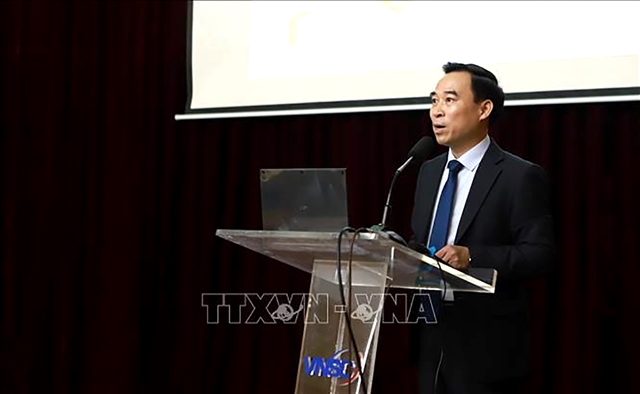
| Phạm Hải Quỳnh, Director of the Asian Tourism Development Institute (ATI). — VNA/VNS Photo |
Resolution No. 26-NQ/TW also sets the goal of placing Việt Nam among the world’s 30 most competitive tourism countries by 2045. Looking at the realities of the tourism sector, what does Việt Nam need to change most significantly to transform itself from a destination with many advantages into one that is genuinely competitive on the global tourism map, and particularly to make tourism a true spearhead economic sector?
To genuinely strengthen our competitiveness on the global tourism map, Việt Nam needs to pursue four pillars simultaneously.
First, putting local culture at the core and use the principle of “green” development as the benchmark.
We must not commercialise heritage in a forced or inappropriate manner. Instead, we need to transform culture into an economic asset through creativity.
Second, build a nationwide, integrated smart tourism ecosystem.
AI and Big Data should be used to analyse visitor behaviour, personalise marketing and automate entry procedures while providing 24/7 assistance to visitors.
Third, retrain and upgrade the skills of the tourism workforce to international standards.
Particular attention should be paid to foreign-language proficiency, digital skills and a professional service mindset.
Finally, if tourism is to genuinely become a spearhead economic sector, I believe there must be close and determined coordination among the “three parties” from now on.
The State should continue to liberalise visa policies, provide tax and credit incentives for green tourism projects, and make breakthroughs in transport infrastructure connecting key tourism development areas.
Authorities must abandon siloed thinking. Provinces and cities need to work together to develop journeys offering 'one destination – multiple experiences', share tourism promotion resources and jointly manage a safe, civilised tourism environment.
Businesses should take the lead in innovation, proactively improve service quality, build brands around distinctive products and actively participate in global tourism value chains.
This coordinated effort will enable tourism to genuinely become a spearhead economic sector, generating strong spillover effects across commerce, transport, agriculture and the preservation of the nation’s cultural heritage. — VNS
Opinion
 Opinion
 Opinion
 Opinion
 Opinion
 Opinion
.jpg) Opinion
Opinion
 Opinion
 Opinion
 Opinion
 Opinion
 Opinion
 Opinion
 Opinion
 Opinion