 Opinion
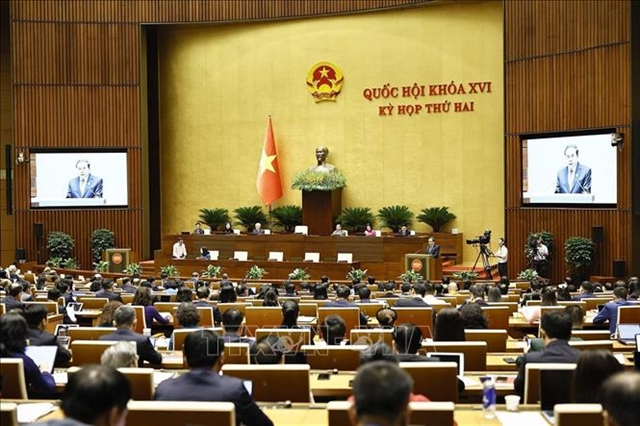
NA President calls for high-quality legislation to drive national development
1.
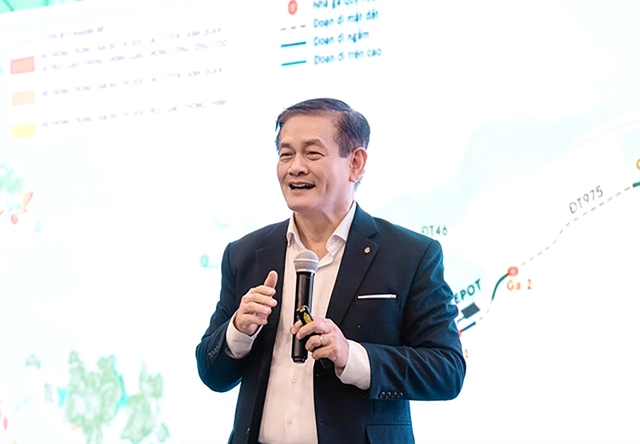 |
| Ngô Viết Nam Sơn, chairman of Ngo Viet Architects & Planners, speaks about HCM City’s 100-year planning vision. — VNA/VNS Photo |
Urban planning expert Ngô Viết Nam Sơn speaks to Báo Điện tử Chính Phủ (Government News) about HCM City’s 100-year planning vision and how the expanded metropolis can develop while preserving space for future generations.
What should be the guiding principle for HCM City’s 100-year master plan?
The 100-year vision should not attempt to predict exactly what HCM City will look like a century from now. Technology, demographics, economic models and the way people live will change significantly.
The more important task is to identify the strategic values that must be protected and ensure that future generations retain enough land, resources and space to continue developing the city.
HCM City has now become a very large metropolis following the merger with Bình Dương and Bà Rịa-Vũng Tàu.
It therefore needs to be planned as a polycentric, multi-centre metropolis, connected by modern infrastructure and developed in a sustainable, people-centred way.
What does a polycentric metropolis mean in practical terms?
A metropolis of this scale needs several development centres rather than relying on a single dominant urban core.
But creating multiple centres is not enough. They must be effectively connected by a multimodal transport network. Without adequate links, different areas could develop in isolation and fail to generate the combined strength of a large metropolis.
Infrastructure must also go beyond roads and transport. Schools, hospitals, parks and other essential services need to be developed alongside housing and employment.
We cannot allow new urban areas to be built without adequate schools, healthcare, green space or transport connections. Residential areas, workplaces and social infrastructure must be planned together.
How should transport shape the city’s future development?
Transport infrastructure should be used to organise urban development rather than simply respond to congestion after it occurs.
HCM City should give priority to transit-oriented development, or TOD, around metro stations.
When housing, employment and services are concentrated around public transport hubs, residents become less dependent on private vehicles. This can help reduce congestion and pollution while making more efficient use of urban land.
The city also needs to look beyond its administrative boundaries. Major infrastructure projects increasingly have regional implications, so transport and infrastructure planning must connect HCM City with neighbouring areas, particularly Đồng Nai.
How important is regional connectivity to the expanded HCM City?
It is essential.
Many major projects serve more than one locality. Long Thành International Airport, for example, is in Đồng Nai but has major implications for HCM City and the wider region.
Similarly, HCM City’s ports, financial sector, trade and services can generate development opportunities for Đồng Nai.
The two localities should therefore develop complementary roles rather than compete with each other.
The same principle applies to logistics, ports, airports, free-trade areas and urban development along major transport corridors. These projects need compatible mechanisms and coordinated planning across administrative boundaries.
How can the city balance rapid development with environmental protection?
A large metropolis cannot sacrifice its natural resources, landscapes and identity simply to achieve short-term growth.
The 100-year plan needs to identify areas that must be protected regardless of how the urban model changes.
These include important ecological reserves and the historic urban core, whose value has developed over roughly 300 years.
Such assets cannot easily be recreated once they are destroyed.
The city should also preserve strategic land reserves, ecological corridors and green spaces instead of putting every piece of potentially developable land into immediate use.
Why is preserving land and green space so important?
Because today’s planning decisions can determine what future generations are able to do.
HCM City currently has only about 0.55 square metres of public green space per person. The city needs to increase this substantially.
Land reserved for parks, waterways, floodways and ecological areas is not simply land being taken away from development. Green spaces can improve the environment, help with drainage, reduce the urban heat-island effect and provide places for communities to interact.
In other words, preserving resources for the future also provides direct benefits to people living in the city today.
What should a 100-year plan ultimately leave to future generations?
The plan should provide a framework that is strong enough to maintain the city’s strategic direction but flexible enough for future generations to make their own decisions.
We cannot know what technology or urban systems will exist in 100 years. Future generations may develop solutions that we cannot imagine today.
Our responsibility is therefore not to design their lives for them.
We need to ensure that after 100 years they still have land, resources and space to develop the city.
Strategic ecological areas, heritage sites, infrastructure corridors and land reserves need long-term protection, while investment programmes, technologies and development methods should be reviewed and adjusted as circumstances change.
A 100-year plan should therefore be a strong framework, not a rigid blueprint.
The important thing is that today’s generation does not consume all the city’s resources and close off opportunities for the future.
The purpose of long-term planning is not to design the future of the next generations, but to leave them enough space, resources and opportunities to write their own future. — VNS
Opinion
 Opinion
 Opinion
.jpeg) Opinion
Opinion
 Opinion
 Opinion
 Opinion
 Opinion
 Opinion
.jpg) Opinion
Opinion
 Opinion
 Opinion
 Opinion
 Opinion
 Opinion