 Politics & Law
Türkiye and Việt Nam: turning friendship into lasting partnership
1.
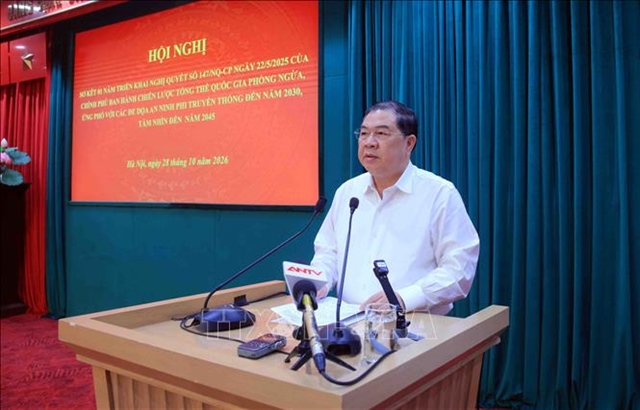 |
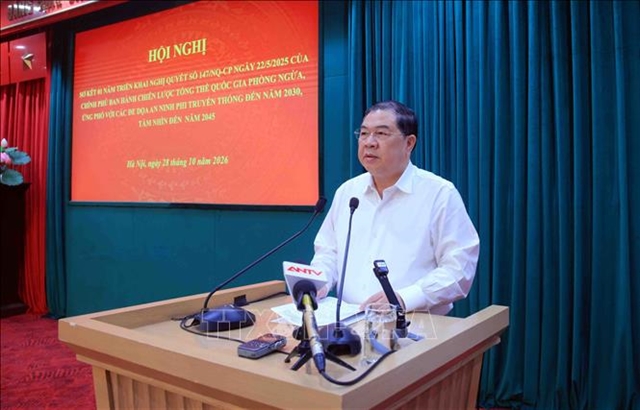
| Permanent Deputy Prime Minister Phạm Gia Túc delivers a speech at the conference on Wednesday. — VNA/VNS Photos Phạm Kiên |
HÀ NỘI — Preventing and responding to non-traditional security threats requires coordinated action across the entire political system and society, with public security forces taking the lead in identifying risks to national security and coordinating cross-sectoral responses.
Permanent Deputy Prime Minister Phạm Gia Túc made the remarks at a national conference on Wednesday reviewing the implementation of Government Resolution 147, which outlines the national strategy for preventing and responding to non-traditional security threats through 2030.
Non-traditional security threats are those falling outside the purview of the military, such as resource shortages, pandemics or cyber crime.
Túc said that the responsibility for addressing such threats must not be left entirely to the public security forces.
Ministries, sectors and localities must have clearly defined responsibilities, while obstacles involving coordination, data, legislation and resources must be resolved.
He said progress has been made in raising awareness, improving legislation, developing response scenarios, preparing personnel and equipment, and strengthening international cooperation.
However, implementation remains uneven, with some agencies still viewing the task as the sole responsibility of public security forces.
Several tasks, particularly the development of framework response scenarios, are also behind schedule, the Deputy PM added.
Túc outlined eight priorities for relevant ministries and agencies to carry out in the near future.
Priorities include streamlining coordination mechanisms without creating additional organisational structures; making response scenarios operational; strengthening forecasting and early-warning capacity; closing legal gaps and resolving overlapping regulations, and reviewing implementation plans to ensure feasibility.
Other tasks involve prioritising resources for major risks and vulnerable areas, promoting science, technology and innovation, and strengthening leadership accountability and workforce capacity.
Túc called for a national database on non-traditional security, with standardised data, clear sharing protocols and defined responsibilities for updating information and responding to warnings.
Ministries and localities were also instructed to review relevant legislation, identify gaps and overlapping provisions and promptly resolve issues within their authority. Matters beyond their jurisdiction must be reported to the Government and Prime Minister.
Resources should be directed towards the greatest risks and most vulnerable areas, drawing on State funding, legitimate social resources and international cooperation.
Heads must understand the threats facing their respective sectors and localities, available response plans, responsible forces and resource mobilisation mechanisms. Officials also need stronger capabilities in cross-sectoral coordination, data analysis, forecasting and emergency management.
The Ministry of Public Security will monitor implementation, assess progress and report delays or issues beyond its authority to the Government and Prime Minister.
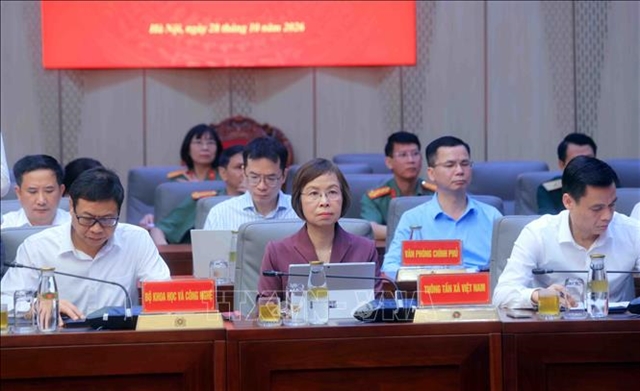 |
| Vietnam News Agency General Director Vũ Việt Trang attends the conference. |
Emerging threats demand early intervention
In his opening remarks, Minister of Public Security General Lương Tam Quang said the Party had identified responses to non-traditional security threats as a priority at its 11th National Congress in 2011, reaffirming the task at subsequent congresses.
Resolution 147 marked Việt Nam’s first comprehensive national strategy in the field, he said.
While initial progress has been made, emerging threats require more coordinated and preemptive action.
Such threats span the economy, finance, the environment, natural resources, natural disasters, climate change, epidemics, migration, urbanisation and transnational crime. They are closely linked to traditional security challenges and can undermine national security and sustainable development.
Quang highlighted new risks associated with the digital era, including threats to digital sovereignty, cybersecurity and data security arising alongside the growing use of artificial intelligence. Cyberattacks, information manipulation, supply chain disruptions and dependence on technology platforms and strategic infrastructure also require attention, according to Quang.
He called for a shift from responding after threats emerge to identifying and neutralising risks early, supported by continuous risk management and the integration of security considerations into policies from the outset.
Also at the conference, ministries reported practical challenges.
The Ministry of National Defence said maritime response scenarios needed clearer links with civil defence, search and rescue, environmental incident response and maritime safety mechanisms to avoid overlapping responsibilities.
Meanwhile, the Ministry of Agriculture and Environment called for common risk assessment methods, better data connectivity and region-specific scenarios for environmental, water and food security threats.
The Ministry of Health said its draft framework covered three epidemic scenarios and one biosafety and biosecurity scenario, highlighting the need for stronger local healthcare and inter-agency exercises.
At the same time, the Ministry of Science and Technology called for research to deliver practical results, while the Ministry of Foreign Affairs urged cooperation with neighbouring countries and ASEAN on cross-border threats.
The Ministry of Justice called on authorities to distinguish legal shortcomings from weaknesses in enforcement, to avoid unnecessary new regulations. VNS
Politics & Law
 Politics & Law
 Politics & Law
 Politics & Law
 Politics & Law
 Politics & Law
 Politics & Law
 Politics & Law
 Politics & Law
 Politics & Law
 Politics & Law
 Politics & Law
 Politics & Law
 Politics & Law
 Politics & Law