 Opinion
NA President’s visit expected to boost Việt Nam–China ties across multiple fields
1.
|
|
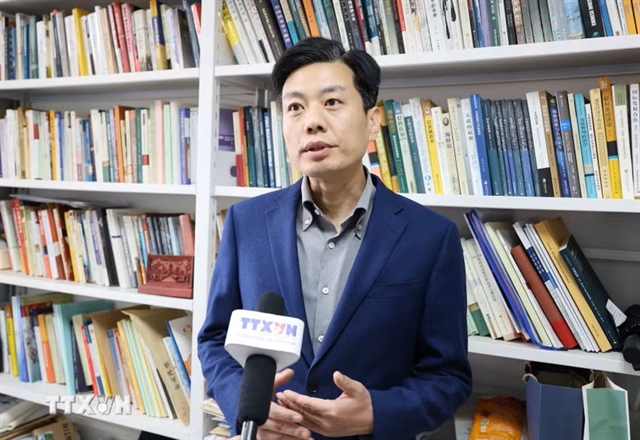
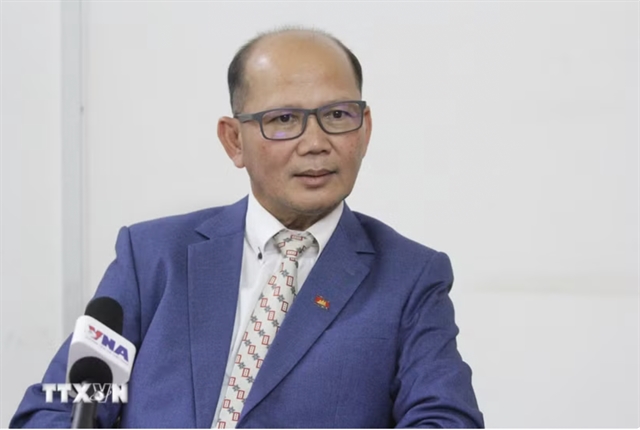
| Professor Cui Shoujun of the School of International Studies at Renmin University of China. — VNA/VNS Photo |
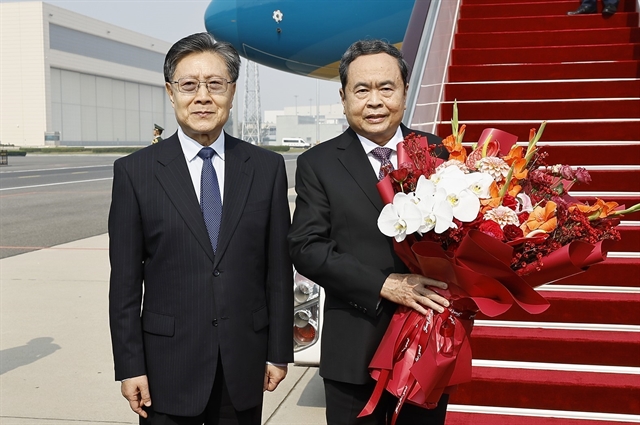
BEIJING — The official visit to China by National Assembly (NA) President Trần Thanh Mẫn and his co-chairing of the second session of the cooperation committee between the Vietnamese NA and the National People’s Congress of China (NPC) will help advance bilateral relations in multiple areas, according to a Chinese scholar.
In an interview with Vietnam News Agency correspondents in Beijing, Professor Cui Shoujun of the School of International Studies at Renmin University of China said the visit is significant to bilateral ties.
Cui said the visit could be viewed from three perspectives. First, it is a concrete step to implement the consensus reached by the high-ranking leaders of the two Parties and countries. In April, General Secretary of the Communist Party of Việt Nam Central Committee and President Tô Lâm chose China as his first destination after being elected president of Việt Nam. The two countries issued a joint statement pledging to strengthen their comprehensive strategic cooperative partnership in the new era and advance the building of a Việt Nam–China community with a shared future that carries strategic significance.
The meeting of the two legislative leaders six months later demonstrates efforts to translate high-level consensus into practical action through different channels.
Second, NA President Mẫn's visit marks a new phase in the regular operation of the cooperation committee mechanism. In April 2024, the two legislative bodies signed a new cooperation agreement in Beijing, establishing the committee co-chaired by their leaders for the first time. Its first session took place in Hà Nội in late August 2025, covering legislation on national security and ways to promote economic, trade, scientific and technological cooperation.
The first session in Việt Nam and the second in China show that the mechanism has moved beyond establishment to practical operation, Cui said.
Third, the timing is important as China began implementing its 15th Five-Year Plan, while Việt Nam entered a new development phase following the 14th National Party Congress and the start of the 16th NA’s tenure. Both legislative bodies face major responsibilities in lawmaking and oversight, creating favourable conditions for in-depth exchanges on governance experience.
Assessing bilateral legislative ties, Cui described them as having a solid foundation, close exchanges, comprehensive mechanisms and substantive content.
High-level exchanges have intensified. In August 2025, Vice President of the Vietnamese NA Trần Quang Phương visited China and met with Zhao Leji, Chairman of the Standing Committee of the NPC. Zhao later visited Việt Nam for the 80th anniversary of National Day and held talks with NA President Mẫn. In September that year, Zhong Shan, Chairman of the NPC Financial and Economic Affairs Committee, led a delegation to Việt Nam. Both sides saw further potential for economic, trade and investment cooperation.
Regarding comprehensive mechanisms, cooperation also extends to specialised committees and local-level people’s congresses and councils.
The two sides have also expanded exchanges on legislation and oversight, while seeking to share experience in building socialist rule-of-law states and coordinate at multilateral parliamentary forums.
Cui highlighted the visit’s contributions to strengthening political trust, establishing legal foundations for practical cooperation, broadening public support and safeguarding shared regional and international interests.
Legislative coordination plays an important role in advancing infrastructure connectivity and emerging sectors such as artificial intelligence, semiconductors and the Internet of Things. It can also facilitate trade, investment and railway links.
Candid parliamentary dialogue can also help manage maritime differences appropriately and maintain expectations for mutually beneficial cooperation. — VNA/VNS
Opinion
 Opinion
 Opinion
 Opinion
 Opinion
 Opinion
 Opinion
 Opinion
 Opinion
 Opinion
 Opinion
 Opinion
 Opinion
 Opinion
 Opinion