 Environment
HCM City steps up hand, foot and mouth disease prevention as cases exceed 44,000
1.
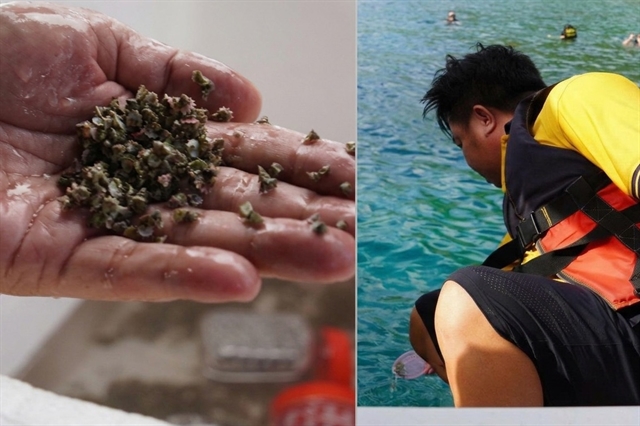 |
| More than 30,000 artificially bred ốc đụn cái (Rochia nilotica) are released into the wild off Côn Đảo Special Zone in HCM City on October 31. — VNA/VNS Photos |
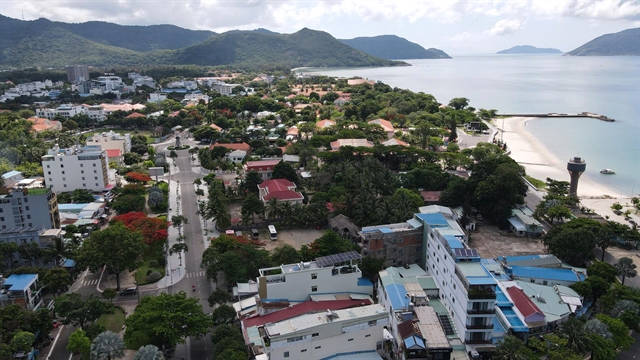
HCM CITY — More than 30,000 artificially bred ốc đụn cái (Rochia nilotica), common name the commercial top shell, a rare and high-value marine species, were released into the wild off the Côn Đảo Special Zone in HCM City on October 31 to help restore wild populations and preserve marine biodiversity.
The release was organised by the city’s Department of Science and Technology in collaboration with the Institute of Oceanography under the Việt Nam Academy of Science and Technology, and the Côn Đảo National Park Management Board.
The juveniles were released into their natural habitat around Bảy Cạnh Islet and Đầm Tre Bay.
The initiative is a key outcome of the scientific research project "Study on the Artificial Reproduction of ốc đụn cái in Côn Đảo National Park", which was launched in November 2023 under the leadership of Dr Hoàng Xuân Bền, deputy director of the Institute of Oceanography.
While the original target approved for the project was 10,000 juveniles measuring 1-3mm, technological optimisations allowed researchers to harvest nearly 30,000.
Among these, around 1,200 individuals measuring 4-8mm were placed in separate experimental cages to closely monitor their survival and growth rates in the wild.
The ốc đụn cái possesses high economic, nutritional, and handicraft value.
Due to long-term overexploitation, its natural population has severely declined, leading to its classification as critically endangered in the Việt Nam Red Data Book.
In many coastal regions across the country, the species has almost entirely disappeared.
Bền said the critical stage determining the survival rate of the species is when larvae settle to the seabed and transition to feeding on attached algae.
To overcome high mortality rates during captive breeding, the research team applied three core technical innovations.
First, they standardised intermittent drying combined with UV-treated circulating seawater to induce synchronised spawning.
Second, strict water quality was maintained through continuous fine filtration and microalgae supplementation.
Finally, benthic microalgae biofilms were pre-cultivated on corrugated plastic sheets for 10 to 14 days before larval settlement.
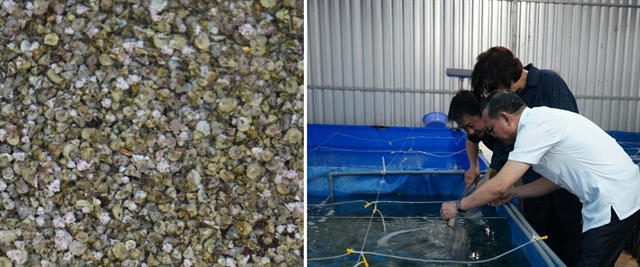 |
| Bùi Minh Thạnh, vice chairman of the HCM City People's Committee, on October 29 inspects the breeding model of ốc đụn cái (Rochia nilotica) before their release into the wild. |
Côn Đảo National Park was selected for the project due to its optimal conditions, including suitable environment for juvenile adaptation, effective protection against illegal harvesting, and availability of parent stock for breeding.
"Previously, our unit successfully researched artificial reproduction of ốc đụn cái in laboratory settings. Based on those results, we have now implemented the release into the wild, marking the first time this has been conducted in Việt Nam," Bền said.
Following the release, scientists will continue field surveys to evaluate survival rates, growth speed, and the impact of natural predators.
The complete technological process will eventually be handed over to local authorities to replicate the model, helping restore wild populations, enhance biodiversity in Côn Đảo, and open new avenues for sustainable livelihoods for local communities. — VNS
Environment
 Environment
 Environment
 Environment
 Environment
 Environment
 Environment
 Environment
 Environment
 Environment
 Environment
 Environment
 Environment
 Environment
 Environment