 Environment
Eximbank shareholders approve board expansion, changes to foreign ownership rules
1.
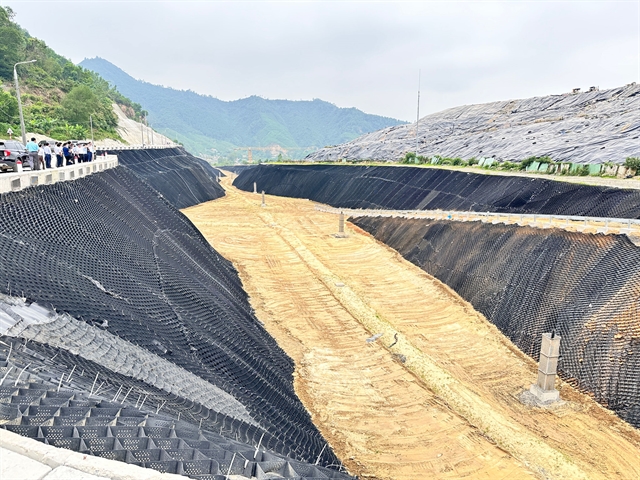 |
| A landfill zone is built at Khánh Sơn Dump in Đà Nẵng City. The beach city has been speeding up the construction schedule for a series of waste treatment projects in 2026-29. — Photo courtesy of Thành Công |
ĐÀ NẴNG — The central city has approved an investment project on the development of the first waste-to-energy project on 17.18 hectares, with an investment of VNĐ2.18 trillion (US$84.2 million) in 2026-27.
The city said the project, will be built by a local joint-venture of Ngôi Sao Xanh (Green Star Environment) company and Cẩm Thạch Xanh (Green Marble joint-stock company) and is set to treat more than 1,200 tonnes of waste each day, including household and hazardous garbage.
The project is expected to collect and process daily waste as input material to generate 15MW of energy. It is likely to be implemented between the third quarter of 2027 and 2029, the city added.
According to a recent report from the city’s Department of Agriculture and Environment, Đà Nẵng, along with the former Quảng Nam Province, releases between 2,300 to 2,500 tonnes of waste each day. The figure is projected to increase to 4,500 tonnes in 2030.
Most daily waste is buried, and only 12 per cent is recycled and reused, the department reported.
About four other waste treatment projects have been planned between 2010 and 2025, but none of them have been put into operation, the department said.
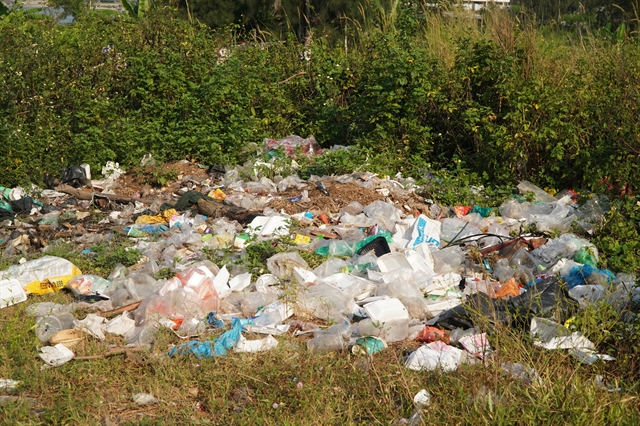 |
| Waste is illegally disposed at a public site in Đà Nẵng City. The central city has approved a waste-to-energy project to deal with more than 1,200 tonnes daily waste. — Photo courtesy of Thanh Trúc |
The Việt Nam Environment Joint Stock Company failed to operate its VNĐ3 trillion (US$114 million) waste-to-energy plant in Khánh Sơn Dump in the second quarter of 2026.
The company then, in co-operation with Amaccao Group, continued the second phase with the use of advanced technology from a German supplier in 2026-27.
According to Amaccao Group, the Việt Nam Bank for Agriculture and Rural Development (Agribank) had agreed to provide an investment fund of VNĐ1.5 trillion for the project in a loan agreement.
Meanwhile, another waste treatment project in Đại Lộc Commune by Huy Hoàng Eco Company had to close in seven months for investigation on illegal burial activity, and more than 100,000 tonnes of waste had been piled up in the plant.
The other two waste treatment plants – Đại Hiệp and Hội An – are either not operating properly or are yet to be built due to legal barriers.
According to the department, 55 per cent of daily garbage in the inner city is food, garden and park waste, and more than 22 per cent is plastic waste.
The tourism industry discharges more than 20 tonnes of plastic each day, but a plastic recycling plant has yet built in Đà Nẵng, or even in central Việt Nam. — VNS
Environment
 Environment
 Environment
 Environment
 Environment
 Environment
 Environment
 Environment
 Environment
 Environment
 Environment
 Environment
 Environment
 Environment
 Environment