 Environment

Philippine Leaders and Enterprises Champion Excellence with Purpose
1.
|
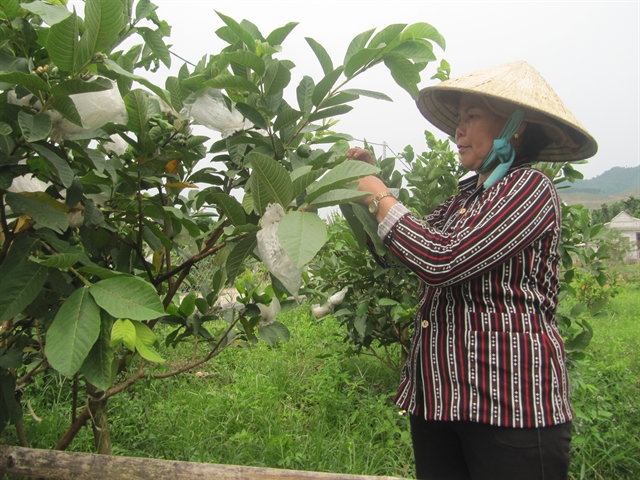
| A farmer harvests fruits at her farm in Hòa Bắc Commune in a suburban area of Đà Nẵng City. The Central and Central Highlands region has been asked to transform into a circular and green economy. — VNS Photo Công Thành |
Công Thành
ĐÀ NẴNG — The circular and ‘green’ economy is seen as one of the most sustainable solutions to boost the Central and Central Highlands region into a strategic powerhouse of biodiversity conservation in 2030-45.
This target was discussed and shared at a conference on biodiversity conservation and multi-stakeholder partnerships for the green economy.
The region, which covers 8.18 million hectares of forest, an equivalent of 55.3 per cent of the country’s total forest area, and is home to 59 national parks, nature reserves and world biosphere sites, has been asked to transform into a circular economy and achieve the country’s net-zero goal by 2050.
|
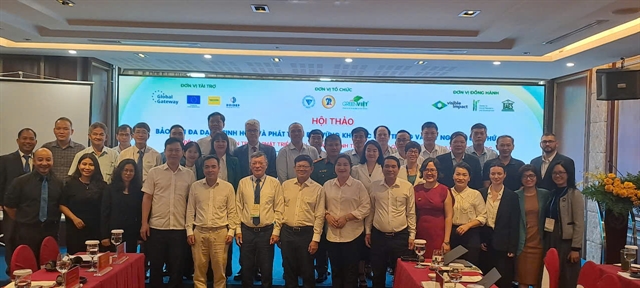
| Experts, businesses, farmers and state officials join a conference on green economy growth and biodiversity conservation in central Việt Nam. — VNS Photo Công Thành |
Rector of Đà Nẵng University of Science and Education under the University of Đà Nẵng Võ Văn Minh said that a circular and ‘green’ economy is not only a reduction of waste and emissions, but also converts the natural ecological system into economic value, better livelihoods and living conditions based on a well-protected nature and environment.
|
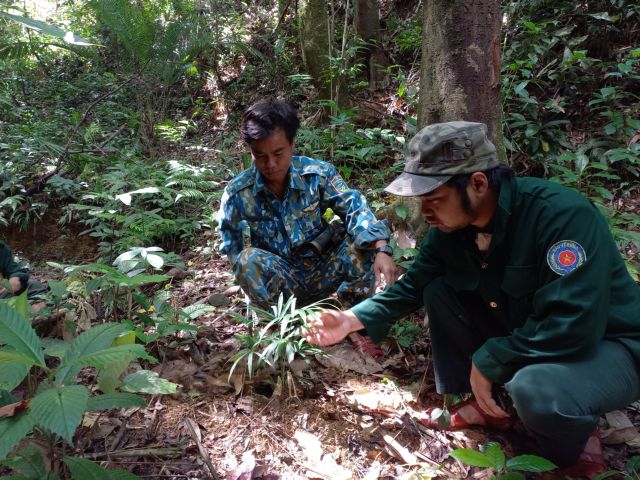
| Local farmers in Ba Tư commune check a rattan farm in the forest-canopy forestry product development project. Farmers support forest protection, while growing herbs and plants to improve income from nature-based conservation. — Photo courtesy of GreenViet |
He said nature-based green growth is how to transform from natural resource exploitation into creating value from the natural ecological system, and biodiversity conservation acts as a key factor in the new economic growth model.
“A circular and green economy should build up a closed cycle of ecological conservation and recovery to create economic value and improve livelihoods for communities before reinvesting in the ecological system,” Minh said.
“Biodiversity protection is needed, and it will play a crucial foundation for sustainable development in the central and Central Highlands region in the future,” he explained.
Deputy director of the Institute of Strategy and Policy on Agriculture and the Environment Nguyễn Anh Phong shared that Việt Nam included circular and green economy in the 2020-issued Law of Environment, and ‘low’ emission criteria – ‘green’ bonds and credit, low-carbon rice farming and circular agriculture practices – were also suggested for sustainable agriculture production in 2020-26.
|
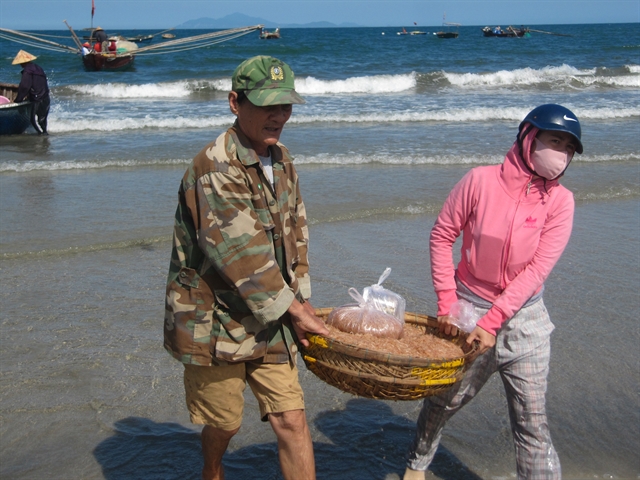
| Fishermen collect fish and seafood from a sea trip in Thọ Quang ward of Đà Nẵng City. Women in Thọ Quang Ward, Hòa Bắc commune and Ba Tư commune in Đà Nẵng City have been given support from the EU to learn about the circular and green economy. — VNS Photo Công Thành |
He said a pilot plan of one million hectares of high-quality, low-emission rice in Việt Nam will be only succeed when multi-stakeholder partnerships in production chains are formed.
“Multi-sector partnerships and a series of supportive policies and finance are needed for a green economy to grow in the region. Some sustainable production models and eco-industrial parks have been formed,” Phong said.
Nguyễn Văn Toại, from IUCN, said intercropping in coffee farming will be seen as an effective and cost-saving solution to replace the risky single-crop.
He said the region often leaves 32,000ha vacant out of 600,000 coffee farms in drought season.
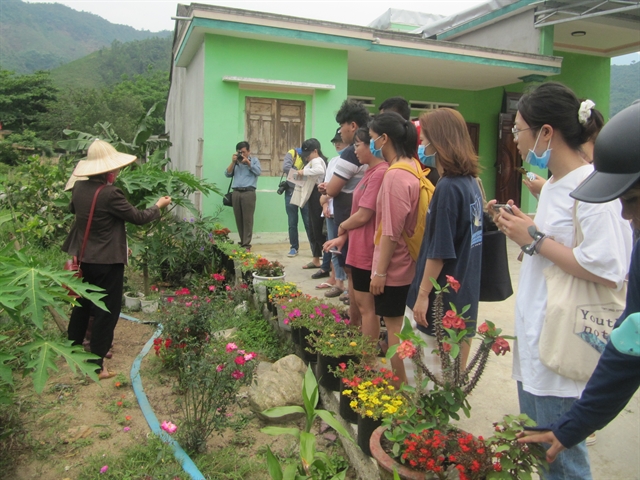
|
| Visitors learn sustainable farming skills from local women farmers living in mountainous villages of Đà Nẵng City. — VNS Photo Công Thành |
Toại said high-value corn and durian trees were suggested for mixed planting on 16 per cent of the coffee area, reducing from 585 litres of water to 450 litres for each plant during a crop.
“Intercropping would help increase income for farmers, while reducing market price risk as well as carbon emissions,” he explained.
Circular and green economy development plans in Việt Nam have been given support from the EU to achieve the national commitment to the Sustainable Development Goals.
Gonzalo Serrano De La Rosa, Deputy Head of Development Cooperation at the EU Delegation to Việt Nam, shared: “The EU has a strong commitment to help partner countries, including Việt Nam, to achieve sustainable development.
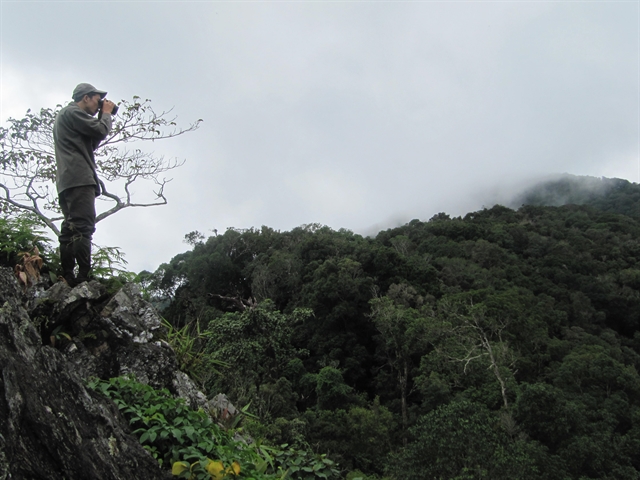
|
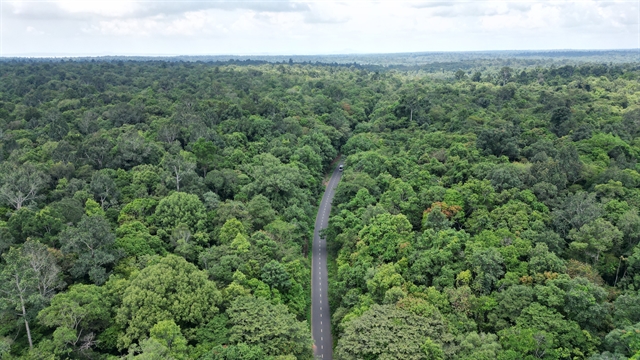
| A forest corner is seen in the central and Central Highlands region of Việt Nam. The region, which is one of the richest biodiversity conservation value sites in Việt Nam, is moving to green economy development in 2030-45. — VNS Photo Công Thành |
“The EU-funded project, which aims at ‘enabling women in the central of Việt Nam to improve their lives and protect the environment and natural resources by applying a green and circular economy in Đà Nẵng City, actually also contributes to larger and inclusive efforts in promoting Biodiversity Conservation and Sustainable Development in the central and Central Highlands of Việt Nam.”
“The EU is not only the largest ODA donor in Việt Nam. The EU is also the destination for foreign scientists, researchers, startups and innovators. Horizon Europe is our flagship global programme of EUR93.5 billion (about US$106 million) that provides technical and financial support to partnerships, established between European universities and peer research institutions in partner countries, like Việt Nam,” he said.
He added: “The EU has signed a Letter of Intent with Việt Nam for the improvement of our cooperation in the field of science, technology, innovation and digital. We believe that there will be plenty of opportunities for both sides to boost the research capacity of our universities and to commercialise research results for our mutual benefit," he added.
Trần Hữu Vỹ, vice chairman of the Founding Council of the GreenViet biodiversity conservation centre, said more than 300 women, including individuals from ethnic minority groups in the central city of Đà Nẵng, have been given knowledge to establish ‘green’ and circular economies, courtesy of the EU-funded livelihood improvement project from 2025-28.
He said the project will provide a total fund of EUR 999,792 (more than $1 million) to support and improve practical skills for women in Thọ Quang Ward, Hòa Bắc commune and Ba Tư commune in Đà Nẵng City.
It aims to increase incomes by a third for women working within a ‘green’ and circular economy model, while the population in the supported communities become aware of sustainable economic development and biodiversity protection, he added. — VNS
Environment
 Environment
 Environment
 Environment
 Environment
 Environment
 Environment
 Environment
 Environment
 Environment
 Environment
 Environment
 Environment
 Environment
 Environment




