 Environment

Malaysian tourist rescued after falling into 10-metre-deep hole in Đà Lạt
1.
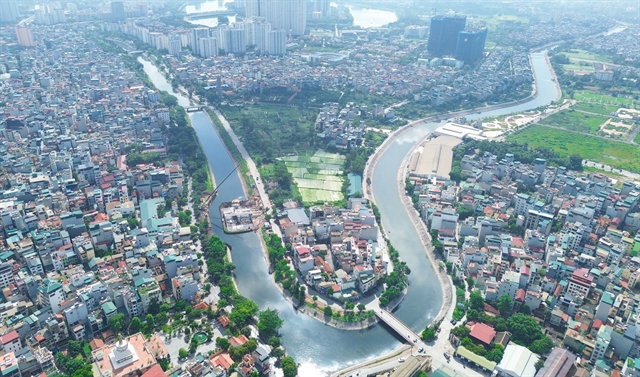 |
| A section of the Tô Lịch River. — VNA/VNS Photo |
HÀ NỘI — In August 2025, the Tô Lịch River in Hà Nội turned green.
Contractors had diverted all its sewage outfalls to a new treatment plant at Yên Xá. Water from West Lake and treated effluent was fed in to keep it flowing, and the river, long written off as dead, took on a mossy green rarely seen on its surface.
Then the lake water was switched off. Within days, stretches of the Tô Lịch were dark again, and the smell was back.
A representative of the Tô Lịch project's management board said rain and sewage still share the same pipes in the area, so a downpour can send a mix of both spilling into the river.
Visits this year found the water dark and scummy in places, the smell worse in hot weather. A treatment plant, it seems, cannot clean a river on its own.
The Tô Lịch is one river, but the numbers behind it are national. At the end of 2024, Việt Nam had 83 treatment plants in more than 50 cities, designed to treat 2.06 million cubic metres of wastewater a day.
But they were taking in about 1.06 million cubic metres, a little over half of the design capacity, while the need is much larger still. By the construction ministry's count, only 18 per cent of urban wastewater was being collected and treated.
The other 82 per cent does not vanish. Most of it flows through shared sewers into rivers, canals and lakes.
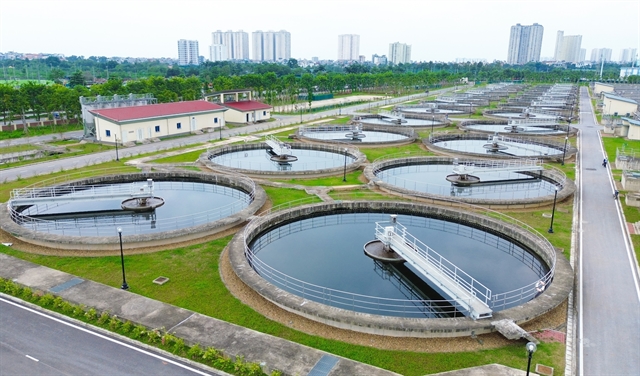 |
| Sludge settling tanks at the Yên Xá wastewater treatment plant. — VNA/VNS Photo |
Trần Hoài Anh, deputy director of the ministry's Department of Construction Infrastructure, said in late 2025 that about 70 per cent of the wastewater in areas that have sewers is collected.
But many mid-sized and smaller cities have no central collection or treatment system at all. Instead, household sewage runs into storm drains.
Plenty of sewage, in other words, is simply dumped in a river.
There is a simple way to tell whether sewage is reaching a plant, says Nguyễn Việt Anh, vice president of the Vietnam Water Supply and Sewerage Association.
Compare the water supplied to a neighbourhood with the flow arriving at the pumping station that feeds the plant. Setting aside rain and groundwater seeping into the pipes, the second figure should be between 90 per cent and 100 per cent of the first.
Yet the estimate nationwide remains at around 18 per cent, as the construction ministry's 2024 figure was confirmed by a National Assembly oversight team in 2025.
A lot of work to do
"There is still a lot of work to do," he said.
A plant is only as good as the pipes that feed it. The ministry says Việt Nam's wastewater treatment plants, most of them in big cities, run at only between 50 per cent and 60 per cent of capacity because the collection networks that should feed them are incomplete.
The result is a paradox: treatment plants operating at half capacity beside rivers running black.
Along the Kim Ngưu River in Hà Nội, the water is dark and at times reeks of sewage, but how badly depends on the weather.
"On muggy, scorching days the smell spreads and you really notice it," said Nguyễn Văn Hiếu, a 60-year-old security guard at a riverside company.
"When it rains hard, the water moves, the waste gets washed away and the smell drops a lot."
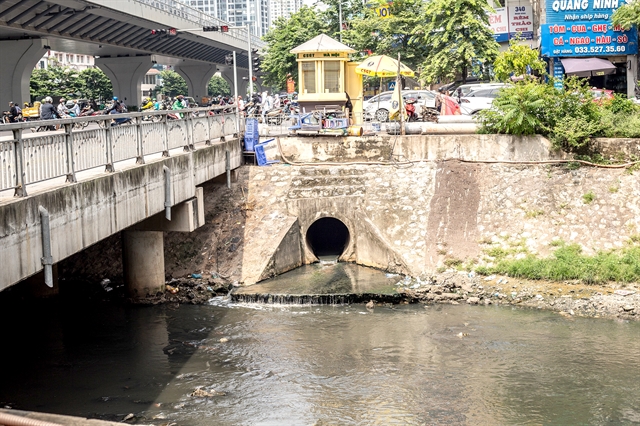 |
| Household wastewater flows through a drain directly into a section of the Kim Ngưu River. — VNA/VNS Photo |
Some longtime residents say the river is far less foul than it was years ago. Still, a river that smells better after rain is not clean. The sewage has just temporarily moved on.
Farther southwest, 54-year-old Bùi Xuân Hòa sells drinks beside the Nhuệ River.
She said raw sewage is regularly dumped straight into the water, sometimes for days on end. In 2025, just before the Lunar New Year, it went on for three days, and the stench was overwhelming.
Because it all comes through shared sewers, residents struggle to pinpoint where it starts, and they say the local authorities have done little to solve the issue.
A visit in July found long stretches of the river murky or blue-black, covered in rubbish and weeds, with sewage pouring from outfalls.
Hà Nội's government counts about 2,500 sources of pollution in the basin and has approved a clean-up expected to cost more than VNĐ75 trillion (US$2.9 billion) between 2026 and 2029. For the people who live beside the river, that promise has yet to materialise.
In HCM City, the renovated Nhiêu Lộc–Thị Nghè canal was still drawing complaints of discoloured, foul-smelling water earlier this year, and rubbish from upstream sometimes piles up in thick mats at its lower end.
The city is counting on the Nhiêu Lộc–Thị Nghè wastewater plant, designed for 480,000 cubic metres a day and due to be finished and test run by December 31.
By then, HCM City aims to collect at least half of its wastewater and treat more than a quarter to standard, and it has urged agencies to make better use of existing plants that are running under capacity.
Planning problem
The trouble starts with collection. According to Việt Anh from the Vietnam Water Supply and Sewerage Association, the hardest part of the job is to connect every home and business to a sewer, then carry the whole flow to a treatment plant.
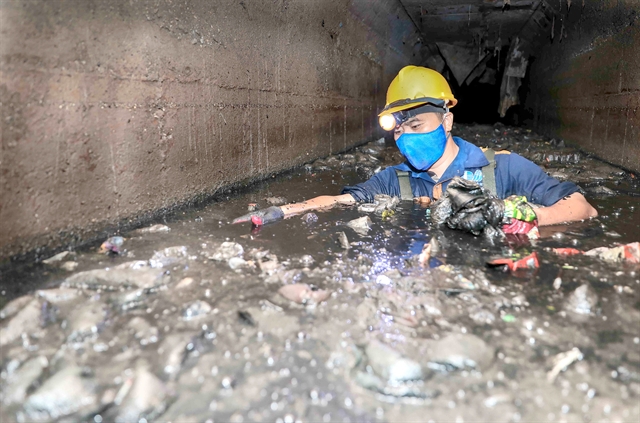 |
| A worker stands submerged in a sewer, clearing rubbish to keep the water flowing. — VNA/VNS Photo |
This task is toughest in older neighbourhoods, where sewers were never laid with the roads and houses and retrofitting runs into obstacles at every turn.
At the same time, in many cities rain and sewage still share pipes, so treatment plants must cope with a flow that can vary wildly in volume by the hour, the day and the season.
Lê Hùng Anh, director of the Institute of Environmental Science and Engineering and Management, traces the problem back to how the cities were planned.
"In many places, the wastewater infrastructure came after the city had already taken shape, so we've never had the integrated, sustainable drainage system we wanted," he said.
Drainage, waste disposal and flood control have not been given the priority granted to transport and economic growth, he added.
Money set aside
Then there is the money. According to the ministry, collecting and treating wastewater requires three to 10 times as much investment as supplying fresh water, yet State funding is limited and private capital has yet to follow.
Even where treatment plants do get built, the pipes lag behind. Yên Xá, Hà Nội's biggest plant, cost more than VNĐ16 trillion ($614 million) and is designed for 270,000 cubic metres a day, but it will not reach that until the trunk sewers and feeder lines that serve it are finished.
Việt Anh from the Vietnam Water Supply and Sewerage Association argues for treating sewage as a single system, from the plumbing inside a building to the sludge and the safe release or reuse of treated water, with money set aside to run it as well as to build it.
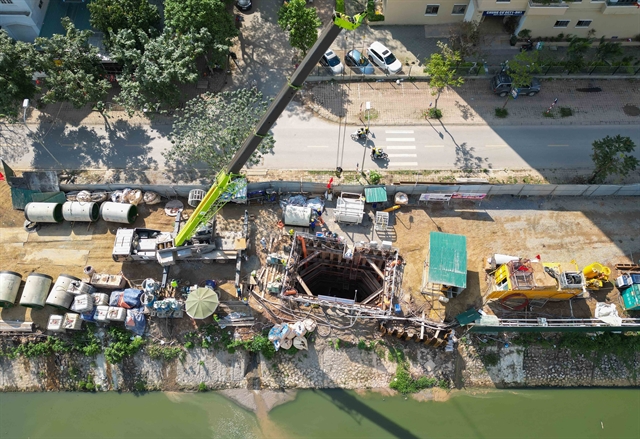 |
| Underground pipes are being laid at a depth of 15m along the Tô Lịch River. — VNA/VNS Photo |
That means looking beyond the State budget. He wants the 'polluter pays' principle applied, so that those who produce and discharge sewage contribute, and those who benefit from the service share the cost.
Residents' role
Hùng Anh from the Institute of Environmental Science and Engineering and Management also highlights the role of residents.
"When people understand how their wastewater is treated and how their fees are spent, they'll keep an eye on it themselves and work alongside the authorities," he said.
He favours smaller, local treatment plants. Rather than sending all wastewater to one big plant, it could be treated in residential areas, urban clusters or apartment blocks, he said.
That would cut investment costs, make the system easier to manage and remove the need for long sewers, and the treated water could be reused on the spot for watering plants or cleaning public spaces.
Over the longer term, he argued, every new housing project, urban development and shopping centre should treat its wastewater to standard before it enters the shared system.
The green that briefly appeared on the Tô Lịch was borrowed from a lake and from treated effluent. Making it last means getting the water from every sink and shower along its banks to a treatment plant instead of the river.
Until then, Việt Nam's rivers will remain the last stretch of its sewers. — VNS
Environment
 Environment
 Environment
 Environment
 Environment
 Environment
 Environment
 Environment
 Environment
 Environment
 Environment
 Environment
 Environment
 Environment
 Environment