 Environment

Vietnamese NA President’s China visit facilitates bilateral cooperation: Chinese researcher
1.
 |
| Delegates at the discussion on promoting an end to bear keeping in Hà Nội. VNS Photo Khánh Linh |
By Khánh Linh
HÀ NỘI — Experts have called for breakthrough measures to accelerate the handover of bears kept by households, saying a stronger legal framework is needed to completely end the more than two-decade-long practice of keeping the animals for bile extraction.
Among the proposed measures, the issuance of a legal ban on keeping bears is considered one of the concrete solutions needed in the final stage of the plan to end bear bile farming.
Number of captive bears falls 97 per cent
Speaking at a discussion on promoting an end to bear keeping in Hà Nội, themed 'From Commitment to Action', organised by Nhân Dân (People) Newspaper in coordination with Education for Nature Vietnam (ENV) on Wednesday, Nguyễn Hoàng Nhật, Deputy Head of Nhân Dân Online under Nhân Dân Newspaper, said Việt Nam had made sustained efforts over the past 20 years to end bear bile farming.
The number of captive bears had fallen sharply, reflecting positive progress in management, conservation and raising public awareness, he said.
However, despite the reduction, the remaining cases have become more difficult to address.
They are often cases in which owners are reluctant to hand over their bears, requiring closer coordination and more appropriate approaches among management agencies, authorities and conservation organisations, he said.
In Hà Nội, Phúc Thọ Commune is currently one of the areas requiring continued attention to achieve the goal of completely ending the keeping of bears.
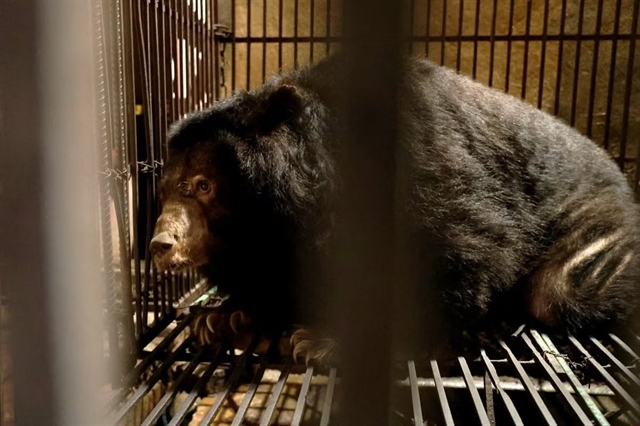 |
| Odyssey, the female Asiatic black bear, before the trip from Hà Nội's Phúc Thọ Commune to the Việt Nam Bear Rescue Centre in Huế in July, 2026. Photo courtesy of Animals Asia |
Sharing an overview of the 20-year journey towards ending bear bile farming in Việt Nam, Bùi Thị Hà, Deputy Director of ENV, said 2026 marked an important milestone in the country’s efforts to completely end the practice, which has continued for more than two decades.
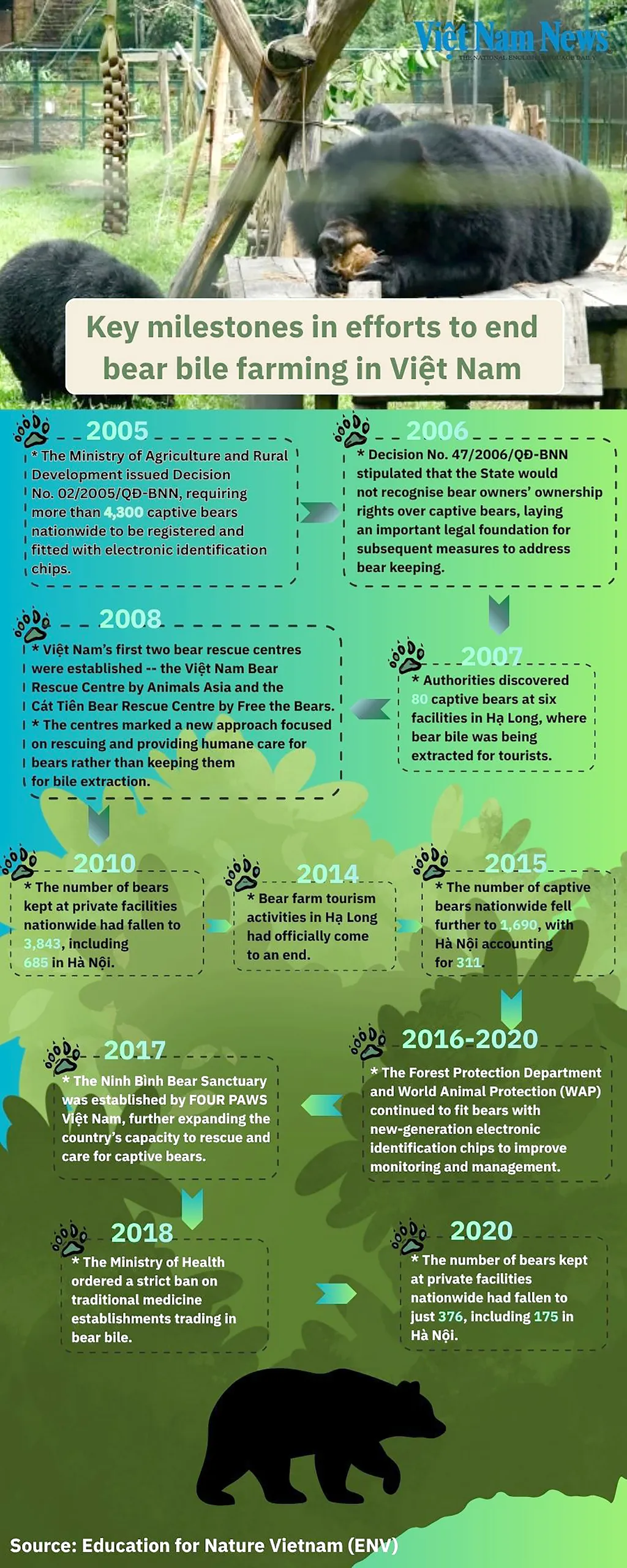
According to ENV data, more than 4,300 bears were kept at private facilities nationwide in 2005. By 2026, the number had fallen by 97 per cent to just 129 bears at 50 facilities across the country.
Bile from bears is extracted mainly in Asia as some people believe it has medical qualities.
In the past, it has been used in traditional medicine to treat liver conditions, reduce inflammation, and lower fever
Notably, 23 of the country’s 34 provinces and cities are now free of captive bears. Đà Nẵng and Thái Nguyên were the latest localities to achieve this goal in 2026.
However, Hà said Hà Nội currently had the largest remaining number of captive bears in the country, with 64 bears at 17 facilities, accounting for about half of all captive bears nationwide.
Phúc Thọ Commune alone is home to 62 of these 64 bears, meaning that nearly half of all captive bears in the country are concentrated in a single locality.
 |
Looking ahead, Hà said that although the remaining task was much smaller in terms of the number of bears compared with two decades ago, it required much stronger determination.
Hà Nội, in particular, remains the area with the most work to do in the final stage, she said, partly because bear owners are reluctant to be the first to give up keeping bears.
Hà proposed legal measures to help make Hà Nội a locality with no captive bears. This would require close coordination among local authorities, law enforcement agencies, conservation organisations, the media and the community, all working together under a clear roadmap.
“The current obstacle is that no one wants to be the first to give up keeping bears," she said.
"In addition, the absence of unified and mandatory directives from the Government or the city means that efforts to resolve the remaining cases still rely largely on encouraging and persuading owners to voluntarily hand over their bears.”
Hà warned that at the current rate of bear handovers, it could take another 10 years to completely end the keeping of bears in Việt Nam.
She therefore reiterated the need for a specific legal document to accelerate the process.
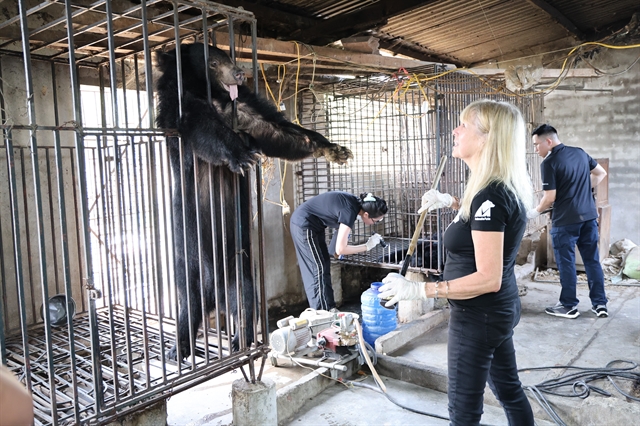 |
| Two long-term captive bears voluntarily handed over by a household in Quang Đồng Commune, Nghệ An Province, in 2026. Both rescued bears are female Asiatic black bears (Ursus thibetanus), more than 20 years old. VNA/VNS Photo |
Sharing her view on the compensation for households keeping bears, Hà said that under current regulations, the State did not recognise the owners’ ownership rights over the bears.
Therefore, she argued that compensation should neither be provided nor become part of the policy framework, as this could create expectations among bear owners and encourage them to wait for financial support, potentially prolonging the process.
Local authorities seek a legal basis
Agreeing with this view, Nguyễn Văn Công, Vice Chairman of the Phúc Thọ Commune People’s Committee, said that during 2000-2005, households had spent a considerable amount of money to purchase bears.
The bears represented valuable assets and, in many cases, a source of livelihood for years, meaning that many owners wanted financial assistance when handing them over, Công said.
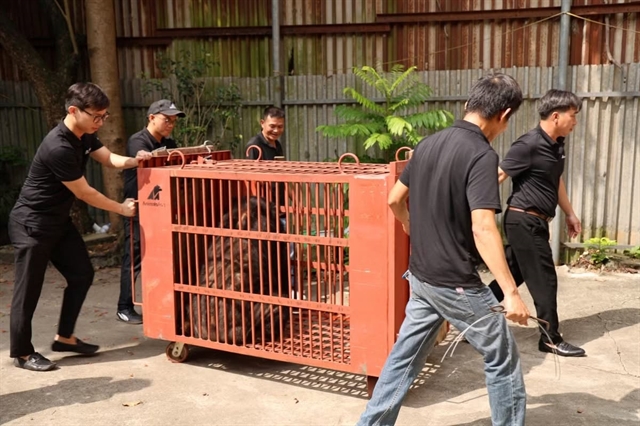 |
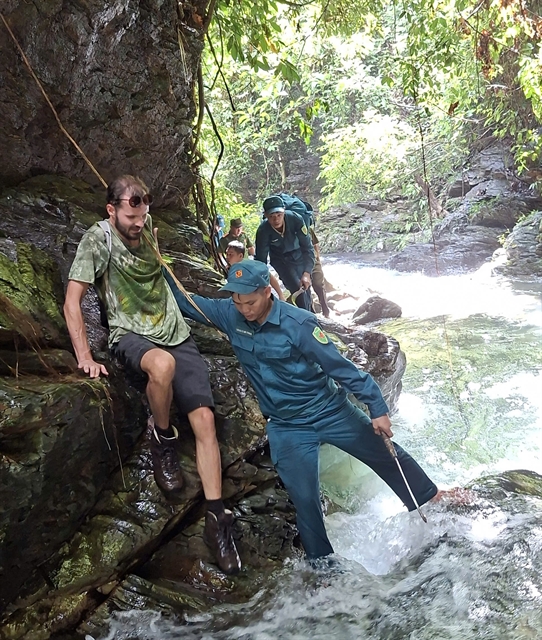
| The Odyssey bear is being transported to Bạch Mã National Park. Photo courtesy of Animals Asia |
The commune had coordinated with the city’s Forest Protection Department to review the remaining bear-keeping households, conduct awareness campaigns, organise meetings and even hold drawing contests to encourage owners to hand over their bears to rescue centres.
All bear-keeping households had signed commitments not to extract bear bile or exploit any parts of the animals’ bodies, he said.
However, Công acknowledged that these measures had only achieved limited results.
Only three bears had been handed over to the authorities since the beginning of the year and subsequently transferred to a national park for conservation.
A clear legal basis was needed, with the Hà Nội People’s Committee or the Hà Nội Department of Agriculture and Environment issuing specific directives setting deadlines and a mandatory roadmap for the remaining bear-keeping facilities.
“Once there is a legal basis, we will handle the cases in accordance with regulations," Công said.
"If households refuse to hand over their bears after awareness campaigns, enforcement measures will be taken."
Monitoring continues
Bùi Huy Khôi, Deputy Head of the Hà Nội Forest Protection Department, said the management, inspection and monitoring of captive bears in the city had been carried out continuously.
Under the regular inspection regime, forest rangers inspect each bear-keeping household and scan the identification chips of the bears once a year. Local forest rangers also coordinate with local authorities to have owners sign commitments not to illegally buy, sell, slaughter, transport or extract bile from bears.
“We maintain unannounced inspections and are determined to prevent the swapping of bears, the illegal introduction of new bears, or illegal trading and bile extraction,” Khôi said.
He added that the department was expected to coordinate with conservation organisations in October 2026 to take bear owners on field visits to the Việt Nam Bear Rescue Centre in Tam Đảo.
The aim is to allow owners to see first-hand the living conditions of bears after they have been handed over, he said.
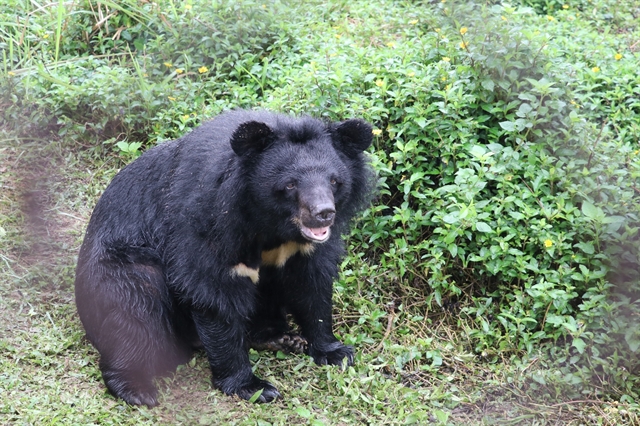 |
| A bear kept at the Ninh Bình Bear Sanctuary in a semi-wild environment in Nho Quan Commune, Ninh Bình Province. VNA/VNS Photo Đức Phương |
The Forest Protection Department has also proposed organising regular visits for bear owners to see the individual bears they previously handed over, Khôi said.
Environment
 Environment
 Environment
 Environment
 Environment
 Environment
 Environment
 Environment
 Environment
 Environment
 Environment
 Environment
 Environment
 Environment
 Environment