 Environment
Việt Nam, Denmark issue joint statement on establishment of Comprehensive Strategic Partnership
1.
|
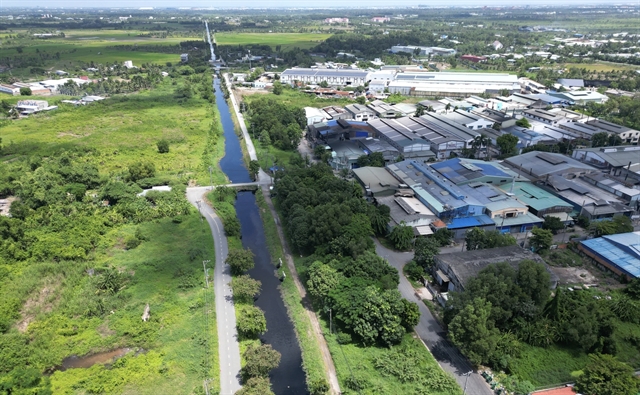
| The environmental protection fees for industrial wastewater and industrial emissions will be raised twice from 2027 and 2.5 times from 2030. Photo: dantri.com.vn |
HCM CITY — HCM City is proposing to raise environmental protection fees for industrial wastewater and industrial emissions to twice the rates set by the Government from 2027 and 2.5 times from 2030.
The municipal People’s Committee is drafting a resolution on environmental protection fees for industrial wastewater and industrial emissions in the city. The proposal is among measures to concretise the Law on Urban Development.
Under the proposed roadmap, from January 1, 2027 to December 31, 2029, HCM City would apply environmental protection fees for industrial wastewater and industrial emissions at twice the rates used to determine payable fees under Government regulations for subject entities.
From January 1, 2030, the proposed rate would increase to 2.5 times the Government-regulated level.
The draft documents note that HCM City is a special municipality with a large population, extensive production, business and service activities, and a high rate of urbanisation. The city is also home to numerous industrial parks, export processing zones, industrial clusters, high-tech parks and production, business and service establishments operating across diverse sectors and at different scales.
In 2025, HCM City collected about VNĐ69.8 billion (US$2.7 million) in environmental protection fees for industrial wastewater and about VNĐ1.3 billion (US$50,000) for industrial emissions.
Meanwhile, the city budget allocated an average of about VNĐ4 trillion (US$153 million) annually for environmental protection activities during the 2022–24 period.
According to the draft, the higher fee rates would be introduced according to a roadmap to ensure policy stability and predictability, while giving organisations and individuals subject to the fees time to proactively adjust production and business activities and invest in waste reduction and treatment solutions.
The policy aims to increase the responsibility of organisations and individuals generating waste, encourage reductions in waste volume and pollutant loads, and promote investment in and innovation of production technologies and waste-treatment technologies.
The draft also states that the municipal People’s Committee has proposed submitting the resolution to the municipal People’s Council for approval at its nearest meeting after the Law on Urban Development takes effect.
The Department of Agriculture and Environment is responsible for leading the drafting process in coordination with the Department of Justice and relevant agencies. It will organise consultations with departments, agencies, local authorities, organisations and individuals concerned.
The lead agency will then consolidate and study the feedback, provide explanations and make revisions to the draft documents before sending them to the Department of Justice for appraisal and subsequently submitting them to the municipal People’s Council. — VNS
Environment
 Environment
 Environment
 Environment
 Environment
 Environment
 Environment
 Environment
 Environment
 Environment
 Environment
 Environment
 Environment
 Environment
 Environment