 Environment

Triton Crown launch draws more than 400 prospective buyers
1.
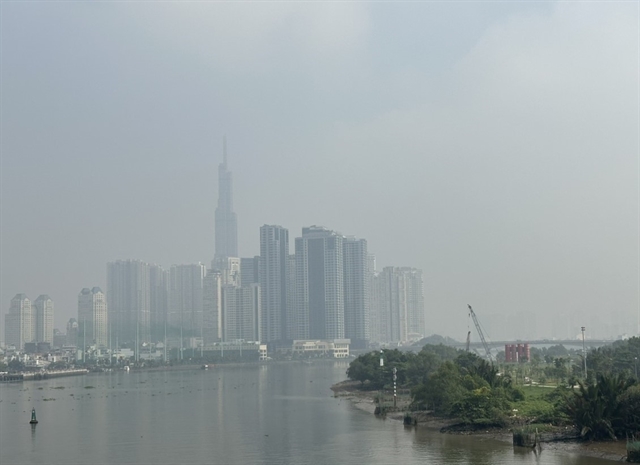 |
| The skyline of HCM City appears obscured by smog in late December 2025. — VNA/VNS Photo |
HÀ NỘI — Efforts are being stepped up to turn policies on air pollution control into concrete and measurable actions, with a focus on improving air quality in major urban areas, a senior environment official has said.
Deputy Minister of Agriculture and Environment Lê Trọng Yên made the remarks at a workshop on combating pollution and improving air quality, held by the Ministry of Agriculture and Environment’s Environment Department in Hà Nội on Tuesday.
Deputy Minister Yên said improving air quality was not only an environmental and public health task, but was also closely linked to the country’s green transition, greenhouse gas emission reductions, and commitment to achieving net-zero emissions.
He called for stronger coordination among ministries, sectors, and localities, as well as greater mobilisation of resources from domestic and international organisations, experts and scientists.
The workshop took place as Việt Nam implements its Action Plan on Addressing Air Pollution for 2026–30, with a vision to 2045. The plan focuses on translating policy orientations into specific actions, strengthening inter-sectoral coordination, and mobilising resources to improve air quality.
The Politburo's Conclusion No. 75-KL/TW on environmental protection and proactive response to climate change in the new period has also identified tackling air pollution as a key task.
High PM2.5 levels in Hà Nội
Lê Hoài Nam, Deputy Director of the Environment Department, presented data showing persistent air pollution in Hà Nội.
Between 2023 and 2025, the annual average concentration of PM2.5 – fine particulate matter in the air with a diameter of 2.5 micrometres or less, enabling them to bypass the body's natural defence like mucus or hair in the nose – in Hà Nội ranged from about 47 to 48 micrograms per cu.m., approximately 1.5 to two times the applicable regulatory limit.
Around one-third of days each year recorded PM2.5 concentrations exceeding the 24-hour regulatory limit, with such episodes occurring mainly during the pollution season from September to April.
Analysis showed that secondary particulate matter, formed from pollutants in the atmosphere, accounted for the largest share of PM2.5 emissions at 27 per cent. Transport accounted for 23 per cent, construction and road dust 20 per cent, open burning, including waste and agricultural residue burning, 12 per cent, industry 10 per cent, and 8 per cent from other sources.
The figures highlight the diverse sources of air pollution in Hà Nội and the need for coordinated measures targeting multiple sources rather than focusing on a single sector.
Nam said completing the regulatory framework and strengthening the effectiveness of State management were key to addressing air pollution at its root.
The ministry would continue working with ministries, sectors and localities to implement coordinated measures covering policies, technical regulations and technology, while strengthening emissions control and cooperation across administrative boundaries.
Among the measures under consideration is the development of regulations on low-emission zones, including principles and criteria for their establishment, emission-control measures and the responsibilities and authority of relevant agencies.
Measures to monitor and limit dust emissions from construction activities are also being considered.
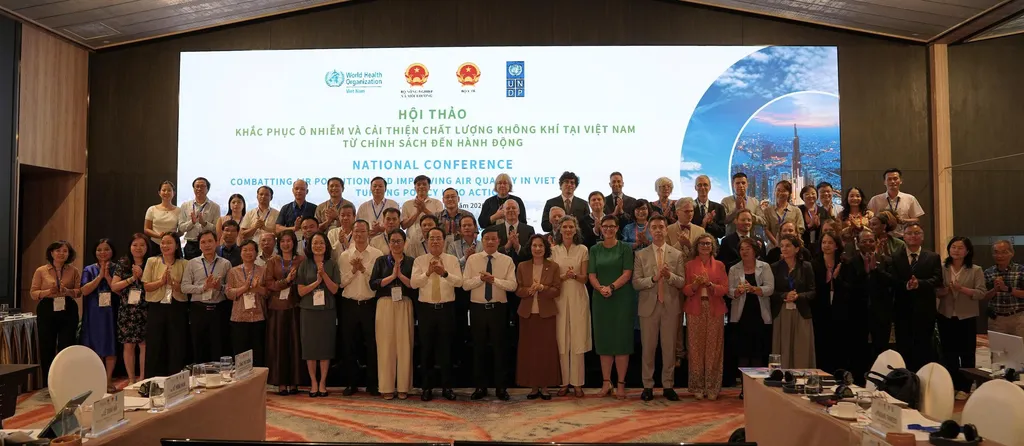 |
| The national-level conference on combating air pollution and improving air quality was held on September 29 in Hà Nội. — Photo from the Ministry of Agriculture and Environment |
WHO calls for stronger implementation
Representatives of the United Nations Development Programme (UNDP) and the World Health Organisation (WHO) in Việt Nam stressed the need to translate policies and commitments into actions with tangible impacts.
Angela Pratt, WHO Representative in Việt Nam, described air pollution as one of the country’s major environmental and public health challenges.
Pollution affects the air people breathe every day, contributes to disease and premature deaths, reduces productivity and increases costs for families, communities and the economy.
The national action plan on air pollution control and air quality management for 2026–30 sets specific targets. In Hà Nội, the aim is to bring down the annual average PM2.5 by 20 per cent by 2030 compared with 2024 levels.
The plan also seeks for at least 80 per cent of days each year to record air quality at the good or moderate level under national air quality regulations.
According to Pratt, implementation remains the key challenge. Cleaner air cannot be achieved through a single measure or by one ministry or sector acting alone, as pollution comes from multiple sources, including transport, industry, energy production, construction, waste burning and household fuel use.
Việt Nam is expanding its air-quality monitoring systems and accumulating more scientific evidence to support policymaking. New technologies, digital tools and artificial intelligence could also help identify pollution sources, improve forecasting and support more targeted interventions.
WHO has called for stronger local evidence on the health impacts of air pollution, particularly on vulnerable groups. Linking air-quality data with health data could improve early-warning systems, identify high-risk populations and support public health responses.
WHO and UNDP aim to pilot a 'clean air city' model in Hà Nội, combining science, technology, public participation, and investment solutions. The model is expected to generate practical experience that could subsequently be applied more widely.
UNDP is also supporting the Government in developing a unified national air emissions inventory to provide a stronger basis for identifying and addressing pollution sources.
European Union Ambassador to Việt Nam Julien Guerrier remarked that the EU welcomed the Government's focus, saying this reflects "a growing recognition that better air quality means healthier citizens, more liveable cities, greater productivity, and a more resilient development pathway."
As part of the Global Gateway, the EU is 'more committed than ever' to assist Việt Nam in tackling air quality issues, through policy dialogue, technical cooperation, investment, and the broader partnership for a green and just transition, the diplomat noted. — VNS
Environment
 Environment
 Environment
 Environment
 Environment
 Environment
 Environment
 Environment
 Environment
 Environment
 Environment
 Environment
 Environment
 Environment
 Environment

.jpg)




