 Environment
Tây Ninh province seeks Japanese investment in high-value industries
1.
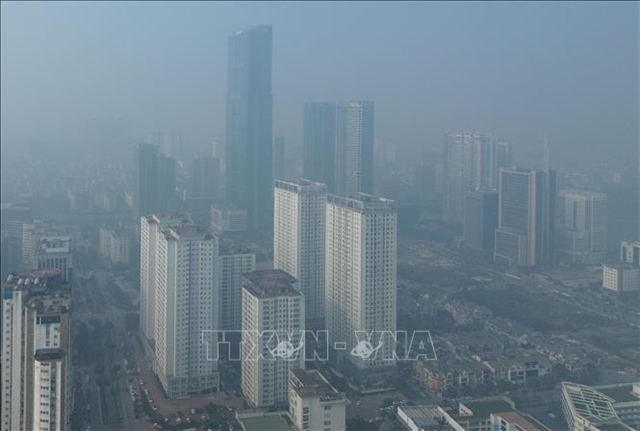 |
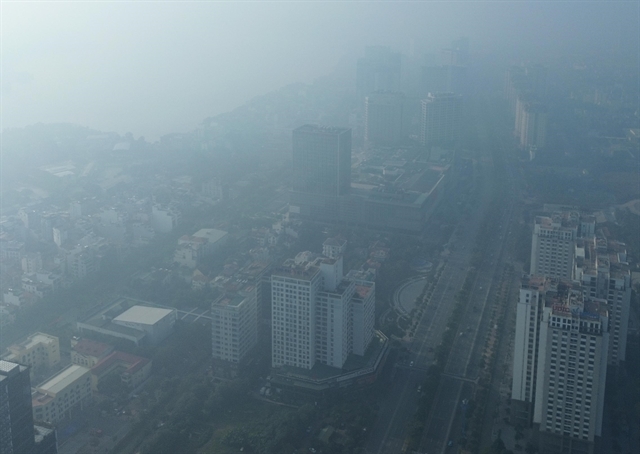
| A view of high-rise buildings shrouded in fine dust and thick fog on Phạm Hùng Street in Hà Nội on December 10, 2025. Air pollution typically becomes most recognisable in the capital city from October to March or April of the following year. — VNA/VNS Photos Phan Phương |
HÀ NỘI — For long-time residents of Hà Nội, changes in air quality are reflected in the small, familiar details of daily life.
According to Đặng Thị Điệp, a 63-year-old resident in Cầu Giấy Ward, air pollution was not nearly as severe 20 years ago as it is today.
Over time, the rise in construction, traffic density and industrial production has exposed the city to much more dust, she said.
"Even inside the house, if I skip cleaning for just one day, everything gets covered in dust," Điệp told VietnamPlus.
"That’s why I always wear a face mask whenever I go out."
This concern is shared by younger people who spend a significant amount of time travelling around the city.
Hương Thảo, a resident in Long Biên Ward, said she travels about 15-20km daily across Hà Nội for work.
"During periods of high pollution, air quality in many areas, especially those with heavy traffic, becomes deeply concerning," Thảo said.
"Beyond vehicle exhaust and road dust, activities like waste burning, construction work and sidewalk repairs all take a toll on the air quality."
Thảo said she has noticed her respiratory system weakening and believes that air pollution also affects well-being, making it uncomfortable for people to spend time outdoors.
Data from the Environment Department under the Ministry of Agriculture and Environment showed that fine particulate matter (PM2.5) is the primary pollutant in Hà Nội.
The annual average PM2.5 concentration for the 2023-25 period was 1.5 to 2 times the regulatory limit.
On approximately one-third of the days throughout the year, PM2.5 concentrations exceeded the 24-hour average limit.
An emissions inventory for the 2023-25 period reveals a diverse range of sources for PM2.5.
Transportation accounts for about 23 per cent of the total PM2.5 matter, construction activities and road dust 20 per cent, industrial operations 10 per cent; open burning 12 per cent, and secondary particulate matter formed from other gaseous pollutants 27 per cent.
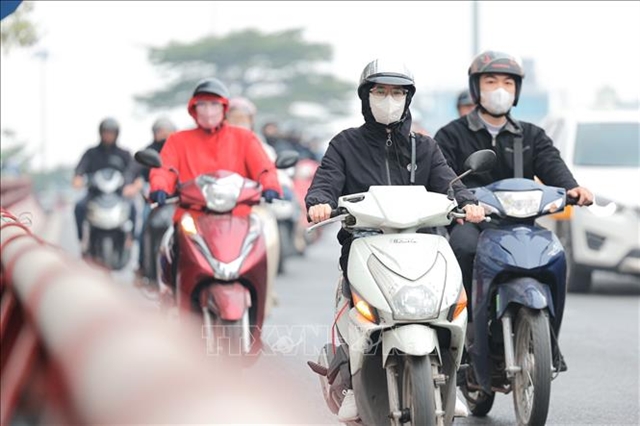 |
| People wear face masks when going out in Hà Nội to avoid air pollution on December 10, 2025. |
Air pollution typically becomes most recognisable in Hà Nội from October to March or April of the following year, according to Lê Thanh Thủy, deputy head of the environmental management division at the Hà Nội Department of Agriculture and Environment.
According to Deputy Minister of Agriculture and Environment Lê Trọng Yên, the 14th Party Central Committee has identified addressing air pollution as a key priority in Conclusion No. 75-KL/TW, issued on July 28 after their third plenum.
To actualise the conclusions, the Government issued Resolution No. 208/NQ-CP to approve an action programme to address air pollution in Hà Nội, HCM City and other major urban areas.
Source identification
At a training workshop titled 'Understanding Air Pollution: From Awareness to Action' organised by the Hà Nội Department of Agriculture and Environment on September 23, experts stressed the importance of identifying and quantifying each specific source of emissions for effective pollution control, the Agriculture and Environment (Nông nghiệp & Môi trường) newspaper reported.
According to Dr Hoàng Xuân Cơ from the Vietnam Association for Environmental Economics (VIASEE), the first step in air quality management is to accurately identify the characteristics of emission sources and their impacts.
“Emission sources are highly diverse, ranging from natural origins such as forest fires, biomass burning and biological processes to human activities including industrial production, transportation, construction, agriculture and daily domestic activities,” said Cơ.
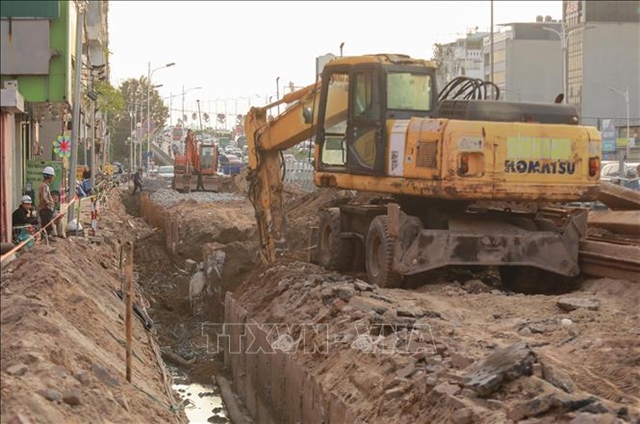 |
| Construction sites are among the major sources of pollutants in Hà Nội. Environmental experts have stressed the importance of identifying source of emissions for effective air pollution control. |
He proposed to strengthen emission inventories and management of emission sources at the commune and ward levels, which would enable the city to gather data and conduct a more comprehensive and systematic inventory process.
"Hà Nội is conducting a city-wide emissions inventory," Cơ added.
"The city has obtained preliminary findings on the sources of air pollution and is currently running models to refine these results."
Professor Lý Bích Thủy from the Hà Nội University of Science and Technology said air quality data collection requires an integration of various tools.
“Monitoring facilitates data collection through ground-based stations, low-cost sensors and satellites, while emission inventories provide information on the volume of pollutants released from primary sources,” she said.
She added that based on meteorological data and emission sources, dispersion models can be developed to estimate ambient pollutant concentrations.
Receptor models can then further assist in determining the contribution of various sources to pollutant concentrations at a specific location, Thủy said.
"If connected and used together, these tools can provide regulators with information to better understand air quality trends," she added.
Coordination needed
Apart from source identification, deputy environment minister Yên also emphasised the need for collaboration across ministries, sectors and localities, as 'air pollution does not respect administrative boundaries'.
On June 4, Hà Nội and five neighbouring provinces and cities Phú Thọ, Thái Nguyên, Bắc Ninh, Hưng Yên and Ninh Bình signed a coordination regulation for environmental management in the capital region, which includes provisions for joint responses to inter-provincial air pollution.
The ministry is also developing coordination protocols and air quality management measures for the northern provinces, with plans to submit them to the Prime Minister within this month, Yên said.
"This approach aims to establish a coordination mechanism for instances of severe, inter-regional, or inter-provincial air pollution, such as when the Air Quality Index (AQI) exceeds 300 for three consecutive days," he added.
The ministry has also proposed to Prime Minister Lê Minh Hưng to consider establishing a national steering committee on air pollution mitigation to enhance coordination, mobilise resources and drive the implementation of unified solutions, he said. — VNS
Environment
 Environment
 Environment
 Environment
 Environment
 Environment
 Environment
 Environment
 Environment
 Environment
 Environment
 Environment
 Environment
 Environment
 Environment