 Environment
Đồng Tháp taps ecological, cultural strengths to develop sustainable tourism
1.
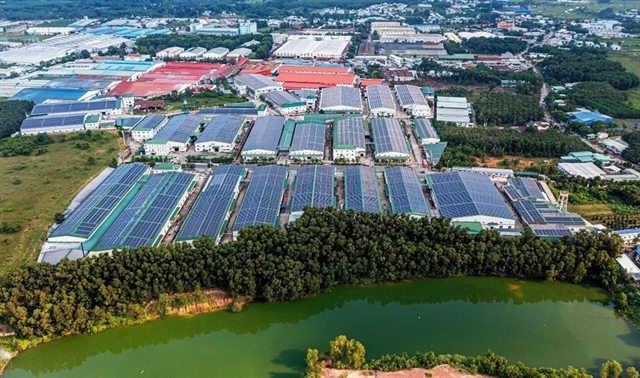 |
| An industrial park in Bình Dương, part of HCM City. The city is developing criteria and a roadmap to shift industrial parks towards eco-industrial models. — VNA/VNS Photo |
HCM CITY — HCM City is developing its own criteria for eco-industrial parks and clusters, with 10 existing industrial parks and three industrial clusters set to be put on a green transition roadmap through 2045.
The draft criteria, being prepared by the HCM City Export Processing and Industrial Zones Authority (HEPZA), would introduce measurable requirements on resource efficiency, industrial symbiosis, green infrastructure and the number of businesses adopting cleaner production.
The draft is being developed as the city seeks to shift existing industrial areas towards greener and more resource-efficient production while attracting higher-quality investment.
Under the proposed rules, an eco-industrial park would have to reserve at least 25 per cent of its land for green space, transport and shared technical and social infrastructure.
For newly built industrial parks, the figure would rise to 28 per cent, including at least 12 per cent for green space and 2 per cent for social infrastructure.
Each eco-industrial park would also have to establish at least three industrial-symbiosis activities and apply an appropriate ISO management system.
At least 25 per cent of businesses in the park would have to adopt measures on resource efficiency, cleaner production or the circular economy and demonstrate savings in materials, energy or chemicals. An alternative would be for at least 10 per cent of businesses to meet the criteria for eco-enterprises.
Industrial symbiosis refers to businesses working together to reuse or share materials, water, energy, waste and infrastructure.
The draft also requires each industrial park to have at least one ambient air monitoring station and provide solutions for accommodation, services and public facilities for workers.
For eco-industrial clusters, at least 23 per cent of land would have to be allocated to greenery, transport and shared technical and social infrastructure. Newly built clusters would have to provide at least 12 per cent green space.
At least one industrial-symbiosis activity would be required, while at least 10 per cent of businesses in a cluster would have to meet eco-enterprise criteria or more than 15 per cent would have to apply cleaner-production solutions.
Businesses seeking recognition as eco-enterprises would first have to demonstrate compliance with regulations on investment, construction, land, environmental protection, fire prevention and fighting, and labour for the previous two years.
They would also have to apply at least three measures to improve resource efficiency, cleaner production or circular-economy practices. Each measure would have to save at least 5 per cent of materials, water, energy or chemicals, or reduce waste or emissions by at least 5 per cent.
For new investors, the draft would instead require the application of the best available techniques used in developed countries, setting a higher technical threshold for new projects in eco-industrial areas.
The proposed roadmap covers 10 industrial parks such as Hiệp Phước, Tây Bắc Củ Chi, Phú Mỹ II and its expansion, Đại Đăng, Đồng An 2, Kim Huy, Phú Tân, Sóng Thần 3, Việt Nam-Singapore II and BW Supply Chain City, as well as the Nhị Xuân, Tân Thạnh and Tân Quy Tây industrial clusters.
The list would be reviewed every five years, with the conversion process targeted for completion by 2045.
Financial support
The city is also proposing financial support to help existing industrial parks and clusters make the transition.
Infrastructure investors that adjust their investment projects and commit to meeting eco-industrial criteria within five years could receive preferential interest-rate support through the HCM City Finance and Investment State-owned Company (HFIC) and the city’s Environmental Protection Fund.
The support would cover projects involving resource efficiency, cleaner production, the circular economy and technology upgrades.
The proposed framework comes as HCM City seeks to make its industrial base more competitive as manufacturers face stricter environmental requirements in export markets.
The city has previously identified green and smart industrial development as a priority, alongside high-tech manufacturing and supporting industries.
It has also been working to promote industrial symbiosis and circular-economy practices in industrial parks.
The shift is also intended to help manufacturers respond to environmental, social and governance requirements and carbon-related trade rules such as the European Union's Carbon Border Adjustment Mechanism.
HCM City attracted more than US$5.57 billion in investment into its export processing and industrial zones in the first nine months, 29 per cent higher than a year earlier, according to HEPZA. Foreign direct investment (FDI) accounted for more than $4.2 billion, up 62 per cent. — VNS
Environment
 Environment
 Environment
 Environment
 Environment
 Environment
 Environment
 Environment
 Environment
 Environment
 Environment
 Environment
 Environment
 Environment
 Environment
.jpg)
.jpeg)



